
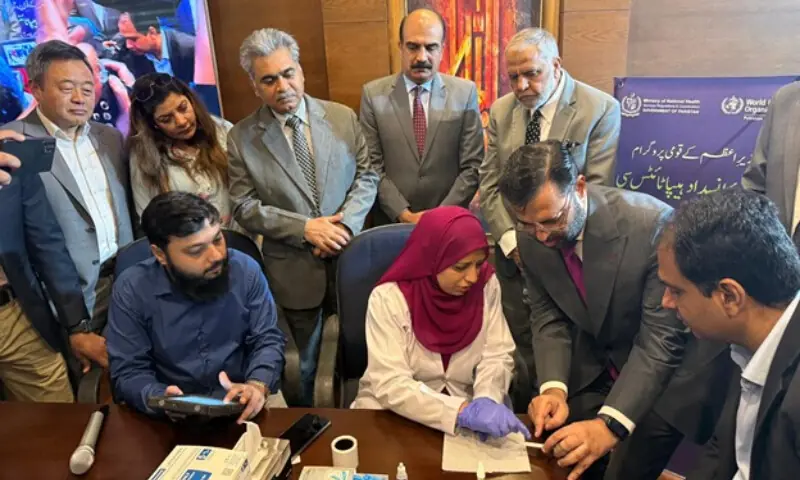

Pakistan has officially launched a nationwide campaign to eliminate Hepatitis C with the support of the World Health Organization. The new Prime Minister’s Hepatitis C Elimination Programme was introduced in Islamabad on Wednesday during a major health sector event attended by government officials and international representatives.
The initiative aims to fight one of the country’s most dangerous public health threats through free screening, free treatment, and nationwide awareness campaigns. Health authorities say the programme could transform healthcare delivery across Pakistan over the next several years.
According to the Ministry of Health, the campaign will initially target 1.6 million people within the next six months. Later phases will expand coverage to more than 164 million citizens nationwide.
Officials described the programme as one of the largest public health initiatives launched in Pakistan in recent years. The campaign also aligns with global health goals established by the World Health Assembly, which seeks to eliminate Hepatitis C as a public health threat by 2030.
Free Screening and Treatment to Reach Millions Across Pakistan
Federal Health Minister Mustafa Kamal announced that the government has allocated Rs67 billion for the programme. The funding will support screening, diagnosis, treatment, and prevention efforts throughout the country.
The minister confirmed that Hepatitis C testing and complete treatment courses will be provided free of cost. Patients diagnosed with the disease will receive treatment lasting between three and six months without financial burden.
Kamal explained that the government wants to remove cost barriers that prevent people from seeking medical care.
The minister warned that Hepatitis C remains a silent but deadly disease in Pakistan. He revealed that nearly 10 million people in Pakistan are affected by hepatitis-related illnesses. Globally, around 60 million people suffer from the disease.
He also highlighted a major concern. Nearly 80 percent of infected individuals do not know they carry the virus. As a result, they unknowingly spread the infection to family members and surrounding communities.
Kamal stressed that untreated Hepatitis C can eventually lead to severe liver disease and liver cancer.
He urged citizens to participate actively in the screening programme before complications become irreversible.
“Prevention is better than cure,” he said during the event.
The minister also stated that Pakistan’s healthcare model must move away from treating illness after damage occurs. Instead, the system should focus on prevention, early diagnosis, and public awareness.
NADRA Integration and Hospital Counters to Expand Access
The government plans to use data support from National Database and Registration Authority to improve nationwide screening efforts.
Officials explained that database integration will help health authorities identify populations, improve transparency, and ensure broader outreach.
Initially, 12 Hepatitis C screening counters have already been established at federal hospitals in Islamabad. These counters will help diagnose patients quickly and guide them toward treatment facilities.
Health officials expect the programme to expand gradually into other provinces and districts.
The government also plans to strengthen awareness campaigns about safe healthcare practices. Officials believe prevention remains the strongest weapon against Hepatitis C transmission.
Authorities stressed the importance of:
- Safe blood transfusions
- Safe injections
- Proper medical equipment sterilization
- Prevention of mother-to-child transmission
- Harm reduction strategies
Experts believe better awareness about these issues can significantly reduce infection rates in future generations.
WHO Predicts Major Health Benefits From New Initiative
Dr Luo Dapeng, the WHO Representative in Pakistan, praised the initiative and called it a major milestone for public health.
He stated that successful implementation could prevent nearly 850,000 deaths and stop 1.1 million new infections by 2050.
The WHO official confirmed that the organization would continue supporting Pakistan through technical guidance, international expertise, and evidence-based healthcare strategies.
Dr Dapeng said Pakistan’s programme could become an important model for other countries facing similar public health challenges.
He also emphasized that testing and treatment alone are not enough. Prevention strategies must remain central to the campaign.
International health experts believe Pakistan faces one of the world’s highest Hepatitis C burdens. Therefore, the success of this programme could have global significance.
Medical professionals also welcomed the decision to provide free treatment. They say many patients previously avoided medical care due to expensive testing and medication costs.
The launch of the programme reflects growing cooperation between Pakistan and international health organizations to address major healthcare challenges through large-scale prevention and treatment strategies.
Officials hope the campaign will reduce infections, improve public awareness, and save hundreds of thousands of lives in coming decades.

