
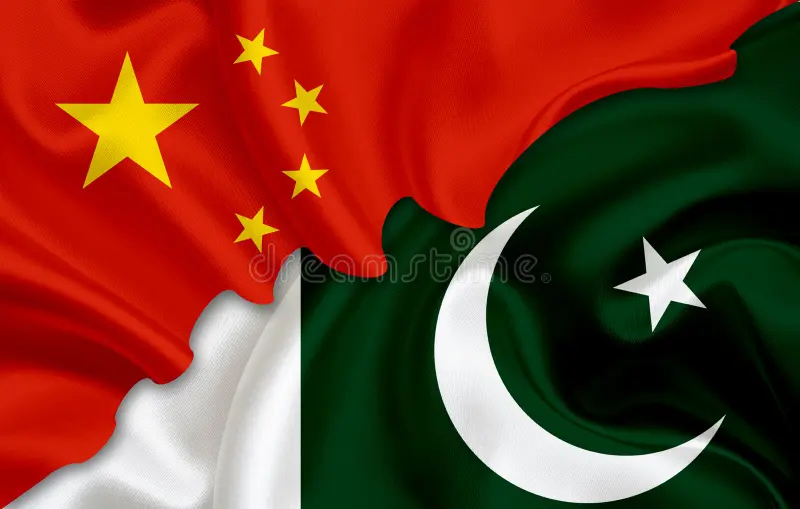

China and Pakistan’s foreign ministers called for the United States and Iran to stop fighting. They urged both nations to resume peace negotiations immediately. This joint call followed an important bilateral meeting in Shanghai.
Chinese Foreign Minister Wang Yi and Pakistani Foreign Minister Ishaq Dar expressed deep concern. They worry about the rapid deterioration of the current situation.
Consequently, they urged all involved parties to immediately cease hostilities. Both leaders emphasized the urgent need to return to peaceful dialogue.
High Stakes in the Middle East Conflict
Both countries have actively sought to mediate in the months-long Middle East conflict. The situation recently intensified with renewed fighting over the strategic Strait of Hormuz. This tension flared just a month after a preliminary peace deal.
Referring to that previous agreement, Wang Yi noted it was hard-won.
“Peace is before our eyes, (we) cannot fall at the last hurdle and even more so cannot lose what we have gained,” he added.
Unfortunately, the United States and Iran exchanged strikes again on Friday. Tehran accused Washington of striking civilian infrastructure. These targets reportedly included an airport, a railway station, and two bridges.
In response, Iran launched a barrage of drone strikes. These drones targeted US military allies and infrastructure in Kuwait. The Strait of Hormuz briefly reopened after the June deal. However, Tehran closed it again until US aggression ends. Meanwhile, the US has reimposed its port blockade.
Pakistan Joins World AI Cooperation Organisation
Beyond regional conflicts, the Shanghai meeting focused heavily on future technology. Wang Yi highlighted Pakistan’s accession to the World Artificial Intelligence Cooperation Organisation (WAICO). He noted this move serves Pakistan’s long-term interests.
China promotes WAICO to build an international consensus on technology. The goal is to help Global South countries benefit equally from artificial intelligence.
Ishaq Dar called the creation of WAICO a great initiative. He stated Pakistan is honored to be a founding member.
Furthermore, Dar promised to ensure the safety of Chinese personnel and projects in Pakistan. He hopes this protection will foster stronger bilateral relations.
Deepening the China-Pakistan Strategic Partnership
The two leaders eagerly reviewed their broad bilateral relations. They reaffirmed their shared commitment to deepening their all-weather strategic cooperative partnership.
Specifically, they discussed the high-quality development of CPEC 2.0. They plan to enhance cooperation in trade, investment, digital economy, and AI.
Several key officials accompanied Deputy Prime Minister Dar on this trip. The delegation included Information Technology Minister Shaza Fatima Khawaja. It also included Punjab AI Adviser Ali Mustafa Dar and PVARA Chairman Bilal Bin Saqib. Additional Secretary Dr. Syed Asad Ali Gillani and Chargé d’Affaires Aizaz Khan also attended.

