
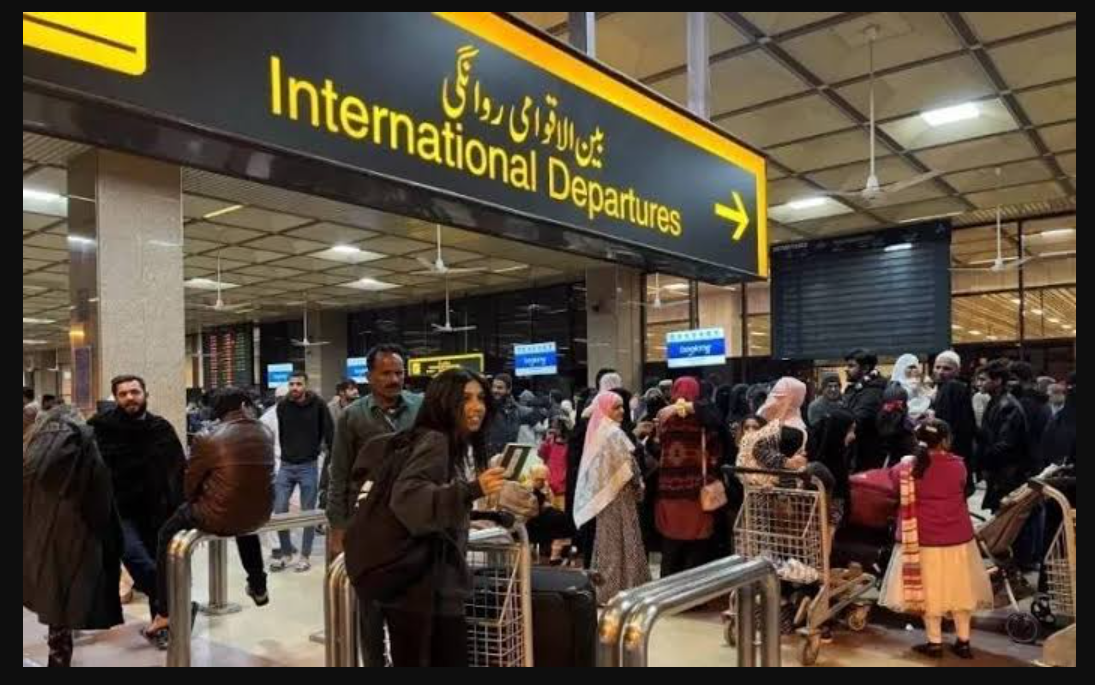

Saudi Arabia Remains Top Destination for Pakistani Workers
More than 317,000 Pakistanis travelled abroad for employment during the first six months of 2026, highlighting the continued importance of overseas labour markets for the country’s workforce.
Official figures from Pakistan’s Bureau of Emigration and Overseas Employment show that 317,436 Pakistanis proceeded abroad for employment between January and June 2026.
The workers included both skilled and unskilled professionals from a wide range of sectors.
Doctors, software engineers, information technology professionals, petroleum engineers, mechanical engineers, paramedical staff and technicians were among those seeking employment overseas.
Saudi Arabia remained by far the largest destination for Pakistani workers.
A total of 183,951 Pakistanis travelled to Saudi Arabia for employment during the first half of the year.
The United Arab Emirates ranked second, receiving 50,773 Pakistani workers.
Qatar was the third-largest destination, attracting 34,025 workers from Pakistan.
Bahrain received 13,329 Pakistani workers, while 4,673 people travelled to Turkiye for employment.
Cyprus, Greece, the United Kingdom and Malaysia were also among the destinations selected by Pakistani workers during the period.
Skilled Professionals Among Thousands Seeking Careers Abroad
The latest figures show that overseas employment is not limited to traditional labour and construction jobs.
A growing number of skilled and professionally qualified Pakistanis are also seeking career opportunities outside the country.
Healthcare professionals, engineers, information technology specialists and technical workers form part of the outward employment movement.
For many workers, overseas jobs offer higher salaries, international experience and improved career prospects.
Economic pressures at home, including employment challenges and the rising cost of living, have also increased interest in foreign job markets.
According to reported official figures, 316,848 workers were registered through the Bureau of Emigration and Overseas Employment, while another 588 secured employment through the Overseas Employment Corporation.
Together, these figures bring the total to 317,436 workers during the January-June period.
The Overseas Employment Corporation serves as an official government platform connecting Pakistani workers with verified international employment opportunities.
Thousands of additional applicants are reportedly completing documentation, visa and employment procedures for overseas jobs.
This suggests that the number of Pakistanis leaving for employment could rise further during the second half of 2026.
Overseas Jobs Boost Remittances but Raise Brain Drain Concerns
The continuing movement of skilled workers abroad has created two very different economic effects for Pakistan.
On one side, economists and policymakers remain concerned about the loss of qualified professionals.
When doctors, engineers, technology specialists and other highly trained workers leave the country, Pakistan can lose valuable human capital needed for domestic industries and public services.
The trend can become particularly challenging when the country has invested heavily in educating and training those professionals.
However, overseas employment also remains a major source of economic support.
Pakistanis working abroad send billions of dollars home through remittances every year.
These funds support millions of households and provide Pakistan with an important source of foreign exchange.
Saudi Arabia and the UAE remain particularly important because they host large Pakistani communities and account for a significant share of remittance inflows.
The latest figures also underline Pakistan’s continued dependence on Gulf labour markets.
Saudi Arabia, the UAE, Qatar and Bahrain together accounted for the overwhelming majority of workers who left Pakistan for employment during the first half of 2026.
The government has been seeking to expand overseas employment opportunities while also improving professional skills so Pakistani workers can qualify for higher-paying jobs.
For policymakers, the challenge is to increase the benefits of labour migration and remittances without allowing the departure of skilled workers to create serious shortages within Pakistan.

