
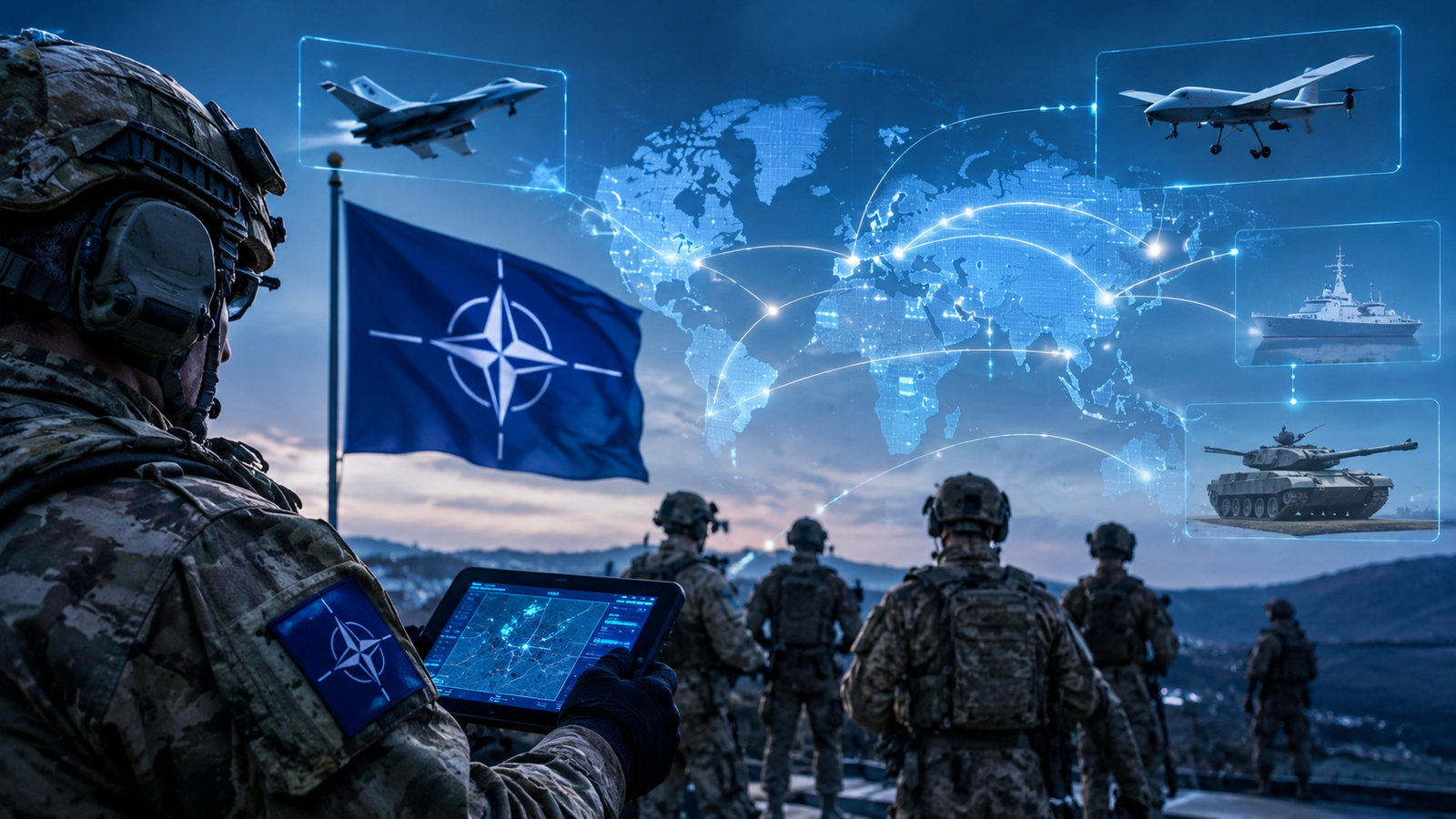

Artificial intelligence could help NATO allies overcome communication barriers between their weapons systems. The technology may also improve how military forces exchange battlefield information and coordinate operations.
French Admiral Pierre Vandier, NATO’s Supreme Allied Commander Transformation, highlighted AI’s potential on Wednesday. Speaking at NATO headquarters in Brussels, he described the technology as a major development for allied military cooperation.
AI Could Improve Communication Between Allied Forces
AI has already changed how military forces operate on the battlefield. However, its potential extends beyond combat applications to information processing and communication between different systems.
Vandier said artificial intelligence could strengthen interoperability among NATO members. This would help different allied combat systems exchange information despite their existing technical differences.
“For NATO, it’s extraordinary news because now we run AI interoperability,” he told reporters at NATO headquarters in Brussels.
The technology could make it easier for allied forces to share information across platforms. Consequently, military systems could work together more effectively during joint operations.
However, significant challenges remain. Vandier said NATO already possesses the necessary technology but lacks the ability to share classified information on a large scale.
“We already have the technology. What we lack is the ability to share classified data at scale,” he said.
Ukraine Demonstrates AI’s Growing Battlefield Role
AI is also becoming an important tool in battlefield operations. Vandier pointed to its use by Ukrainian forces to identify targets and monitor battlefield activity.
According to the admiral, these systems can detect movements without relying on human intelligence. He illustrated their capabilities by explaining how AI can distinguish between different objects and living beings.
“You can see, if a leaf moves, if it’s a rabbit, or if it’s a soldier.”
Meanwhile, artificial intelligence is also improving the capabilities of unmanned aerial systems. Drones equipped with AI can now navigate independently without requiring human remote piloting.
These developments highlight the growing importance of autonomous technology in modern warfare. Moreover, Vandier warned that countries developing AI capabilities faster could gain a decisive military advantage.
Classified Data and Commercial Cloud Security Remain Challenges
Despite its potential, AI integration raises serious questions about data security. The technology depends on online data services and partnerships with major cloud providers.
Companies such as Microsoft, Oracle and Google provide services that support AI operations. However, storing sensitive military information on commercial cloud platforms creates confidentiality concerns.
“Having the secret on commercial cloud is a big issue,” the admiral said.
Nevertheless, AI could help NATO allies manage these risks. Vandier explained that the technology could allow countries to share necessary information while concealing sensitive details.
This approach could preserve operational cooperation without exposing classified military data. Therefore, secure information-sharing systems remain essential to NATO’s wider AI ambitions.
NATO’s Push for Greater Military Interoperability
Vandier has overseen NATO’s military transformation and interoperability efforts since 2024. His remarks underline the alliance’s interest in using artificial intelligence to strengthen cooperation among its members.
Although the technology offers new opportunities, sharing classified information remains a major obstacle. NATO’s ability to address that challenge could shape how effectively allied forces integrate AI into future military operations.
For the latest updates, visit and follow The Truth International website (www.thetruthinternational.com) and subscribe to the YouTube Channel.

