
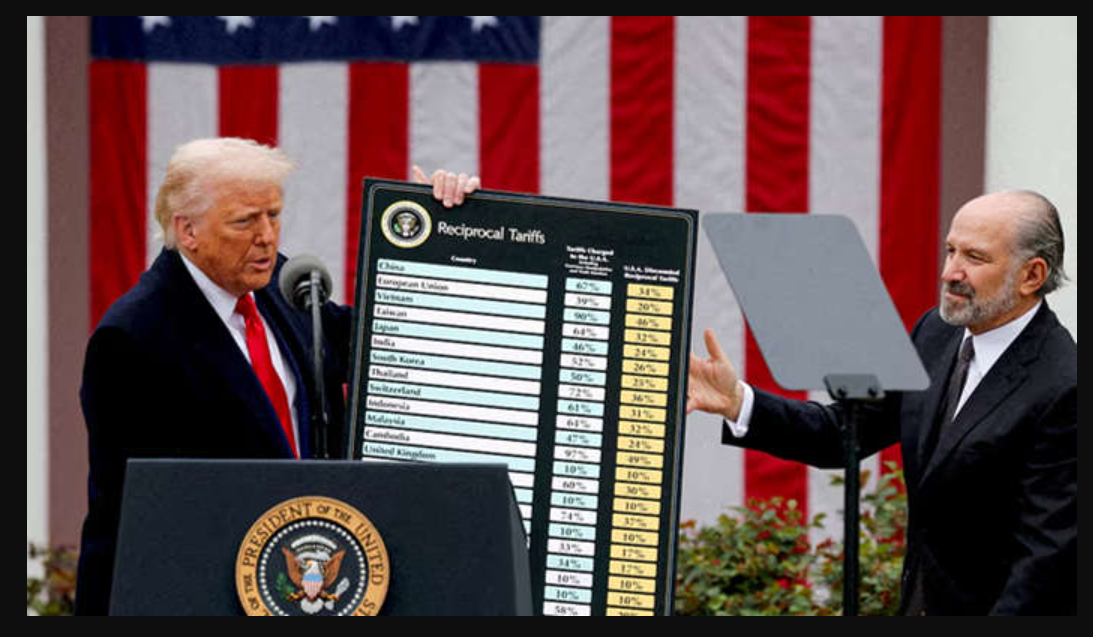

The United States has proposed fresh tariffs on 14 major trading partners, including China, the European Union and India. The move follows a months-long investigation into alleged excess manufacturing capacity and production.
The proposed duties could reach 20%, adding another layer of uncertainty to global trade relations. However, the measures must first undergo a public consultation process before taking effect.
A senior US official confirmed the proposals on Wednesday. The official said Washington believes certain economies are expanding production beyond actual market demand.
The latest announcement represents another effort by President Donald Trump to reshape America’s international trade relationships. It also raises concerns about possible price increases for American businesses and consumers.
Which Countries Could Face the New US Tariffs?
The proposed measures cover 14 economies, including several major US trading partners. These include China, the European Union, India, Bangladesh, Cambodia, Indonesia and Japan.
The list also includes South Korea, Malaysia, Singapore, Switzerland, Taiwan, Thailand and Vietnam.
According to the US Trade Representative’s office, the proposed tariff rates vary across these economies.
The proposed rates include:
- China: 20%
- Vietnam: 20%
- Cambodia: 18%
- Indonesia: 18%
- India: 17%
Meanwhile, partners such as the European Union, South Korea and Taiwan could face tariffs broadly capped at 15%. These economies previously reached trade agreements with the Trump administration.
The proposed rates reflect Washington’s consideration of existing trade arrangements. Nevertheless, the final duties could depend on the outcome of the consultation process.
Why Is Trump Targeting Excess Manufacturing Capacity?
The Trump administration argues that some economies maintain manufacturing capacity beyond genuine market demand. According to a senior US official, these countries “are promoting production and capacity divorced from the realities of demand and market principles.”
Washington believes excessive production can distort international markets and undermine American industries.
The investigation covers several sectors, including batteries, cement, chemicals and processed food. US officials argue that persistent oversupply can push prices down and weaken domestic manufacturing.
The investigation began in March under the US Trade Representative’s office. It examined whether foreign governments adopted practices considered “unreasonable or discriminatory” and whether those practices affected American commerce.
Trade lawyer Ryan Majerus described the investigation as potentially one of the administration’s “most important” actions. He highlighted concerns about factories continuing production despite insufficient market demand.
He warned that such conditions could create oversupply, depress prices and contribute to a “hollowing out” of US manufacturing.
Brazil Faces Separate US Tariff Proposals
Alongside the measures targeting 14 economies, Washington announced another tariff proposal involving Brazil.
The US Trade Representative also proposed additional duties on Brazilian goods, including aircraft. The move follows allegations that Brazil has failed to address American trade concerns.
However, this proposal forms a separate part of Washington’s broader trade actions.
Could the New Tariffs Increase Inflation in the United States?
The proposed duties could create additional financial pressure for American businesses. Companies already facing higher import costs from previous tariffs may struggle with further expenses.
Consequently, businesses could transfer some of these additional costs to consumers through higher prices.
US inflation remains another important concern surrounding the announcement. Consumer inflation reached 3.7% year-on-year in September, approaching a three-year high.
Several factors have contributed to rising prices, including the effects of Trump’s war on Iran, tariffs and the massive artificial intelligence investment boom.
The Federal Reserve aims to maintain long-term inflation at 2%. Its policymakers have indicated that most price effects from previous tariff measures have already passed through the economy.
However, additional duties could create fresh inflationary pressure and complicate efforts to control consumer prices.
Affordability also remains a politically sensitive issue in the United States. Rising living costs featured prominently in recent midterm elections, where Democrats won control of both congressional chambers from Republicans.
When Could the Proposed US Tariffs Take Effect?
The proposed duties will not take effect immediately. The measures must first pass through a period of public consultation.
A senior US official indicated that implementation could begin in January at the earliest.
The proposals also come after a major legal setback for Trump’s earlier tariff programme. In February, the US Supreme Court struck down his previous global tariffs.
The court ruled that the president lacked authority to impose those duties under the law cited by the White House.
However, sector-specific tariffs targeting products such as automobiles and steel remain in place.
The latest proposals will not stack on top of those existing sector-specific duties, according to the US official.
Similarly, the administration previously imposed another round of tariffs on 60 economies in July. That action targeted countries accused of insufficient efforts against forced labour.
Where both the forced labour and excess production measures apply, the higher tariff rate will prevail. The two duties will not accumulate.
China and Other Trading Partners Could Challenge the Measures
The latest announcement could trigger opposition from China and other affected economies. Beijing has repeatedly rejected criticism of its reliance on exports to support economic growth.
The proposed duties also risk complicating diplomatic and commercial relationships with major US partners.
Nevertheless, Washington expects the announcement to encourage further trade negotiations. A senior official said the administration does not anticipate major disagreements during the upcoming G20 summit.
“We don’t expect this to create tension or rancour” at the G20 summit, the official said. “We actually expect that we may be signing more agreements at the G20 in the wake of these announcements.”
President Trump is scheduled to host G20 leaders in Miami in December. The administration hopes the latest developments could create opportunities for additional trade agreements.
What Do the Proposed Tariffs Mean for Global Trade?
The proposed tariffs signal another significant shift in America’s approach to international commerce. They could affect major trading partners while increasing uncertainty for businesses operating across global supply chains.
China, India, the European Union and several Asian economies now face potential changes in their trading conditions. Meanwhile, American companies and consumers could experience additional costs if import prices rise.
However, the proposals remain subject to public consultation and have not yet become final measures. Their eventual impact will depend on the final tariff rates and responses from affected economies.
For now, the announcement adds another major development to an already complicated global trade environment.
For the latest updates, visit and follow The Truth International website (www.thetruthinternational.com) and subscribe to the YouTube Channel.

