
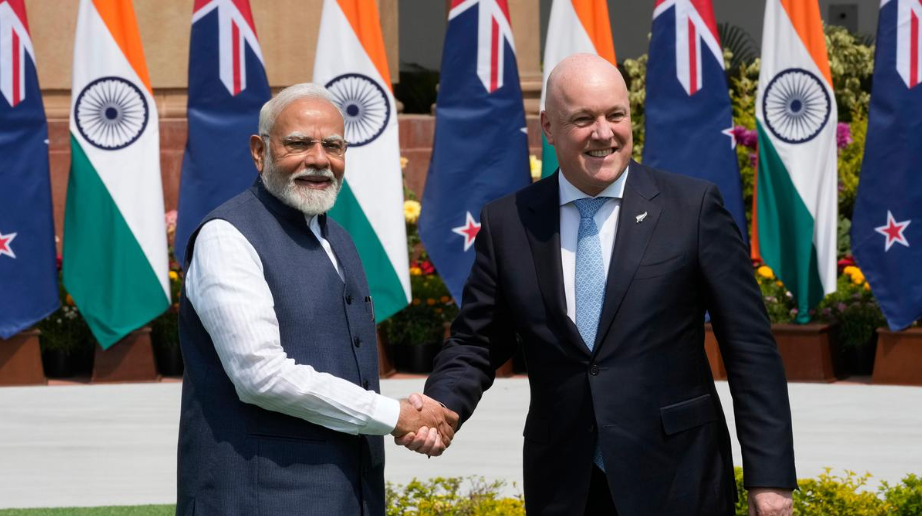

Indian Prime Minister Narendra Modi arrived in New Zealand on Friday to strengthen bilateral ties. His visit follows the signing of a free trade agreement that has generated political debate and public criticism. Nevertheless, both governments continue promoting the deal’s economic benefits.
Trade Deal Faces Political Opposition
Prime Minister Christopher Luxon has described the agreement as a major opportunity for exports, investment, and job creation. The deal, signed in April, is widely expected to receive parliamentary approval.
However, some members of the governing coalition have criticised provisions related to migration and visas. New Zealand First minister Shane Jones opposed aspects of the agreement during a radio interview. Consequently, an Indian community leader accused him of making racist remarks.
Meanwhile, evangelical preacher Brian Tamaki also sparked outrage with inflammatory comments targeting religious communities. His remarks were strongly condemned by New Zealand’s Race Relations Commissioner.
Modi Highlights Bilateral Partnership
Modi’s visit includes discussions on trade, tourism, and sports cooperation. He is also scheduled to attend an official ceremony at Government House and a business event in Auckland.
In addition, the Indian prime minister will address nearly 10,000 members of the Indian diaspora at Auckland’s Spark Arena. The visit marks the first trip by an Indian leader to New Zealand in four decades.
Some academics and community leaders have expressed concern about rising anti-migrant rhetoric. They argue South Asians have increasingly faced racial discrimination in recent months.
Despite the controversy, Luxon has welcomed Modi’s visit and reaffirmed New Zealand’s commitment to stronger ties with India. He said the partnership would promote greater prosperity, security, and opportunities for people in both countries.

