
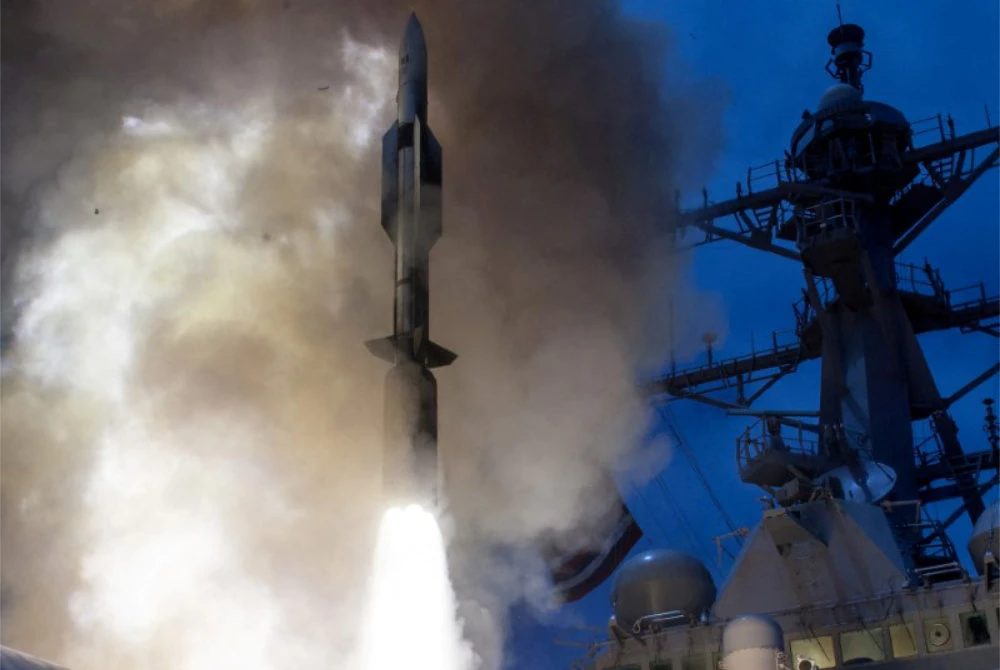

Tensions in the Middle East have intensified after Yemen’s Houthi rebels launched ballistic missiles toward Saudi Arabia’s capital, Riyadh, on Saturday, November 21, 2026. The attack followed a series of Saudi-led coalition airstrikes targeting Houthi positions in Yemen.
Saudi authorities confirmed that air defence systems intercepted and destroyed three ballistic missiles heading toward Riyadh. The incident triggered emergency warnings across the capital and raised fresh concerns about regional security.
Residents reported hearing two explosions shortly after authorities issued an alert about an incoming aerial threat. The warning was later lifted after Saudi defence systems responded to the attack.
The Houthi movement claimed responsibility for launching attacks against several targets in Saudi Arabia. The group described the operation as retaliation for recent coalition strikes on Yemen’s Red Sea port of Hodeidah and other military locations.
The latest missile attack came after the Saudi-led coalition announced a major military operation on Friday. The coalition said it targeted facilities allegedly used for weapons smuggling and the transportation of ballistic missiles through Hodeidah port.
Coalition spokesperson Turki al-Malki stated that the operation aimed to weaken Houthi military capabilities and disrupt the supply of weapons.
The strikes also targeted locations in Yemen’s capital, Sanaa, and the governorates of Saada and Taiz. According to coalition officials, the targeted sites included missile facilities, drone infrastructure and a military supply depot.
The Houthis strongly condemned the attacks and threatened further retaliation against Saudi Arabia.
The group warned that Jeddah and other ports along the Saudi Red Sea coast could face attacks if military operations against Hodeidah continued.
Houthi officials also warned international airlines about possible threats to Saudi airspace. The group declared that certain areas could become targets during its military operations.
These threats have increased concerns about aviation safety, commercial shipping and regional trade.
The escalation follows another major attack earlier in the week.
On Thursday, November 19, a Houthi missile strike damaged a skyscraper in Riyadh’s King Abdullah Financial District.
The building houses offices associated with Saudi Arabia’s Public Investment Fund, the country’s sovereign wealth fund.
Witnesses reported damage to parts of the tower, which is the tallest skyscraper in Riyadh.
The incident raised concerns about the vulnerability of important financial and commercial infrastructure to missile attacks.
The latest attack on Saturday marked the second reported missile assault targeting the Saudi capital within a few days.
Meanwhile, fighting has intensified along Saudi Arabia’s southern border with Yemen.
The Saudi-led coalition reported intercepting two additional ballistic missiles over the Jizan region. Officials said debris from the interception fell in the Al-Shuqaiq area.
The Houthis claimed that they had successfully targeted the Al-Shuqaiq power station and Jizan port.
Their military spokesperson alleged that the attacks caused extensive damage to the facilities.
However, the extent of the reported damage has not been independently verified.
The group also released images showing damage to a power station in Yemen’s coastal city of Mocha following coalition airstrikes.
Both sides have reported casualties during the latest exchange of attacks.
Houthi officials claimed that coalition strikes killed 41 people within 24 hours.
Yemen’s Saudi-backed forces separately claimed that their operations had killed or wounded 193 Houthi fighters.
These casualty figures have not been independently verified, and the conflicting claims underline the difficulty of establishing the full human cost of the fighting.
The renewed violence follows the collapse of a four-year truce in Yemen’s civil war in July 2026.
Since then, fighting between the Houthis and forces aligned with Yemen’s internationally recognized government has intensified.
The Houthis have expanded their military operations and advanced toward Aden, the temporary capital of Yemen’s internationally recognized government.
The conflict has also spread beyond Yemen’s borders, with missile and drone attacks targeting Saudi cities, airports, energy facilities and other strategic locations.
Saudi Arabia has supported Yemen’s internationally recognized government against the Iran-aligned Houthis for more than a decade.
The Saudi-led coalition first intervened in Yemen in 2015 after the Houthis took control of Sanaa.
The conflict has caused widespread destruction, displacement and humanitarian suffering.
The latest escalation has raised fears that renewed military operations could worsen conditions for civilians already affected by years of instability.
The United Nations has expressed concern about the continuing attacks and their potential consequences for regional security.
Shipping routes through the Red Sea are also facing increased uncertainty.
Hodeidah is an important port for Yemen, while nearby maritime routes connect major international trading markets.
Any prolonged disruption could affect commercial shipping, humanitarian supplies and transport costs.
The Houthis have also warned companies using Jeddah port about the possibility of further attacks.
Such warnings could create additional pressure on shipping operators and international businesses working in the region.
For Saudi Arabia, the latest missile attacks present a growing security challenge.
The kingdom must protect major cities, industrial facilities, airports and energy infrastructure while responding to threats from across its southern border.
The repeated attacks have also raised questions about whether intensified military operations can stop further missile launches or whether they could lead to additional retaliation.
Although Saudi air defence systems intercepted the three missiles targeting Riyadh on Saturday, the broader conflict remains unresolved.
The Houthis have threatened further operations, while the Saudi-led coalition continues targeting military facilities it says are connected to missile and drone attacks.

