

Historic ruling renews focus on thousands of unresolved disappearance cases in Indian-administered Kashmir
SRINAGAR: A court in Indian-administered Kashmir has declared a man dead nearly 29 years after he disappeared while allegedly in military custody, marking a rare judicial acknowledgment in one of the region’s long-running enforced disappearance cases.
The ruling concerns Abdul Rashid Wani, a timber trader who vanished in July 1997 after reportedly being detained in Srinagar. According to the court, a police investigation concluded that an army officer took Wani into custody, where he allegedly died before his body was disposed of. The judgment ordered authorities to issue a death certificate, although it did not identify the location of his remains.
For Wani’s family, the decision ends decades of legal battles and uncertainty. His son, Junaid Rashid, said the ruling officially confirmed what the family had long believed after years of unsuccessful efforts to locate him.
Families continue search for answers
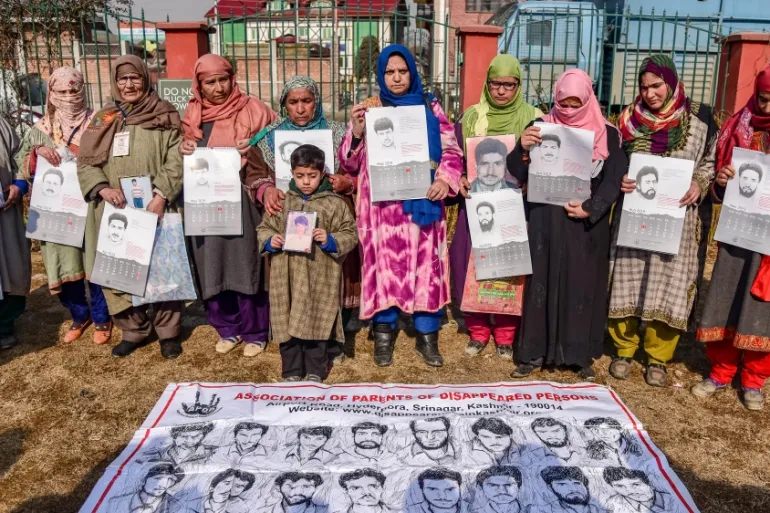
Human rights organisations estimate that thousands of people disappeared during the armed conflict that intensified in Kashmir in 1989. Advocacy groups, including the Association of Parents of Disappeared Persons (APDP), estimate that as many as 8,000 individuals remain missing, although authorities dispute some of those figures.
Many families have spent decades pursuing legal action, searching for missing relatives and seeking official recognition of their cases. Rights groups have also documented unmarked graves across parts of the region and repeatedly called for comprehensive investigations and DNA testing.
Conflict leaves lasting humanitarian impact
Kashmir has remained divided between India and Pakistan since 1947, with both countries claiming the territory in full. The region has witnessed decades of conflict, resulting in significant civilian and security force casualties.
Human rights advocates argue that unresolved disappearance cases continue to affect thousands of families, many of whom still seek information about the fate of missing relatives. While the recent court ruling represents a significant legal milestone, campaigners maintain that broader accountability and transparent investigations remain necessary to address the legacy of the conflict.
The case has renewed calls for authorities to examine other pending disappearance petitions and provide long-awaited answers to families who continue searching for truth and closure.

