
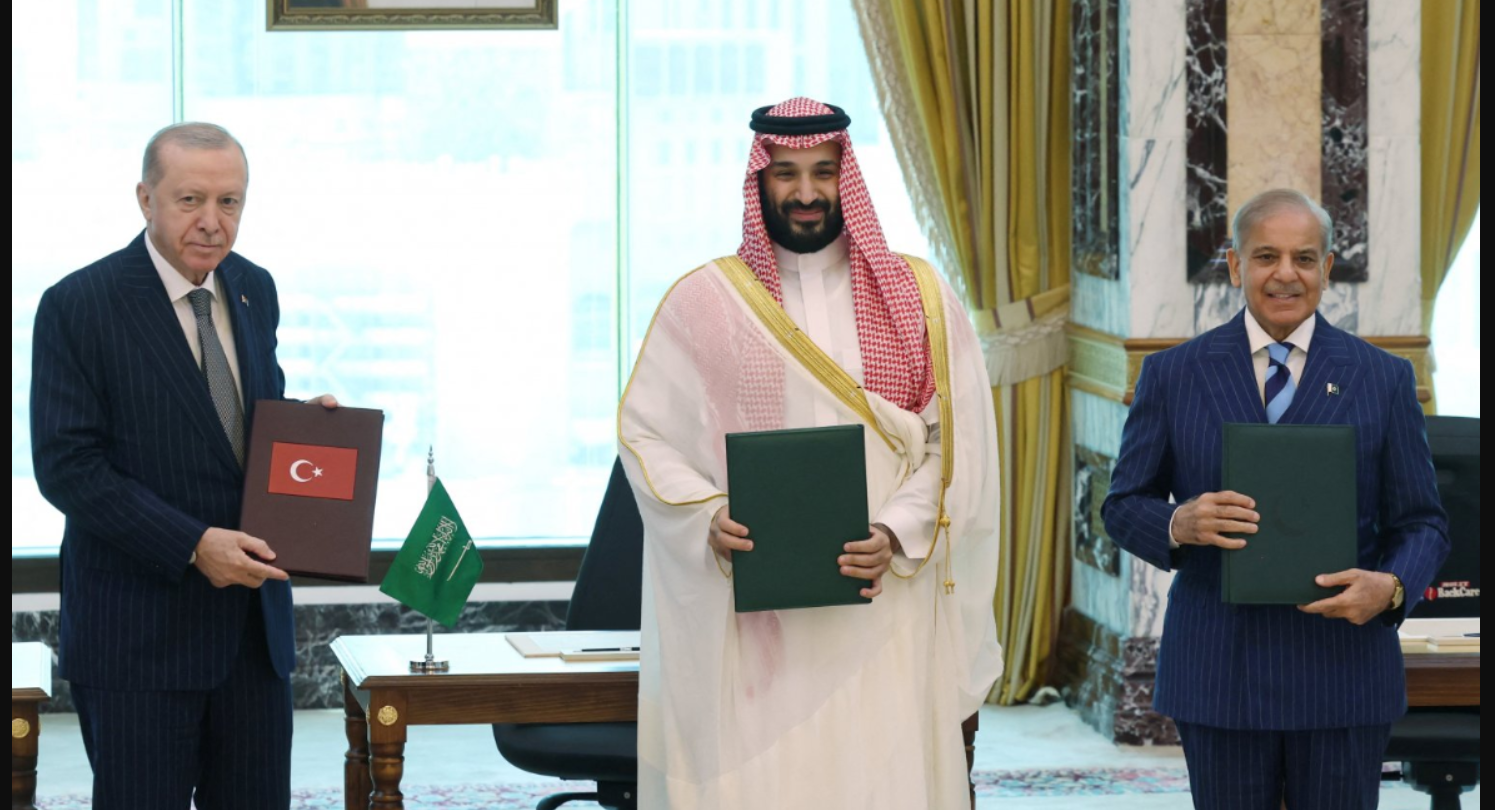

A new mutual defence pact between Saudi Arabia, Turkey and Pakistan could signal a major shift in regional security.
Former US ambassador Christopher Hill described the agreement as “one of the more important developments of this war”.
Hill said the pact could also reflect growing doubts about US security guarantees across the region. The agreement brings together three countries that maintain alliances with Washington.
According to Hill, the development suggests that regional powers may increasingly seek security arrangements of their own.
Saudi Arabia, Turkey and Pakistan Sign Defence Pact
The mutual defence pact brings Saudi Arabia, Turkey and Pakistan together under a shared security arrangement.
Hill said the agreement carries particular significance because all three signatories are US allies.
He argued that the decision reflects concerns about the reliability of American security commitments. Therefore, the pact could indicate a growing push toward stronger regional security cooperation.
The agreement also highlights the changing calculations of countries that have traditionally maintained close relations with the United States.
Former US Ambassador Warns of Regional Shift
Hill, a former assistant secretary of state and five-time US ambassador, said the pact reflects concerns among the three countries.
“They all believe that the US is just not going to be there for them and it’s time to step up some regional efforts,” said Hill.
His assessment suggests that Saudi Arabia, Turkey and Pakistan may be seeking greater regional cooperation. At the same time, the agreement could reflect broader uncertainty about US involvement.
Hill most recently served as Washington’s envoy to Serbia. His comments therefore place the new defence pact within a wider discussion about regional security.
Why the Defence Pact Matters
The agreement is significant because it involves three countries with established relationships with Washington. Yet, they have now chosen to strengthen their mutual defence ties.
Hill said the pact sheds light on the “degree to which the rest of the world is getting worried about how the US manages its interests and its issues”.
His remarks point to concerns extending beyond the three countries involved. The agreement could therefore be viewed as part of a broader debate over international security arrangements.
For Saudi Arabia, Turkey and Pakistan, the pact provides a framework for closer defence cooperation. Meanwhile, its timing has drawn attention to changing perceptions about regional security.
‘You Do Not See Any Fingerprints From the US’
Hill also highlighted the absence of an apparent US role in the agreement.
“You do not see any fingerprints from the US on this,” Hill said.
The comment underlines his argument that regional powers are increasingly considering security arrangements without relying solely on Washington.
The pact therefore carries significance beyond its three signatories. It also raises questions about how traditional alliances could evolve as countries reassess their security needs.
A New Chapter in Regional Security?
The Saudi Arabia-Turkey-Pakistan defence pact comes at a time of heightened concern over regional security. Its significance has been amplified by the fact that all three countries are US allies.
Hill believes the agreement reflects a loss of confidence in US security guarantees. He also sees it as evidence of growing efforts to develop regional solutions.
However, the pact’s broader impact will depend on how the three countries implement their mutual defence commitments. For now, its signing represents a notable development in regional security cooperation.
It also highlights a growing question for Washington and its allies. How much will regional powers rely on established US security guarantees in the future?
For Saudi Arabia, Turkey and Pakistan, the agreement signals a willingness to strengthen their own regional defence efforts. Consequently, the pact could become an important marker of changing security calculations.

