

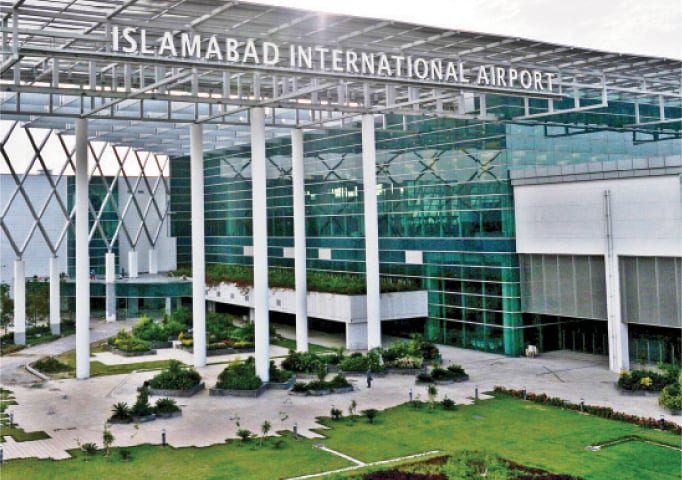

ISLAMABAD: In a significant development aimed at improving operational efficiency and attracting foreign investment, the federal government has decided to hand over the management of Islamabad International Airport to the United Arab Emirates (UAE). This landmark move is part of Pakistan’s broader strategy to involve international partners in managing key state-owned enterprises and enhancing infrastructure.
The decision was announced on Thursday during a meeting of the Cabinet Committee on Inter-Governmental Commercial Transactions (CCoIGCT), chaired by Deputy Prime Minister Ishaq Dar. According to official reports, the airport will be transferred under a government-to-government (G2G) framework agreement.
To streamline the process, a high-level negotiation committee has been formed. The committee, led by the prime minister’s adviser on privatisation, will engage with the UAE authorities to finalise terms of the agreement. The defence, finance, law and privatisation ministries will also provide input to ensure smooth implementation and compliance with national policies.
Islamabad International Airport, inaugurated in 2018, was designed as a modern aviation hub for the capital. However, the facility has faced persistent operational and financial difficulties, raising concerns over service standards and long-term sustainability. Outsourcing airport operations to the UAE is expected to bring in global expertise, improved customer services, and stronger investor confidence.
This step aligns with the government’s economic revival strategy, which includes the outsourcing and privatisation of major state assets to reduce losses and attract foreign capital. Officials emphasize that collaboration with international operators will not only enhance efficiency but also contribute to Pakistan’s broader efforts to modernize its aviation sector.
The meeting was attended by key government representatives, including the petroleum minister, Special Assistant to the Prime Minister Tariq Bajwa, federal secretaries, and senior officials from multiple ministries. Their participation highlights the importance of this decision in Pakistan’s economic roadmap.
