
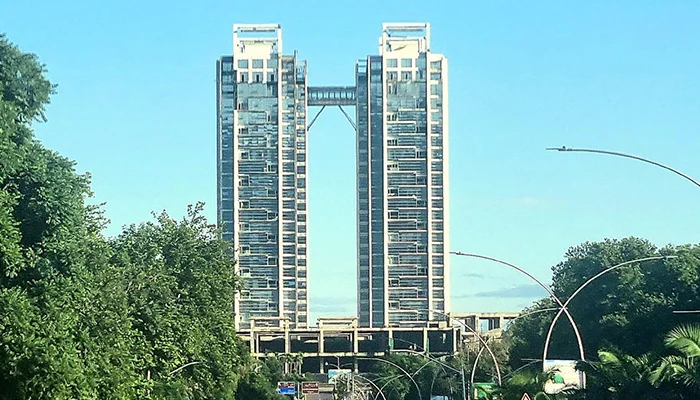

Court Upholds Lease Cancellation of High-Value Islamabad Project
The Islamabad High Court has issued a detailed and decisive ruling in the One Constitution Avenue case. The court upheld the cancellation of the lease for the multi-billion-rupee development. This decision has major implications for investors and apartment buyers.
Chief Justice Sardar Muhammad Sarfraz Dogar delivered the judgment. He dismissed multiple petitions filed by the developer M/s BNP (Pvt) Limited and other stakeholders. These petitions had challenged the lease termination carried out by the Capital Development Authority.
The court ruled that the authority acted within the law. It stated that the decision aligned with the legal framework previously established by the Supreme Court of Pakistan. The ruling confirmed that compliance with earlier judicial directives was mandatory.
The dispute originated from a 2005 lease agreement. The project was initially planned as a five-star hotel. However, the developer later converted it into a luxury residential and commercial complex known as One Constitution Avenue.
Developer Default and Legal Non-Compliance Highlighted
The court closely examined the conduct of the developer. It found that M/s BNP failed to meet its financial obligations. The developer did not make timely instalment payments as required under the revised agreement.
The Supreme Court of Pakistan had earlier restored the lease in 2019. This restoration came with strict financial conditions. The developer was required to pay Rs17.5 billion over eight years through structured instalments. Bank guarantees were also mandatory.
The court noted repeated delays and non-compliance. It stated that the developer failed to provide acceptable bank guarantees. It also failed to adhere to agreed timelines.
The developer argued that delays were caused by the Capital Development Authority. However, the court rejected this claim. It ruled that administrative delays do not excuse failure to meet primary obligations.
The judgment emphasised that contractual responsibilities must be fulfilled. The doctrine of reciprocal obligations could not be used as a defence in this case. The court described the developer’s actions as a material default.
It also confirmed that due process was followed. The authority issued notices before terminating the lease. The developer was given time to correct its failures but did not comply.
Buyers Left Without Ownership Rights but Legal Options Remain
The ruling has serious consequences for apartment buyers. The court clearly stated that buyers do not hold ownership rights. Their claims depend entirely on the validity of the developer’s lease.
Since the lease has been lawfully terminated, no independent ownership can exist. The court noted that buyers entered into agreements at their own risk. Therefore, they cannot claim protection against the authority.
However, the judgment did provide a path forward. Buyers can pursue legal action against the developer. They may seek recovery of their investments through appropriate legal channels.
The case also involves broader public law considerations. The land in question falls under public authority control. The court stressed that such matters must be judged based on legality and fairness.
Recent developments have intensified the situation. Reports emerged of eviction notices being issued to residents. Social media showed a heavy police presence at the site. Some claims suggested forced entry actions, though these remain contested.
Several prominent individuals reportedly own apartments in the building. These include Imran Khan, Aitzaz Ahsan, Shandana Gulzar, Burjees Tahir, and Nasirul Mulk.
In response to the situation, Shehbaz Sharif formed a high-level committee. The government also temporarily halted further action on the ground.
The final verdict reinforces the authority’s position. It confirms that legal compliance is essential in large-scale property developments. The case is expected to influence future real estate disputes across Pakistan.

