
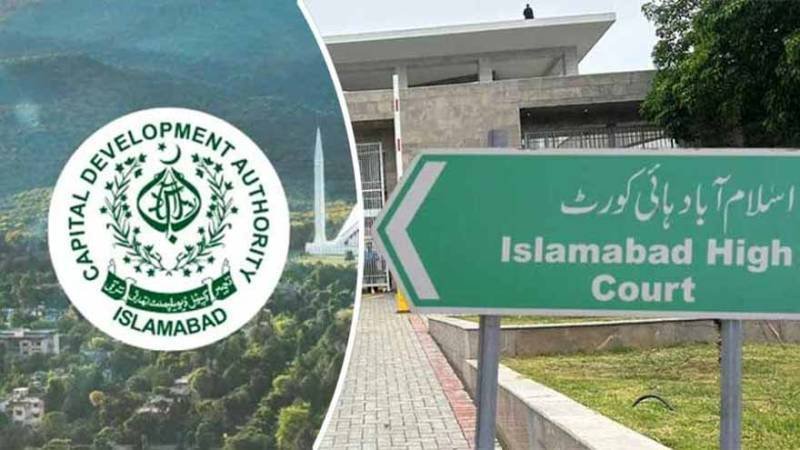

ISLAMABAD — The Islamabad High Court (IHC) has issued a major ruling regarding local property rights. On Thursday, the court officially declared an administrative ban on land transactions unlawful. This long-standing ban had frozen the sale, registration, and transfer of land in several sectors.
As a result of this decision, Justice Muhammad Asif presided over the legal case. He ruled that these sweeping restrictions lacked proper legal authority because the capital administration had implemented the entire freeze without a valid official notification. Consequently, the high court ordered municipal authorities to take immediate action. Specifically, they must resume standard property registration and transfer procedures for local citizens right away.
The Legal Petition and Court Findings
The detailed written judgment allowed a legal petition filed by Fazal Abbas, who is a permanent resident of the federal capital. In this regard, the court held that the widespread property freezes had no legal standing. Indeed, these harsh restrictions had heavily impacted landowners in sectors like Shah Allah Ditta, Sarai Kharbuza, and Sangjani.
Furthermore, during the formal hearings, the court discovered a major procedural flaw. The restrictions were based entirely on a temporary letter from the Capital Development Authority (CDA). In addition to this, the Deputy Commissioner had only issued verbal instructions to local revenue officials.
Therefore, the bench observed that these actions did not constitute a formal statutory decree. Consequently, state institutions cannot strip citizens of their fundamental property rights. In other words, using the pretext of fighting illegal housing schemes is not a valid excuse to bypass the law.
Misinterpretation of Judicial Orders
Moreover, the IHC clarified that the district administration made a significant error. Officials had misinterpreted a previous judicial order in order to expand their own regulatory scope. In fact, the prior court ruling only aimed to halt construction within unapproved housing societies. It never authorized a blanket freeze on private real estate transactions.
For this reason, Justice Asif emphasized that these district-wide restrictions were highly unfair. Naturally, penalizing innocent residents instead of targeting actual violators constitutes discriminatory treatment.
To illustrate this, the judgment highlighted the severe financial hardship faced by the petitioner. The arbitrary ban left Abbas completely unable to sell his private land, even though he desperately needed those funds to pay for his mother’s urgent kidney treatment. Accordingly, the court described this specific situation as both unjust and disproportionate.
Executive Boundaries and Master Plan Enforcement
Ultimately, the high court reiterated a key constitutional principle. Clearly, executive authorities are strictly bound to implement judicial orders exactly as they are issued. Hence, officials cannot modify or expand court rulings through administrative directives. For instance, neither the CDA Ordinance nor the Islamabad Zoning Regulations empowers the deputy commissioner to freeze private property.
However, the judgment clarified that this ruling does not protect illegal developers. On the contrary, the CDA still retains full powers to enforce Islamabad’s official master plan. Thus, the civic body can aggressively implement zoning regulations and demolish unlawful constructions. In conclusion, the court directed the civic body to continue its operations against unapproved developments strictly in accordance with due process.

