
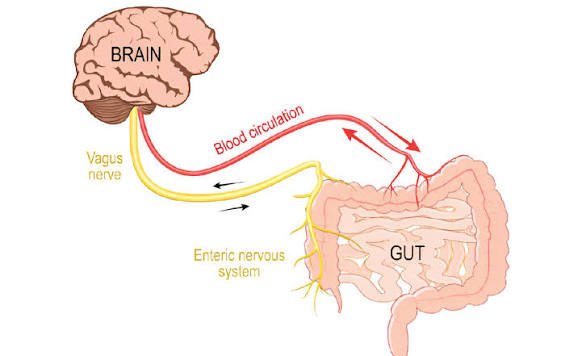

Gut and Brain Operate Through a Two-Way Communication Network
Expressions such as “trust your gut” and “butterflies in the stomach” may sound symbolic, but scientists say they reflect a real biological connection between the digestive system and the brain.
This connection is known as the gut-brain axis. It is a complex communication network linking the gastrointestinal tract, the brain, the nervous system, the immune system and the trillions of microorganisms living inside the intestines.
The science behind this relationship was explored during a live Science Friday discussion at the 2026 Aspen Ideas Festival in Colorado. Host Flora Lichtman spoke with neurogastroenterologists Emeran Mayer and Trisha Pasricha about how signals move between the brain and the digestive system.
Mayer is a distinguished research professor at the David Geffen School of Medicine at the University of California, Los Angeles. Pasricha is a physician-scientist at Beth Israel Deaconess Medical Center and an assistant professor at Harvard Medical School.
Scientists once viewed the brain as the main command centre controlling the rest of the body. Research now shows that communication between the gut and brain moves in both directions.
The brain can change digestion, intestinal movement, appetite and sensitivity to pain. At the same time, the gut can send signals that influence stress, mood, inflammation, immune activity and possibly some aspects of behaviour.
This means neither organ is always completely in control. Instead, the system operates as a continuous feedback loop in which the brain affects the gut and the gut responds with information of its own.
Vagus Nerve Acts as a Major Information Highway
One of the most important communication routes is the vagus nerve. It runs from the brainstem into the chest and abdomen and connects the brain with several internal organs, including large parts of the digestive tract.
The vagus nerve helps regulate digestion while carrying sensory information from the gut back to the brain. Signals involving nutrients, intestinal movement and inflammation can therefore influence activity within the central nervous system.
The digestive tract also contains the enteric nervous system, an extensive network of nerve cells located inside the walls of the gastrointestinal system. It controls many digestive processes without requiring constant instructions from the brain.
This has led to the gut sometimes being described as the body’s “second brain.” However, the enteric nervous system does not think or make decisions in the same way as the brain. Its main role is to manage digestion and communicate changing conditions inside the gastrointestinal tract.
The brain can also influence the gut through the autonomic nervous system and the body’s hormonal stress response. During periods of fear or anxiety, stress hormones can alter intestinal movement, appetite and sensitivity.
This helps explain why stress may cause nausea, abdominal discomfort, constipation or diarrhoea. It also explains why digestive symptoms can become worse during emotionally difficult periods.
The brain can additionally change the intestinal environment through the hypothalamic-pituitary-adrenal system, which controls the release of stress hormones such as cortisol. Cells inside the digestive tract contain receptors that respond to these hormonal signals.
Gut Microbes Produce Chemicals That Influence the Body
The gut microbiome is another major part of the connection. It consists of bacteria, viruses, fungi and other microorganisms living throughout the digestive tract.
These microbes help break down food, support immune function, produce vitamins and generate chemical compounds that interact with human cells.
Gut bacteria can produce metabolites such as short-chain fatty acids, tryptophan derivatives and modified bile acids. These substances may influence inflammation, the intestinal barrier, immune cells and nervous-system signalling.
Some microbes can also produce or stimulate chemicals associated with nervous-system activity, including serotonin, dopamine and gamma-aminobutyric acid.
However, chemicals produced inside the gut do not necessarily travel directly into the brain. Many perform local functions in digestion or communicate indirectly through the vagus nerve, immune system, hormones and bloodstream.
Scientists are therefore studying several connected pathways rather than searching for one single signal that controls the entire gut-brain relationship.
The intestinal barrier is also important. This layer helps prevent harmful substances and microorganisms from entering the bloodstream while allowing nutrients to be absorbed.
Changes in the microbiome or damage to the intestinal barrier may trigger immune responses and inflammation. Those immune signals can affect other parts of the body and may influence processes within the brain.
At the same time, the brain can alter the gut environment through stress signals, eating behaviour and changes in intestinal movement. The relationship is therefore circular rather than one-directional.
Connection May Help Explain IBS, Depression and Parkinson’s Disease
The gut-brain axis is especially relevant to conditions in which digestive and neurological symptoms appear together.
Irritable bowel syndrome is increasingly understood as a disorder involving communication between the digestive system and the brain. Patients may experience abdominal pain, bloating, diarrhoea or constipation even when standard medical tests do not reveal major structural damage.
Stress can worsen these symptoms, while repeated digestive discomfort can increase anxiety and emotional distress. Treatment may therefore involve dietary changes, medication and psychological therapies that target the brain’s response to intestinal signals.
Researchers are also examining possible links between the microbiome and mental-health conditions, including depression and anxiety. Studies have identified differences in gut microorganisms among some affected patients, but scientists have not established a simple cause-and-effect relationship.
It remains unclear whether microbiome changes contribute to mental-health conditions, result from those conditions or reflect other factors such as diet, medication, sleep and lifestyle.
Parkinson’s disease has also attracted growing attention because digestive problems, particularly constipation, can appear years before movement symptoms.
Researchers have detected microbiome differences in some people with Parkinson’s disease and are studying whether inflammation, microbial products or nerve pathways could influence disease development.
Similar research is examining possible connections with Alzheimer’s disease and other neurological conditions. However, much of the strongest mechanistic evidence still comes from laboratory and animal studies.
Scientists warn that findings from animals cannot automatically be applied to human patients. Establishing whether microbiome changes cause disease remains one of the field’s biggest challenges.
Diet and Probiotics Are Promising but Not Proven Cures
Growing interest in the gut-brain axis has created a large market for probiotics, supplements and diets claiming to improve mood, memory or brain health.
A varied diet containing fibre-rich vegetables, fruits, legumes and whole grains can support a diverse intestinal microbial community. Sleep, physical activity, stress and medication use can also influence the microbiome.
However, researchers have not identified one ideal microbiome that applies to every person. Microbial communities vary considerably according to age, geography, diet, environment, genetics and health history.
Probiotics may help with certain digestive conditions, but evidence does not currently support treating every neurological or psychiatric disorder with the same bacterial supplement.
Researchers are also investigating prebiotics, personalised diets, microbial metabolites and faecal microbiota transplantation. These approaches may eventually offer new treatments, but their clinical use for brain disorders remains experimental.
Experts say gut-focused interventions should not replace established treatment for depression, Parkinson’s disease, Alzheimer’s disease or other serious medical conditions.
The emerging science instead shows that the brain cannot be studied entirely separately from the rest of the body. Digestion, immunity, stress and microbial activity form an interconnected biological system that can influence health in multiple ways.
The gut may not independently control the brain, and the brain does not completely dominate the gut. Both continuously exchange signals, making the gut-brain axis one of the most complex and promising areas of modern medical research.

