
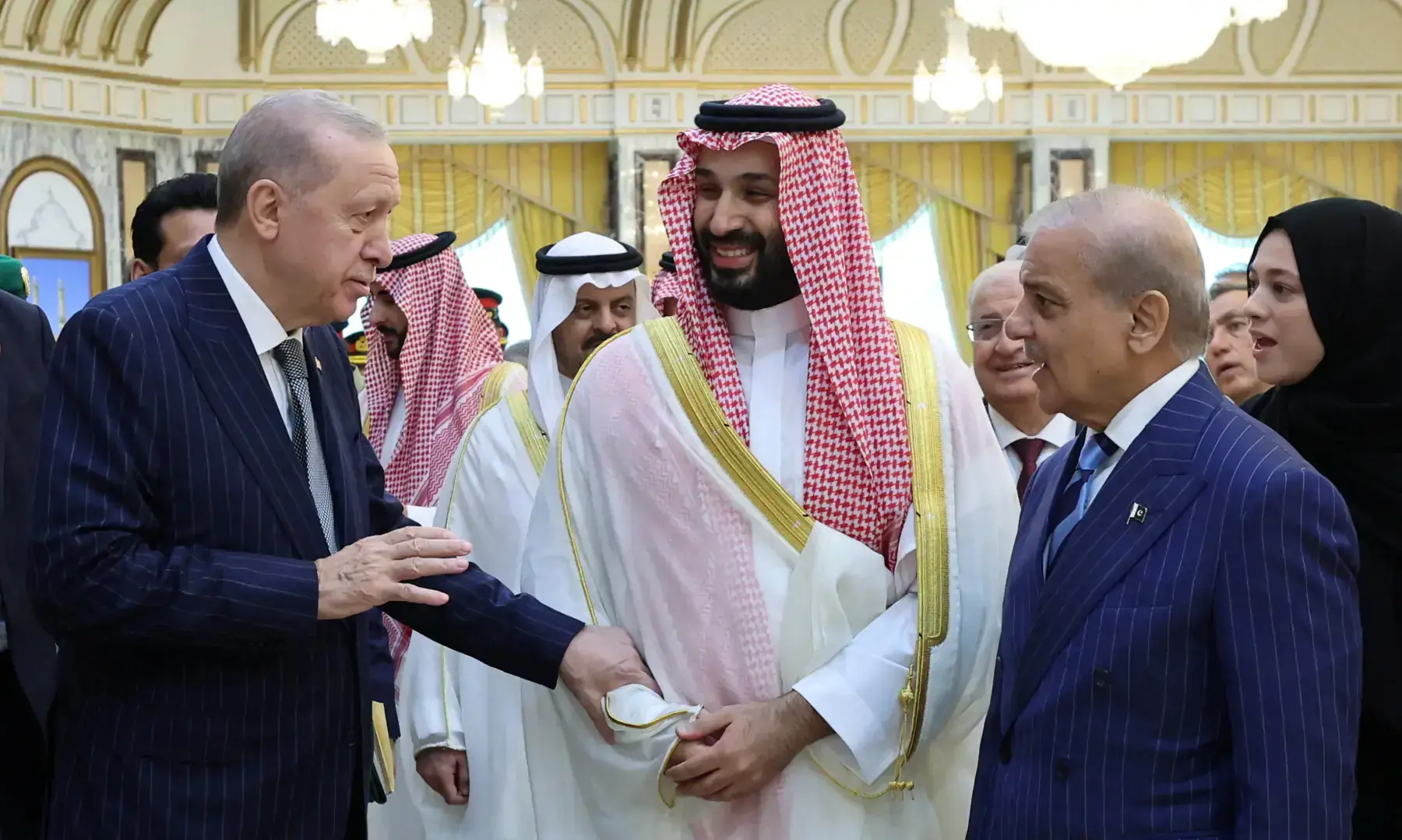

The Organisation of Islamic Cooperation has welcomed the Makkah Joint Defence Agreement between Pakistan, Saudi Arabia, and Turkiye. The OIC described the pact as an important strategic step.
The agreement aims to strengthen collective deterrence among the three countries. It also treats an attack against one member as an attack against all.
OIC Secretary General Hissein Brahim Taha expressed strong support for the agreement. He said the pact reflected shared commitments toward stronger regional and international cooperation.
Prime Minister Shehbaz Sharif signed the agreement alongside Saudi Crown Prince Mohammed bin Salman. Turkish President Recep Tayyip Erdogan also signed the pact during the Makkah summit.
Chief of Defence Forces Field Marshal Asim Munir attended the signing ceremony. Deputy Prime Minister Ishaq Dar and Defence Minister Khawaja Asif also participated.
Defence Pact Remains Open To Friendly Nations
Saudi Deputy Minister for Public Diplomacy Rayed Krimly said the agreement does not replace existing agreements. He said it would remain compatible with current bilateral and multilateral arrangements.
Earlier, President Erdogan said the agreement does not target any country. He also said friendly nations seeking peace could join the arrangement.
Egypt has also shown interest in joining the emerging defence alliance. However, officials have yet to announce any formal Egyptian participation.
The agreement could therefore expand defence cooperation among regional and friendly states. It also signals stronger strategic coordination between Pakistan, Saudi Arabia, and Turkiye.
PM Visits Madina Before Returning Home
Prime Minister Shehbaz Sharif visited Masjid-i-Nabvi in Madina on Saturday morning. He later departed for Pakistan from Madina airport.
Madina Governor Prince Salman bin Sultan Al Saud saw the prime minister off at the airport. The visit concluded Sharif’s participation in the Makkah summit and related engagements.
The new defence agreement has meanwhile drawn wider regional attention. Its implementation could shape future security cooperation among participating and interested countries.

