
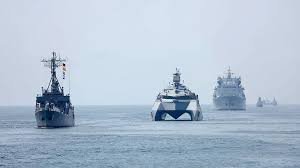

Iran has issued a strong warning to all vessels passing through the strategically vital Strait of Hormuz. The country’s naval forces have ordered ships to use only designated routes approved by Iranian authorities. Any deviation from these routes could result in what officials described as “decisive action.” This move signals a significant shift in how maritime traffic is being managed in one of the world’s most critical energy corridors.
The warning was issued by the naval wing of the Islamic Revolutionary Guard Corps, which plays a central role in securing Iran’s maritime boundaries. Officials emphasized that the designated corridor is the only safe path for ships navigating the strait. They also stated that any vessel attempting to use alternative routes would be considered unsafe and could face serious consequences.
Mandatory Permission and New Maritime Control Framework
Iranian officials have also introduced a new framework for maritime transit through the strait. Under this approach, ships may require authorization before entering the waterway. A senior official linked to the Revolutionary Guard stated that transit would only take place with Iran’s approval. This marks a notable escalation in regulatory control over the strait.
The Strait of Hormuz is one of the most important shipping routes in the world. A large portion of global oil supply passes through this narrow channel. Any restrictions or changes in navigation rules can have immediate global economic impacts. Iran’s decision to enforce designated routes reflects its intent to assert greater control over maritime activity in the region.
The announcement also comes amid ongoing tensions involving international naval forces and regional conflicts. Reports indicate that military activity and security concerns have increased in recent weeks. These developments have raised concerns among shipping companies and global energy markets about the safety of navigation through the strait.
Rising Tensions and Global Impact on Shipping
The warning from Iran comes at a time of heightened geopolitical tensions in the Gulf region. Recent incidents involving naval operations and reported strikes have increased uncertainty around the safety of shipping routes. In response, several countries have stepped up their naval presence to protect commercial vessels.
The situation has also affected global trade and energy markets. The Strait of Hormuz handles a significant share of the world’s oil shipments. Any disruption or perceived risk can lead to price fluctuations and delays in supply chains. Shipping companies are closely monitoring the situation and adjusting their routes based on safety advisories.
Iran’s firm stance indicates that it is prepared to enforce its rules strictly. By declaring a single approved corridor, the country is attempting to centralize control and reduce what it sees as unsafe navigation practices. However, this approach may further complicate an already tense situation, especially with foreign naval forces operating in the same waters.
As the situation evolves, the global community continues to watch closely. The Strait of Hormuz remains a critical artery for international trade. Any escalation or restriction could have far-reaching consequences for energy security and global stability.

