
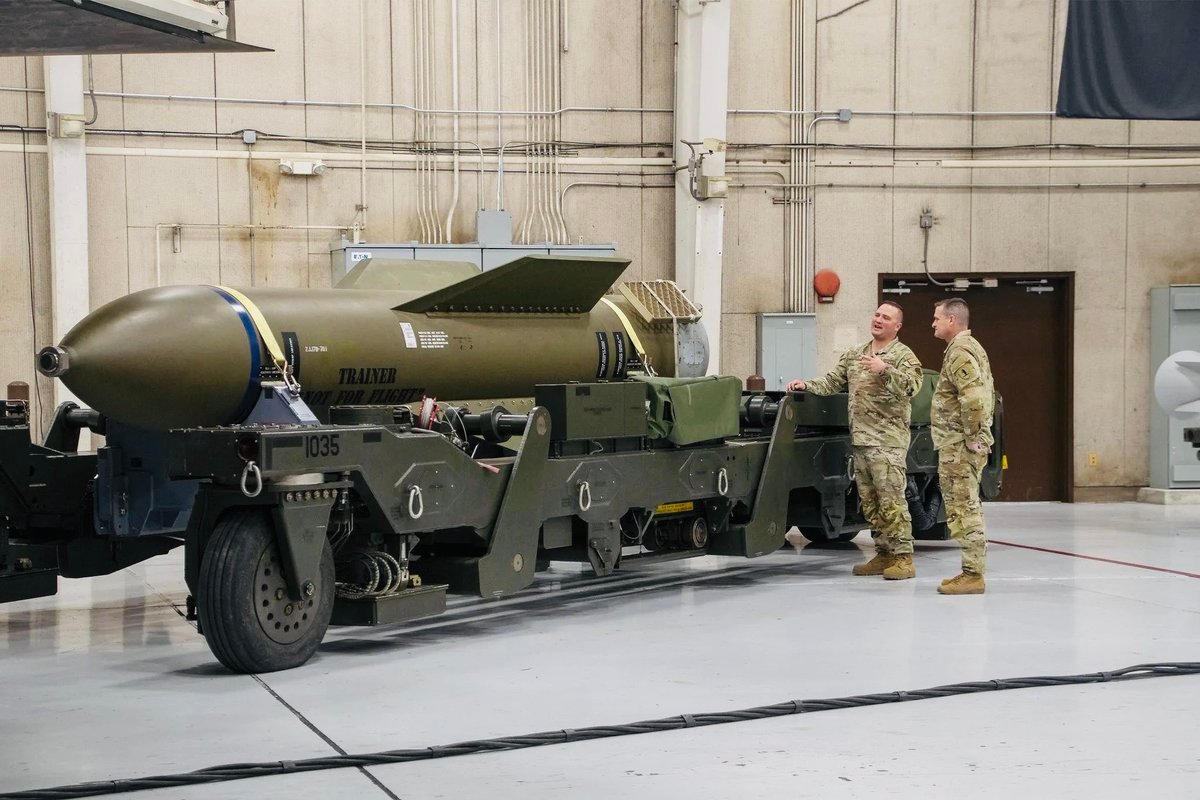

Iran is analyzing the GBU-57 bunker-buster bomb after reports suggest it has acquired intact examples of the weapon. While the bomb is normally delivered by the US B-2 bomber, analysts and commentators argue that its value may extend beyond direct battlefield use. Instead, attention has shifted toward how its technology could inform Iran’s defense development efforts.
Officials focus on technology extraction and defense insights
In recent assessments, observers say Iranian engineers are studying the bomb’s internal structure, materials, and guidance systems. Although Iran does not possess the B-2 bomber required for deployment, analysts argue that access to the weapon itself could still provide technical insights. Moreover, reverse-engineering efforts reportedly aim to examine its casing materials, penetration design, and precision guidance components.
Consequently, military researchers may attempt to apply this knowledge to strengthen domestic defensive infrastructure. By understanding how the bomb penetrates hardened targets, engineers could design deeper underground facilities and improved protective structures. In addition, electronic systems may be studied to develop countermeasures against precision-guided weapons.
Potential integration into missile development programs
Meanwhile, some analysts suggest that insights from the GBU-57 could influence Iran’s missile development programs. They argue that penetration and detonation mechanisms could be adapted for future ballistic missile warheads. As a result, engineers may attempt to create lighter, domestically deployable versions of similar technology.
Furthermore, experts note that studying advanced foreign weapons often contributes to broader technical learning. Even components that are not directly replicated can provide foundational knowledge for future weapons design. Therefore, the reverse-engineering process may have long-term implications for Iran’s defense industry.
Ultimately, analysts emphasize that the primary value lies in technical understanding rather than immediate battlefield use, shaping future military capabilities.

