
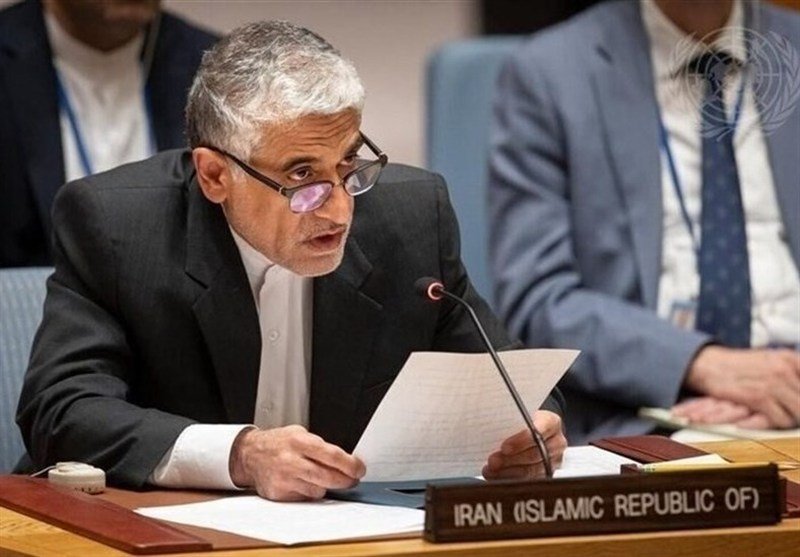

Tehran responds to UN letters with strong rebuttal
Iran’s ambassador to the United Nations, Saeed Iravani, has firmly rejected compensation claims raised by several Gulf and regional countries, asserting that they were complicit in acts of aggression against Iran. In a letter dated April 13 to UN Secretary-General António Guterres and UN Security Council President Jamal Fares Alrowaiei, Tehran presented its formal response.
The communication addressed claims submitted by Bahrain, Saudi Arabia, Qatar, the United Arab Emirates, and Jordan regarding their involvement in recent hostilities. However, Iran dismissed these demands and instead accused the countries of facilitating military operations carried out by the United States and Israel.
Allegations of complicity and legal violations
According to Iravani, Iran has provided documented evidence to the Security Council showing that these states allowed their territories to be used for attacks against Iran. Moreover, he claimed that in some cases, these countries directly participated in strikes targeting civilian sites, thereby violating international law.
He further argued that such actions constitute aggression under international legal standards and breach obligations outlined in the UN Charter. Consequently, Iran maintains that these states cannot invoke self-defense provisions, as it considers itself the victim of unlawful attacks.
Additionally, Tehran reiterated its opposition to UN Security Council Resolution 2817 (2026), describing it as unjust and disconnected from factual realities. The letter emphasized that Iran reserves its right to seek full reparations for both material and moral damages resulting from the alleged actions.
Overall, Iran urged the concerned states to cease what it termed wrongful conduct and called for accountability under international law.

