
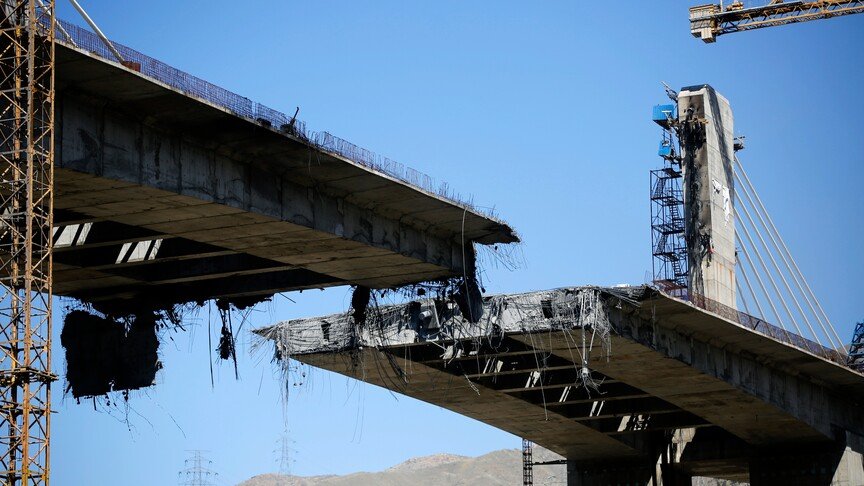

Iranian authorities have rapidly rebuilt the Aminabad railway bridge in Zanjan after it suffered significant damage during recent attacks attributed to the United States and Israel. Officials confirmed that repair crews completed the reconstruction in just four days, restoring a critical transport link in the region.
The bridge had sustained heavy structural damage, with approximately 35 meters of its deck destroyed and nearly 150 meters of rail lines rendered unusable. Consequently, rail connectivity in the area faced major disruption, affecting both passenger movement and freight operations. However, engineers and emergency teams mobilized immediately after the strikes, prioritizing swift restoration to minimize economic and logistical setbacks.
Meanwhile, officials highlighted the swiftness and coordination of repair efforts. Construction teams worked around the clock, deploying specialized equipment and resources to rebuild the damaged sections. As a result, authorities managed to restore rail traffic far sooner than initially expected. They emphasized that the rapid reconstruction demonstrates the resilience of Iran’s infrastructure systems despite ongoing regional tensions.
In addition, analysts note that maintaining railway connectivity remains crucial for domestic supply chains and strategic mobility. Therefore, the swift reopening of the bridge is likely to ease pressure on transportation networks and support economic continuity. Although tensions persist following the strikes, officials signaled readiness to address further infrastructure challenges if required.
The incident underscores the vulnerability of key infrastructure during conflict. Nevertheless, Iran’s quick response reflects its capacity to recover essential services under pressure, ensuring minimal long-term disruption to its rail network.

