
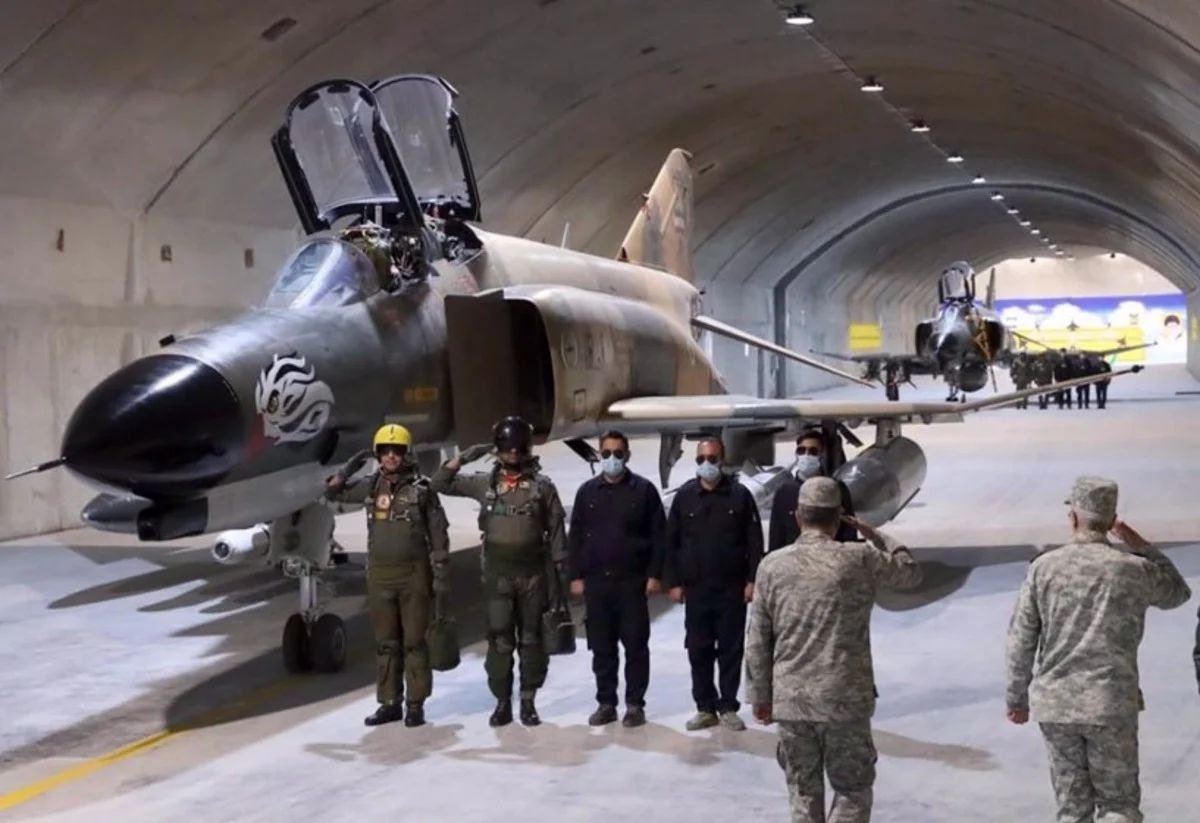

Underground deployment limits damage
During the 2026 conflict, Iran strategically moved a large portion of its combat aircraft into underground bases, significantly reducing potential losses. Defence analysts and open-source intelligence observers reported that approximately 38 aircraft were destroyed across the entire fleet.
By relocating assets to fortified underground facilities, Iranian forces aimed to protect key aviation resources from aerial strikes. Consequently, this approach appears to have limited the scale of damage during the conflict. Experts noted that such tactics reflect a broader emphasis on survivability and strategic depth within Iran’s military planning.
Moreover, the use of concealed infrastructure allowed Iran to maintain operational readiness despite sustained pressure. While losses did occur, the preservation of a majority of the fleet suggests a calculated defensive posture.
Post-ceasefire activity signals recovery
Following the ceasefire, observers detected renewed air activity involving several aircraft types, including the F-4 Phantom II, MiG-29, and Mi-28. These sightings in Iranian airspace indicated that a substantial portion of the fleet remained intact.
Analysts estimate that nearly two-thirds of Iran’s combat aircraft survived the conflict, enabling the country to retain a functional air capability. Furthermore, the reappearance of these platforms suggests a gradual return to routine operations after hostilities subsided.
In addition, military experts believe that Iran may continue to rely on dispersed basing strategies to safeguard its assets in future confrontations. This approach could complicate targeting efforts by adversaries.
Overall, the developments highlight Iran’s ability to absorb losses while preserving core military capabilities, reinforcing its resilience in the face of sustained conflict.

