
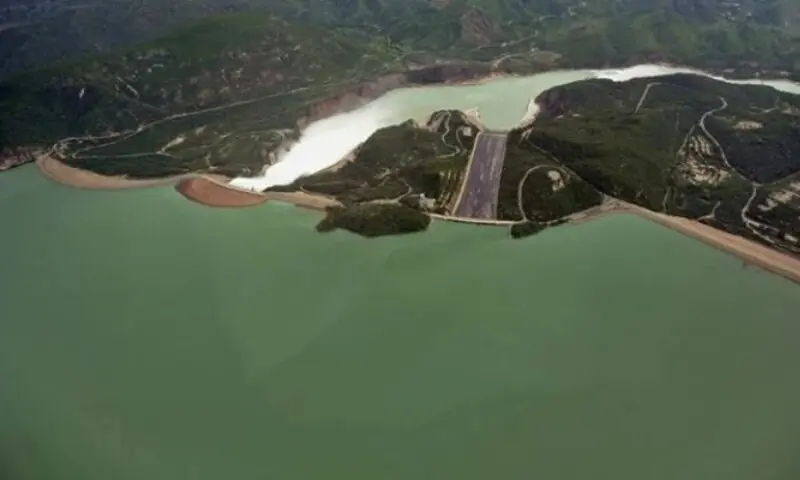

Probe links unauthorised design changes to project delays and massive cost escalation
ISLAMABAD: A government-appointed inquiry committee has held the Water and Power Development Authority (Wapda), the project contractor and the consultant jointly responsible for the collapse of the cofferdam at the 1,530MW Tarbela-5 Extension Hydropower Project. The committee concluded that unauthorised post-contract design changes and contractual violations led to the August 2025 failure.
According to the inquiry report, the contractor proposed replacing the original cofferdam design with a rock-filled structure, despite contractual restrictions. The consultant approved the revised design without ensuring full technical compliance, while Wapda endorsed the changes near the completion stage without questioning either their contractual validity or engineering shortcomings.
Consequently, the collapse caused severe flooding, suspended construction and delayed the project by at least two years. The completion deadline has now shifted from 2026 to June 2028. Moreover, the project cost has surged from Rs82.36 billion to Rs317 billion, representing an increase of more than 285 percent.
Committee rejects flood explanation
The three-member committee, headed by Federal Flood Commission Chairman Ather Hameed, rejected Wapda’s claim that extraordinary flooding caused the collapse. Instead, investigators found that river flows remained within historical levels and should have been accommodated under the original engineering design. They identified inadequate protection layers and deficient filter arrangements as key structural weaknesses.
The inquiry also revealed that Wapda requested a performance review of the cofferdam in July 2023. However, the consultant transferred the responsibility to the contractor, which submitted its monitoring report more than a year later in October 2024.
Financial concerns deepen over project viability
The report further highlighted irregular payments for temporary works instead of permanent construction, weakening the government’s ability to recover damages from the contractor. The Planning Commission now estimates the project’s levelised electricity generation cost could reach Rs27 to Rs28 per unit over 30 years, making it Pakistan’s most expensive renewable energy project and raising concerns about its long-term economic viability.
The Tarbela-5 Extension Project is financed through approximately $700 million in loans from the World Bank and the Asian Infrastructure Investment Bank. Meanwhile, Wapda has terminated the consultancy contract with MM Pakistan-BIDR China, citing persistent staffing deficiencies and contractual violations, including the premature withdrawal of project personnel from the site.

