
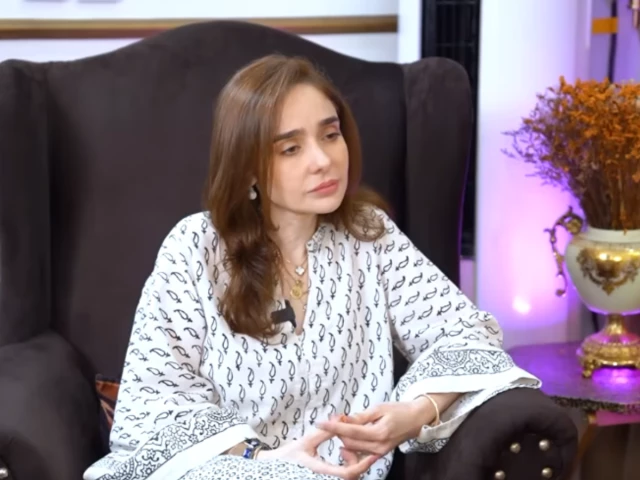

Juggun Kazim has opened up about one of the most painful chapters of her life, recalling her father’s murder when she was just 21. Although their relationship remained complicated, the actor and television host said she always hoped they would eventually understand each other. She also reflected on childhood trauma, family relationships, co-parenting and the women who shaped her journey.
Juggun Kazim Recalls Father’s Murder
Kazim recently reflected on her father’s death during a podcast appearance. She discussed the complicated bond they shared and the emotional impact of losing him so young.
At the time, Kazim was living in New York when she received a late-night phone call about her father.
“I was sleeping in New York at the time. My phone rang, and I don’t even remember who it was. The person said, ‘Dada has died.’ That’s what I used to call him. At that time, I was 21 years old,” she recalled.
The news initially seemed so unbelievable that Kazim thought someone was playing a prank on her. However, her confusion quickly turned into shock when she learned what had happened.
“When I got that call, my reaction was, ‘Stop pranking me.’ When I called my sister, she wouldn’t pick up. There was no caller ID at the time; this was over 20 years ago. When someone finally picked up and told me he had died, I asked what had happened. They said he had been murdered.”
She described the period following his death as one of the most frightening experiences of her life. The loss also exposed her to difficult moments and changed how she viewed people around her.
“That period was the most painful and difficult time of my life. There were a lot of ups and downs, and many people in my life showed their true colours,” she said. “It was a really frightening time.”
An Unfinished Relationship With Her Father
Despite their difficult relationship, Kazim said she never completely gave up on reconciliation. She believed they might develop a stronger bond once she became older and independent.
“The problem is that before our relationship could be resolved, he passed away,” she said.
Years later, she found herself thinking about her father while receiving the Tamgha-e-Imtiaz. The moment reminded her of everything she had once wanted to tell him.
“I was standing there and spoke to him in my mind. I said, ‘I told you I was capable despite being called stupid and hyper, and despite your belief that women should stay at home.’ I was waiting to get older so I could explain all of this to him and tell him how my brain works. Maybe then we could have become best friends.”
Kazim Opens Up About Childhood Abuse
Kazim also spoke openly about the difficult environment she experienced during childhood. Her parents divorced when she was young, and she spent different parts of the week with each parent.
“When I was little, my parents got divorced. I would stay with my dad on weekends and my mom during the week. My dad was very violent. He used to hit all of us a lot,” she said.
However, Kazim explained that she now sees her father as a complicated person rather than defining him solely through his actions.
“But in English they say, ‘You should not speak ill of the dead,'” she said.
“His violence was one part of him, but he was also friendly and loving. This happens. Every person has two sides. The side we saw wasn’t the one others saw. The world knew him as a great person.”
She said she had imagined repairing their relationship after gaining more independence. Unfortunately, his sudden death ended that possibility before it could happen.
“I always thought that once I was older and no longer dependent on him, I would become his friend. I had it all planned. Then he was gone. I thought, Dad is not here, my aunt is not here, and I have lost my grandmother. The people I was becoming successful for were gone.”
Traditional Gender Expectations Created Conflict
Kazim also connected some of their disagreements to her father’s traditional expectations of women. She remembered wanting the freedom to explore the world instead of conforming to strict ideas about gender.
“He believed women should behave a certain way. I was just a child who wanted to live. I wanted to climb trees and set off fireworks. I didn’t know how to be a girl or a boy.”
Her reflections show how deeply childhood experiences can influence family relationships. At the same time, Kazim’s memories suggest that grief can become more complicated when important conversations remain unfinished.
Her father’s death meant she never got the opportunity to have the adult relationship she had envisioned. Nevertheless, she continues to acknowledge the different sides of his personality and the lasting effect he had on her life.
Juggun Kazim Talks About Her Blended Family
Beyond her relationship with her father, Kazim also discussed her own approach to family and parenting. She explained that she avoids calling her husband Feisal Naqvi’s children her “stepchildren.”
Instead, she uses the term “bonus babies” because she feels it reflects the love and connection within their family more positively.
“I have two bonus babies. I don’t like the word ‘step’ because there are so many negative connotations attached to it. I love them. They’re awesome human beings. Dania is 28, Kamal is 25.”
Kazim also shared details about her own children. She said her children are Hamza, 20, Hassan, who is nine and turning 10, and Noor Bano, who will turn six in October.
She further highlighted her friendship with Aida, Naqvi’s former wife. According to Kazim, their relationship demonstrates how families can maintain healthy connections after separation.
“Aida and I are good friends. ‘Co-parenting’ is a big concept abroad. It’s about having a blended family,” she said. “When you separate, it shouldn’t affect the children.” “For me, when I married Feisal, I married Feisal, Dania, Kamal and, in a sense, his ex-wife too.”
For Kazim, creating a blended family means putting children’s emotional wellbeing before personal disagreements. Her approach also reflects her belief that separation does not have to permanently damage family relationships.
The Women Who Shaped Kazim’s Life
Kazim ended her reflections by discussing three women who played an important role in shaping her life: her grandmother, mother and aunt.
Among them, she described her grandmother as her biggest role model. Kazim lost her grandmother when she was only nine, but the emotional connection remained strong throughout her life.
“She was a huge role model in my life. I was very attached to her, and she understood me even more than my own mother. If I ever left this world, I would want to be remembered with as much love and admiration as people remember her.”
These memories offer another side of Kazim’s story, showing how the people who raise children can leave lasting impressions. Her grandmother, mother and aunt provided an important foundation during her formative years.
Juggun Kazim Continues to Build Her Career
Today, Kazim continues to build her career across several creative and business ventures. She currently hosts Morning at Home while working as an actor, content creator and entrepreneur.
She also runs Nur by Juggun and Juggun’s Organics. Over the years, she has appeared in dramas including Pani Jaisa Pyar, Vasl and, most recently, Agar.
Her reflections on loss, family and motherhood reveal a personal journey shaped by difficult experiences and meaningful relationships. Despite losing her father before they could reconcile, Kazim continues to carry the lessons of her family into her life today.

