
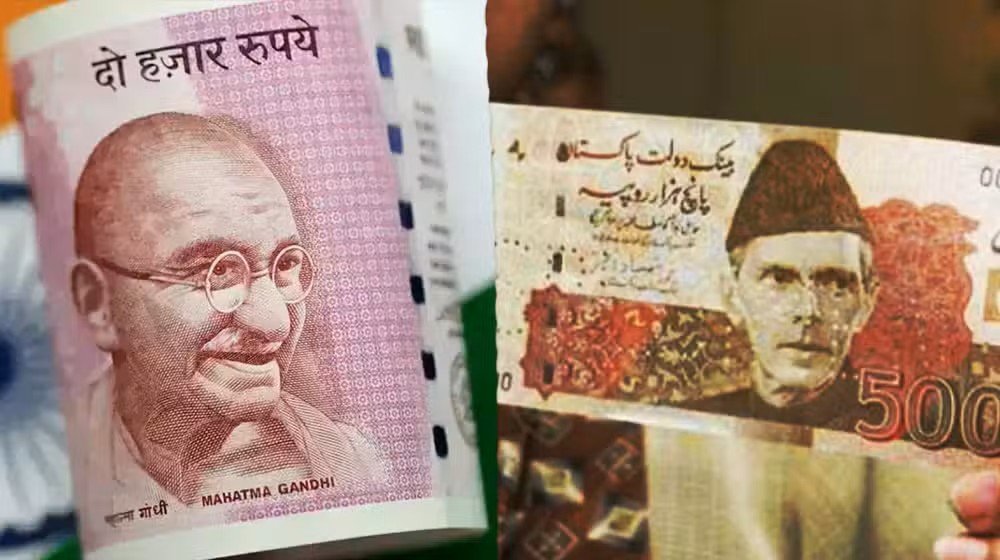

INR Records Steady Decline Against PKR Since 2025 Benchmark
The Indian rupee (INR) has shown a noticeable decline against the Pakistani rupee (PKR) over the past year, according to interbank exchange rate comparisons.
On May 15, 2025, one Indian rupee was valued at 3.2913 PKR. By May 18, 2026, the rate had dropped to 2.901 PKR, reflecting a decline of nearly 11.86 percent.
Market data also indicates that the INR has lost around 6.8 percent of its value in 2026 alone. The trend highlights continued pressure on the Indian currency in regional forex markets.
During the same period, the Pakistani rupee has maintained relatively stronger positioning against the INR. Analysts note that this shift reflects broader currency adjustments across South Asia.
Despite global economic challenges, including inflationary pressure and geopolitical disruptions, the PKR has shown comparatively stable performance in this specific currency pairing.
Regional Currency Pressures and IMF Context Influence Trends
Currency performance across South Asia has been influenced by multiple global and regional factors. These include US dollar strength, energy price fluctuations, and supply chain disruptions.
Pakistan’s recent engagement with an International Monetary Fund (IMF) program has also played a role in shaping macroeconomic stability indicators. The adjustment measures have contributed to tighter fiscal management.
In contrast, the Indian rupee has continued to experience gradual depreciation against several regional currencies, including the Bangladeshi taka.
Market observers suggest that sustained currency pressure reflects broader external account challenges. These include import costs, capital flow fluctuations, and global financial tightening.
However, analysts also caution that short-term currency comparisons can be influenced by temporary market conditions. Long-term stability depends on structural economic performance.
Market Outlook Points to Continued Pressure on INR
Financial analysts suggest that the Indian rupee may remain under pressure in the near term. Global monetary conditions and geopolitical uncertainties continue to influence currency behavior.
The US dollar’s strength remains a key factor affecting emerging market currencies. This has contributed to volatility across several Asian economies.
At the same time, regional trade dynamics and investment flows are expected to play a major role in determining future currency trends.
The comparison between PKR and INR reflects shifting forex market sentiment rather than a direct economic parity assessment. Both economies continue to face distinct structural challenges.
Experts emphasize that currency movements should be viewed within a broader economic context, including inflation control, export performance, and foreign reserves stability.
Despite short-term fluctuations, both currencies remain sensitive to global economic shifts and policy decisions in major economies.
The latest data indicates that the INR has experienced sustained downward pressure relative to PKR over the defined period, marking a notable regional forex trend.

