
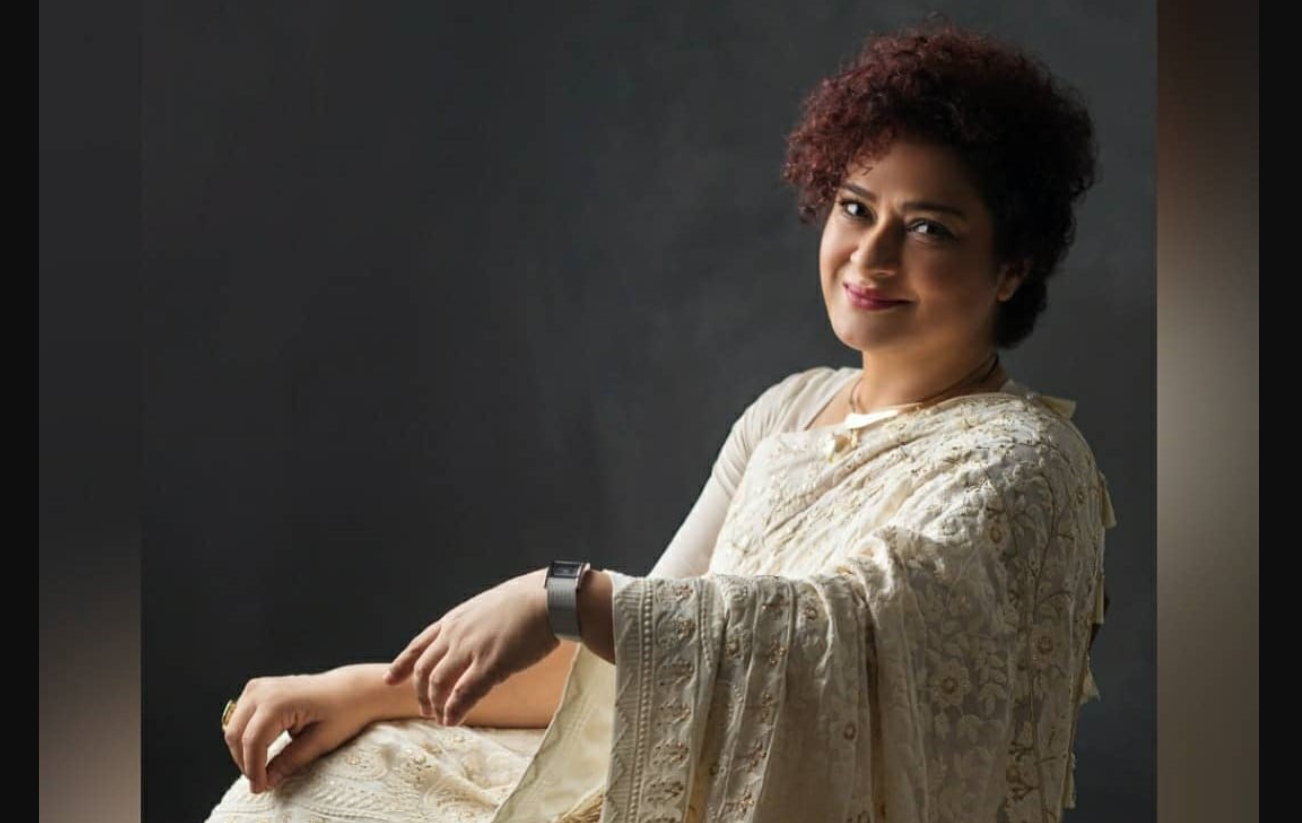

Veteran Pakistani actress Sania Saeed has recently sparked widespread discussion with her observations on the current state of Indian cinema, where she highlights uncertainty in storytelling, changing audience expectations, and the rising dominance of digital platforms in shaping entertainment success.
She argues that the industry is going through a transitional phase where traditional formulas are weakening, while new content trends are still not fully understood by filmmakers or producers. At the same time, audience behaviour is shifting rapidly, especially due to the influence of OTT platforms and social media, which has significantly changed how success in entertainment is measured.
Indian Cinema Struggling to Define Creative Direction
Sania Saeed expressed that Indian cinema appears to be passing through a period of confusion, particularly as big-budget films fail to perform consistently while smaller and content-driven films are increasingly finding success. This inconsistency, according to her, reflects deeper uncertainty within the industry about what audiences now expect from cinema.
She noted that filmmakers are struggling to identify stable trends, as audience preferences have become fragmented across theatres and digital platforms. Consequently, production decisions are becoming more experimental, yet without a clear understanding of long-term audience behaviour or market response.
“Right now, Indian media and cinema seem completely lost. They themselves are struggling to understand what they are doing. Many big-budget films are flopping, while smaller films are becoming hits.”
Her statement reflects a growing perception that traditional box office formulas are no longer reliable, as viewers increasingly shift toward diverse storytelling styles and unconventional narratives.
OTT Platforms Reshaping What Success Means in Cinema
Sania Saeed further highlighted that OTT platforms have fundamentally changed how content is consumed and evaluated, since digital audiences respond differently compared to traditional cinema viewers, especially when it comes to themes and storytelling formats.
She pointed out that content focusing on women’s independence, autonomy, and sexuality has gained strong traction on streaming platforms, where viewers are more open to experimental and socially bold narratives. However, she emphasized that success in digital spaces does not automatically translate into theatrical success, as both markets operate under entirely different economic and audience-driven dynamics.
“A film that becomes a superhit on OTT is not guaranteed to become a superhit in cinemas. The economics and dynamics of cinema have become extremely complicated, and even filmmakers are finding it difficult to figure out what works.”
Her observation highlights the growing divide between streaming success and box office performance, where a film’s popularity in one space does not necessarily guarantee acceptance in another, creating additional uncertainty for producers and directors.
Film Industry Economics Becoming Increasingly Unpredictable
According to Sania Saeed, the economics of filmmaking has become significantly more complex than before, as multiple platforms now compete for audience attention while simultaneously redefining success metrics.
She emphasized that producers are increasingly unable to predict audience reactions with accuracy, since content performance now depends on several interconnected factors, including platform distribution, digital visibility, and shifting cultural preferences.
As a result, traditional decision-making models in filmmaking are weakening, and even experienced industry professionals are finding it difficult to consistently identify what type of content will succeed across theatres and streaming platforms. This unpredictability has added pressure on creative teams, who now operate in an environment where audience expectations evolve faster than production cycles.
Social Media Influence on Television and Entertainment Industry
Sania Saeed also discussed how social media has transformed the entertainment ecosystem, particularly in television production, where online presence has become an important factor in casting and audience targeting decisions.
She observed that producers increasingly prefer actors who already have strong social media followings, as they believe online popularity directly contributes to viewership and engagement levels. This shift has changed how visibility is measured within the industry, placing greater emphasis on digital influence alongside traditional acting credentials.
“The entire medium has changed. Television is now heavily dependent on social media. Producers feel they need actors with large followings because they believe that is what drives viewership.”
However, she also pointed out that this trend has created a growing imbalance, where visibility is sometimes confused with talent, leading to concerns about the long-term impact on artistic quality and performance standards.
Talent Versus Popularity: A Growing Industry Debate
Sania Saeed stressed that social media fame should not be confused with professional acting ability, as she believes that real performance is rooted in skill, experience, and dedication rather than online popularity metrics.
She highlighted that while digital influence plays an increasing role in entertainment economics, it does not replace the craft required to deliver strong and meaningful performances on screen.
This distinction reflects a broader debate within global entertainment industries, where the rise of influencer culture has begun to reshape traditional pathways to success, often prioritizing visibility over training.
Conclusion: An Industry in Transition Between Two Eras
Sania Saeed’s remarks reflect a broader transformation taking place across global entertainment industries, where traditional cinema, digital platforms, and social media are increasingly interconnected yet fundamentally different in how they define success.
Indian cinema, in particular, appears to be navigating a transitional phase where established storytelling formulas are weakening, while new digital-driven models are still evolving. At the same time, OTT platforms continue to reshape audience expectations, and social media is influencing casting and production decisions in ways that were previously unimaginable.
As these forces continue to interact, the entertainment industry is likely to remain in a state of flux, where success is less predictable and more dependent on rapidly changing audience behaviour.

