
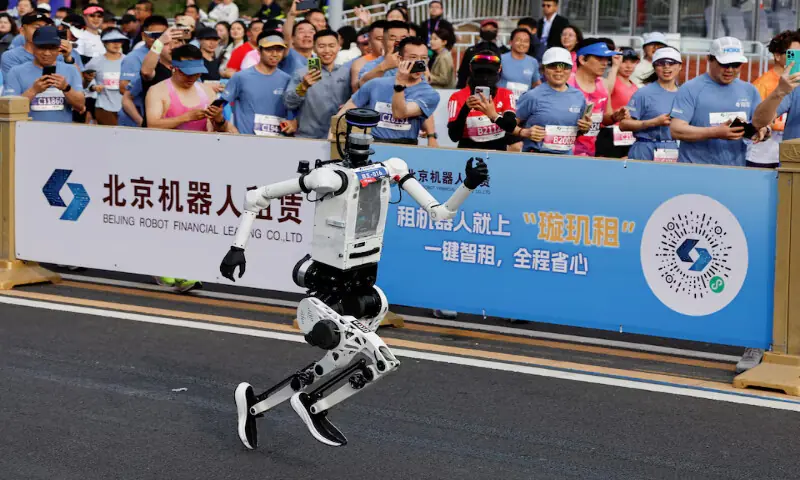

Dozens of humanoid robots demonstrated remarkable improvements in speed and autonomy during a half-marathon race in Beijing on Sunday, underlining rapid technological progress in the robotics sector.
The event marked a significant leap from last year’s inaugural edition, which was plagued by technical failures and saw most robots unable to complete the race. In contrast, this year’s competition featured more than 100 teams, up from just 20 previously, reflecting growing global interest and investment in humanoid robotics.
Moreover, the performance gap between humans and machines shifted dramatically. While last year’s winning robot took 2 hours and 40 minutes—far slower than human runners—several robots this year outperformed professional athletes. Notably, the top performers finished more than 10 minutes ahead of the human winners.
Unlike the previous race, nearly half of the participating robots navigated the challenging 21-kilometre course autonomously, without relying on remote control. Organizers ensured safety by placing robots and approximately 12,000 human runners on parallel tracks to prevent collisions.
The winning robot, developed by Honor, completed the race in an impressive 50 minutes and 26 seconds. This time surpassed the half-marathon world record set by Jacob Kiplimo in Lisbon last month. Teams from the same company secured all three podium positions, with each robot operating independently.
According to engineer Du Xiaodi, the winning robot had been in development for a year and featured long, human-like legs and advanced cooling systems adapted from smartphone technology. He added that although the sector remains in its early stages, such advancements could eventually transform industries, including manufacturing.

