

Publishers and writers are increasingly turning to certification labels to distinguish human-written books from artificial intelligence-generated content. The move follows several controversies involving authors accused of using AI without disclosing its role.
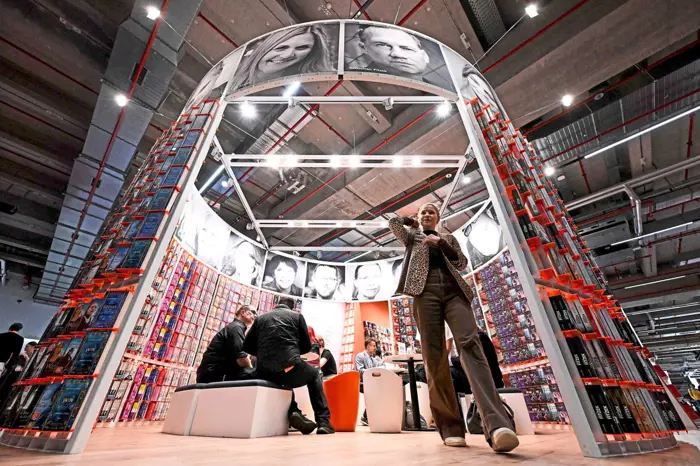
The debate took centre stage at the Frankfurt Book Fair, where initiatives from Britain, France and Germany presented ways to verify human authorship.
France Introduces a Human-Creation Label
French self-publishing company and literary agency Librinova operates a scheme that assesses books before awarding a “human creation” label. Around 200 works have received the certification so far.
Applicants must undergo AI-detection checks and an interview with an auditor, who also reviews the manuscript. The initiative aims to reassure writers as concerns about undisclosed AI use continue to grow.
Librinova co-founder Charlotte Allibert said authors, particularly those who publish independently, increasingly fear being suspected of using AI.
UK and US Introduce Certification Schemes
British startup Books By People has introduced its own certification mark for human-authored books. The country’s Intellectual Property Office has registered the mark.
Under its “organic literature” standards, the writing must originate from the author. However, limited AI use for tasks such as spelling and grammar checks remains permitted.
The initiative launched with five independent publishers, with further members expected to join.
In the United States, the Authors Guild has introduced a “human authored” certification mark. Its self-certification process requires writers to sign a licence agreement. Around 6,500 titles have received the mark so far.
High-Profile Controversies Fuel the Debate
Recent disputes have intensified calls for clearer disclosure. Haitian-Canadian author Thelyson Orelien faced allegations that AI helped produce his debut novel, It Was Either That or Die. He denied the claims and suggested the criticism was racially motivated.
The controversy led to his removal from consideration for France’s Prix Goncourt literary prize.
Meanwhile, publisher Hachette cancelled the release of horror novel Shy Girl by Mia Ballard in the United States and withdrew it from sale in Britain following allegations of AI use. Ballard denied personally using AI but said an acquaintance she hired to edit the book had used the technology.
Can Labels Guarantee Authenticity?
Despite growing interest, some publishing professionals question whether certification schemes can reliably identify AI involvement. Detection tools may not settle every case, while the permitted level of AI assistance remains open to interpretation.
German Publishers and Booksellers Association head Sebastian Guggolz argued that the issue requires broader industry discussion about transparency.
As AI tools become more common, publishers face pressure to clarify how books are created. Certification labels may offer readers greater transparency, but questions remain about how consistently the industry can verify authorship.
For the latest updates, visit and follow The Truth International website (www.thetruthinternational.com) and subscribe to the YouTube Channel.

