
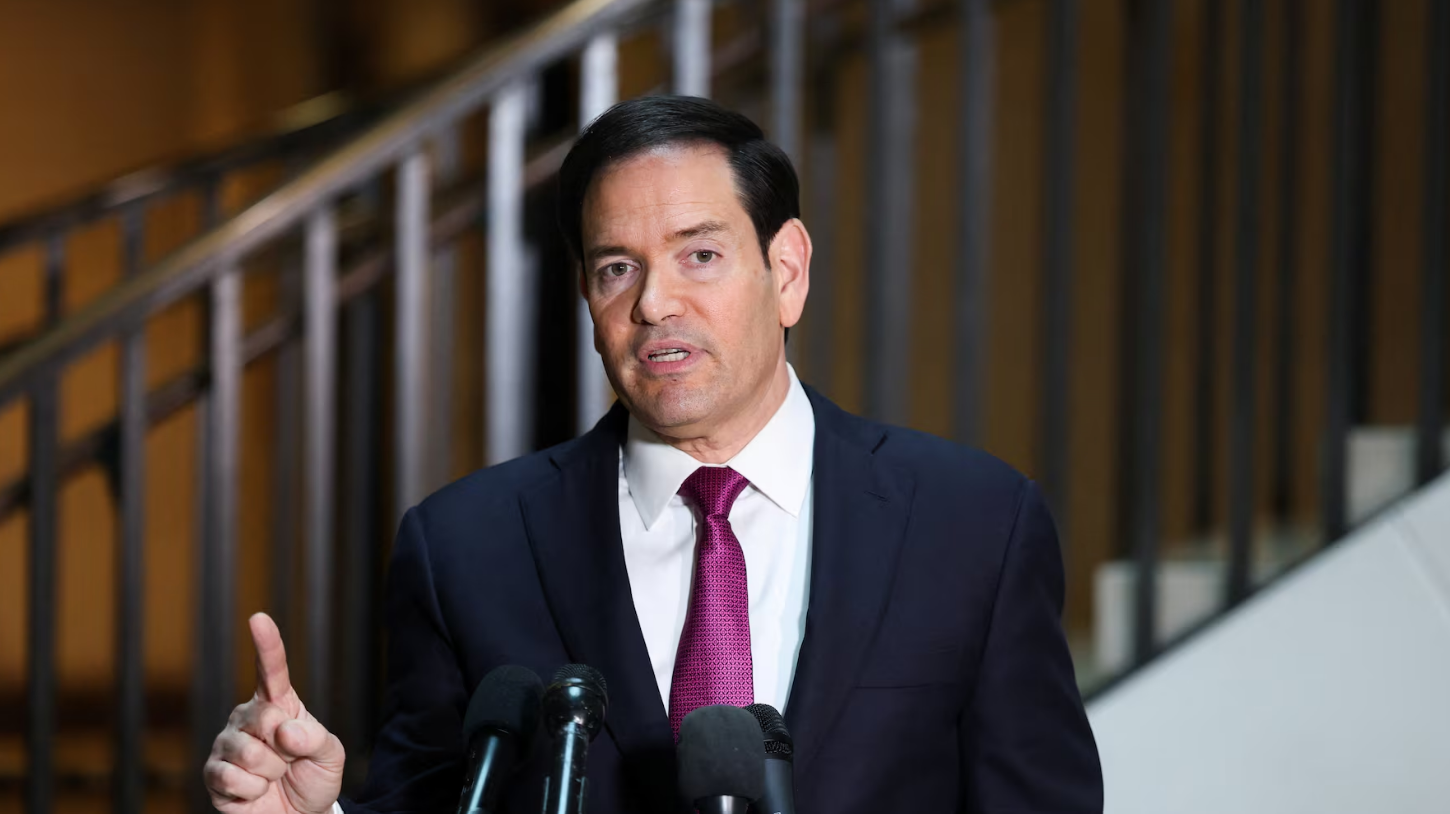

US Secretary of State Marco Rubio was able to travel to Beijing despite existing Chinese sanctions through an unusual diplomatic workaround involving a change in name transliteration.
The development came during a high-profile visit alongside US President Donald Trump, marking an important moment in US-China diplomatic engagement.
Sanctions Background and Travel Restrictions
Marco Rubio had previously been sanctioned twice by China during his time as a US senator due to his criticism of human rights issues.
Those sanctions were tied to the Chinese transliteration of his name, which effectively restricted his entry under formal enforcement rules.
As a result, his visit required an adjustment that would allow diplomatic flexibility without officially lifting sanctions.
Name Transliteration Used as Diplomatic Solution
Chinese authorities reportedly addressed the issue by altering the transliteration of the first syllable of Rubio’s surname using a different Chinese character for “lu.”
This linguistic adjustment created a technical distinction in official records, allowing Rubio to enter the country under his new diplomatic role.
The move is widely seen as a practical workaround that maintained China’s formal sanction position while enabling high-level diplomatic interaction.
Rubio’s First Visit to China as Secretary of State
Marco Rubio, now serving as US Secretary of State, visited China for the first time in his current role.
He travelled aboard Air Force One with President Trump, who became the first US president in nearly a decade to make an official visit to China.
Chinese officials confirmed that Rubio would not be blocked from entry despite prior restrictions, signaling a controlled easing of procedural barriers for diplomatic engagement.
A Chinese embassy spokesperson said, “The sanctions target Mr Rubio’s words and deeds when he served as a US senator concerning China,” clarifying the scope of the restrictions.
Diplomatic Interpretation and Strategic Engagement
Diplomats interpreted the transliteration change as a pragmatic solution that allowed both countries to preserve their political positions while continuing formal dialogue.
Officials suggested that China avoided formally lifting sanctions while still enabling cooperation at the highest diplomatic level.
The approach highlights how symbolic and linguistic adjustments can influence real-world diplomatic outcomes.
High-Level Talks in Beijing
During the visit, Rubio participated in meetings with Chinese President Xi Jinping at the Great Hall of the People in Beijing.
The discussions were part of broader efforts to manage trade relations and geopolitical tensions between the two global powers.
Rubio’s presence alongside senior US leadership underscored the importance of maintaining communication channels despite existing political disagreements.
US-China Relations and Strategic Context
The visit reflects ongoing attempts by both Washington and Beijing to stabilize relations through diplomacy, even amid unresolved sanctions and political differences.
While Rubio has been known for his critical stance on China, his role as Secretary of State has placed him at the center of renewed diplomatic engagement efforts.
The situation highlights how modern diplomacy often relies on technical, procedural, and symbolic adjustments to navigate complex international restrictions.
Outlook for Future Engagement
The workaround used to facilitate Rubio’s visit may set a precedent for future diplomatic interactions involving sanctioned officials.
It also reflects the broader trend of maintaining engagement between major powers despite political tensions.
As US-China relations continue to evolve, such diplomatic innovations may play a growing role in sustaining communication and managing disputes.

