
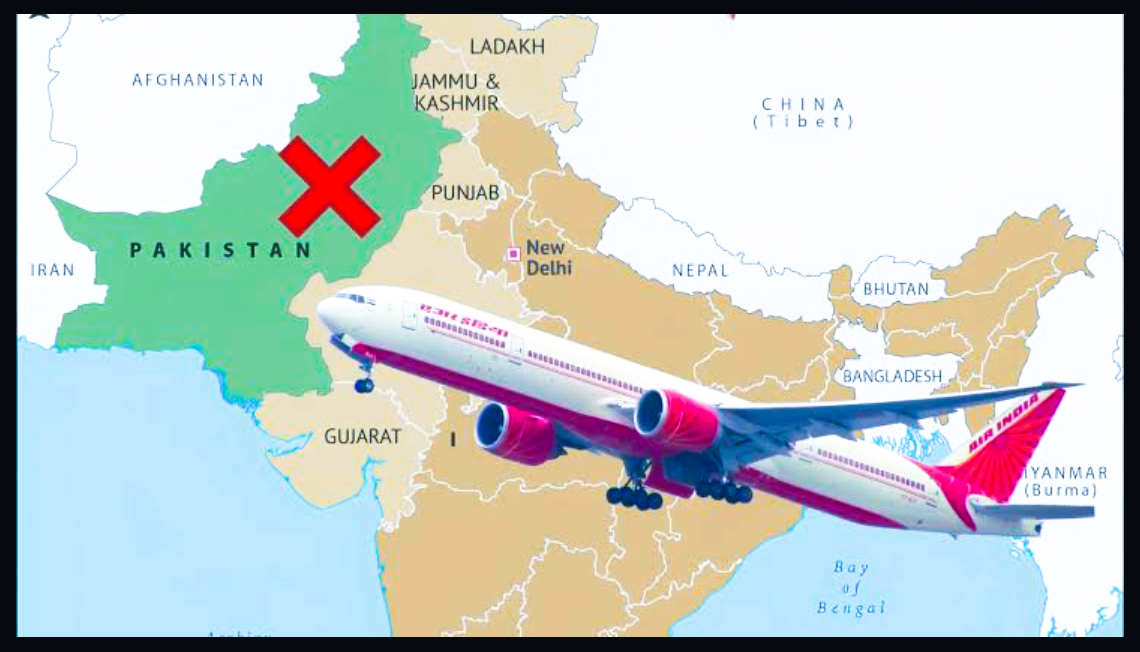

Air India has linked a significant portion of its annual financial losses to Pakistan’s continued airspace closure, saying the restrictions forced costly route changes for international flights.
According to an international aviation report, the airline recorded a loss of nearly $2.3 billion during the financial year that ended on March 31. The carrier said Pakistan’s decision to keep its airspace closed after the Pakistan-India conflict increased operational expenses by requiring aircraft to take longer routes.
Airspace Restrictions Increased Flight Costs
The closure affected Air India’s western-bound flights the most. As a result, the airline had to reroute several international services, leading to longer flying times and higher fuel consumption.
Consequently, operational costs increased across multiple routes. The airline identified the airspace restrictions as one of the key reasons behind its financial setback.
Longer flight paths also placed additional pressure on scheduling and fleet operations.
Rising Fuel Prices Added to Financial Pressure
Besides the airspace restrictions, Air India pointed to rising fuel prices as another major challenge.
The airline said higher fuel costs, triggered by the US-Iran conflict, further increased operating expenses. In addition, broader economic uncertainty also contributed to the company’s financial difficulties during the reporting period.
Together, these factors placed significant pressure on the airline’s overall performance.
Hundreds of Flights Reportedly Affected
An Indian aviation expert stated that the continued closure of Pakistan’s airspace has affected between 400 and 500 flights operated by Indian airlines.
The report noted that rerouting aircraft has created operational challenges across the sector. Airlines have had to manage longer travel distances while dealing with increased fuel consumption and scheduling adjustments.
As a result, the aviation industry has faced additional financial strain.
Aviation Sector Continues to Face Operational Challenges
The report suggested that Pakistan’s airspace closure remains one of the major operational challenges for Indian airlines operating international routes.
Air India maintained that the combination of route diversions, higher fuel prices, and wider economic pressures significantly affected its annual financial results.
Meanwhile, the broader aviation sector continues to monitor the impact of the restrictions as airlines adjust operations to manage higher costs and maintain international flight schedules.

