
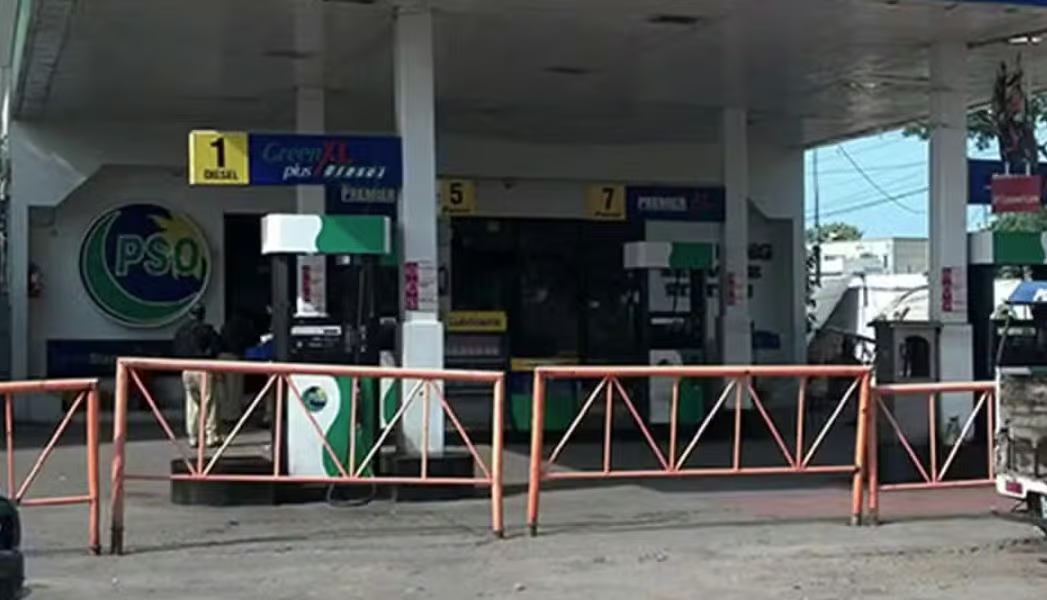

The federal government will begin revising fuel prices daily amid volatile international oil markets. Petroleum Minister Ali Pervaiz Malik announced the decision during a joint press conference on Friday.
The move follows renewed hostilities involving Iran and the United States, which have disrupted global energy markets. Previously, the government revised petroleum prices weekly after adopting the policy in early March.
OGRA to Announce Daily Fuel Prices
Malik said the federal cabinet authorized the Oil and Gas Regulatory Authority (OGRA) to determine daily fuel prices. According to him, OGRA will base the rates on international market trends.
Furthermore, the regulator will publish both daily fuel prices and the factors behind every adjustment. Malik said the measure aims to improve transparency and help consumers understand price changes.
He added that daily prices will rely on a seven-day average of international oil market rates. Moreover, future adjustments will not require approval from ministers or the federal cabinet.
The minister acknowledged that fluctuating prices could increase financial pressure on consumers. However, he said the government remained committed to reducing indirect taxation and maintaining transparency.
Government Reviews Energy Security Strategy
Meanwhile, Malik said a committee is developing a long-term energy pricing and security framework. The panel has already held four meetings under his leadership.
He added that recommendations on post-war energy pricing will be presented within the next 15 to 20 days. The government will also submit a proposal on strategic petroleum reserves to the cabinet next week.
Meanwhile, Information Minister Attaullah Tarar said OGRA would publish the complete pricing formula. He also said the government previously allocated Rs129 billion in fuel subsidies to reduce the burden on consumers.
Tarar added that Pakistan avoided fuel shortages during recent regional tensions through advance planning. He also urged greater adoption of electric vehicles to reduce fuel imports and future economic pressures.

