

High-Level Karachi Talks Aim to End Nationwide Transport Disruption
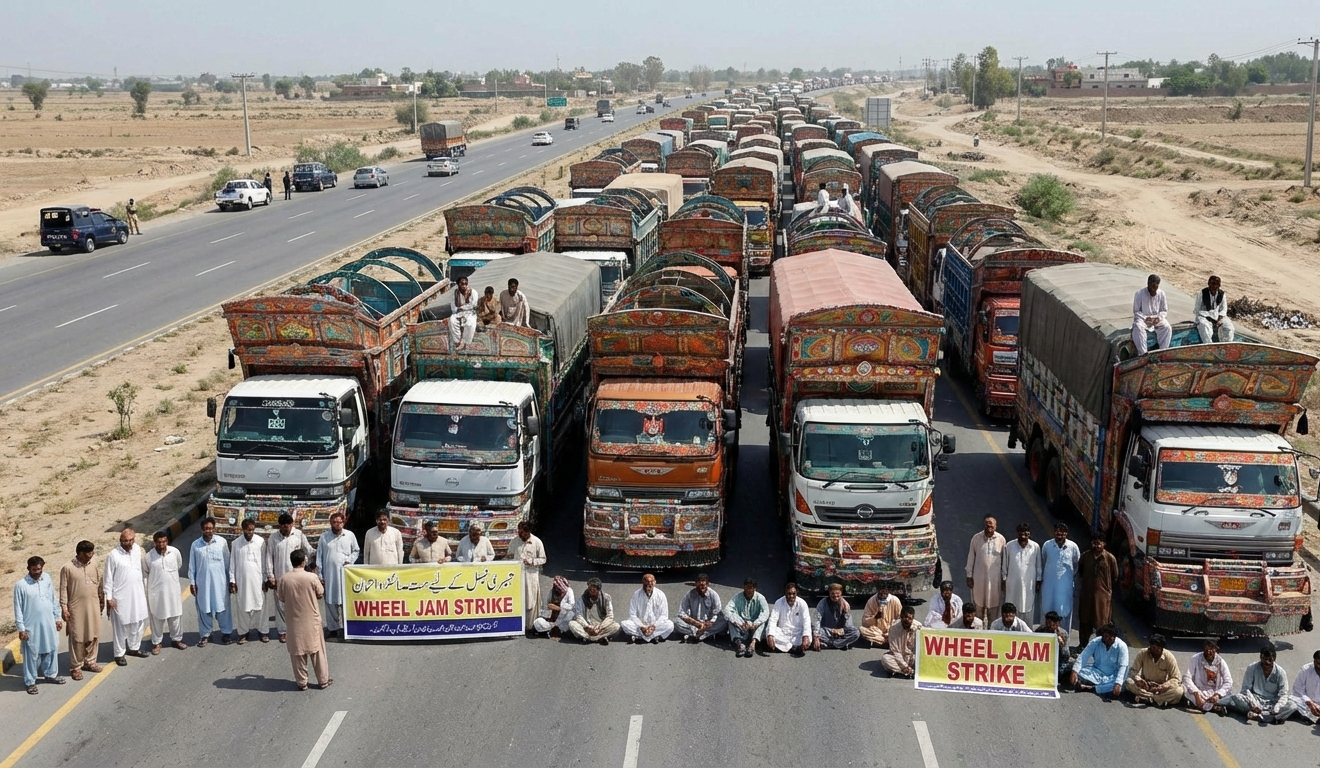
The federal and provincial governments have stepped up efforts to end an eight-day strike by goods transporters and edible oil tanker operators as container congestion begins to build at Karachi’s ports.
A crucial round of negotiations is expected at Governor House in Karachi on Sunday, with senior government officials and transporter representatives attempting to resolve the dispute.
The prolonged strike has disrupted the movement of goods and increased concerns about its impact on trade and port operations.
Federal government sources said the growing economic pressure had pushed authorities to intensify negotiations.
Security authorities have also reportedly become involved in efforts to help break the deadlock.
A senior official said many of the transporters’ concerns were genuine. However, the government also faced legal and procedural limitations in immediately accepting some demands.
Transport representatives are reportedly seeking strong guarantees that any agreement reached with the government will actually be implemented.
Federal Communications Minister Abdul Aleem Khan has been appointed by the prime minister as the focal person for talks with the transporters.
He is expected to travel to Karachi for the negotiations alongside Punjab Transport Minister Bilal Akbar.
The Sindh governor, provincial transport minister and other senior officials are also expected to participate.
Representatives from the Karachi Port Trust and Port Qasim Authority are likely to attend the meeting because of the strike’s growing impact on cargo movement.
Containers Begin Piling Up as Thousands of Transport Vehicles Stay Off Roads
The strike is being organised under the banner of the All Pakistan Goods Transport Ittehad.
Truckers, container trailer operators and edible oil tanker operators have remained off the roads for more than eight days.
Thousands of vehicles are reportedly participating in the nationwide protest.
A senior Karachi Port Trust official said operations had not yet reached a critical stage.
However, visible congestion has started developing because containers are accumulating while road transport remains disrupted.
The strike involves several categories of transporters, each with different demands involving multiple government departments.
Officials said this has made negotiations more complicated.
One of the most significant disputes involves the withholding tax imposed on goods transport operators.
The withholding tax on goods transport currently stands at seven per cent.
It was six per cent during the previous fiscal year.
Fuel tankers, however, face a withholding tax rate of two per cent.
Truckers, container trailer operators and edible oil tanker operators are demanding that their withholding tax also be reduced to two per cent.
Federal Board of Revenue officials have indicated that an immediate reduction may not be possible.
They said such a tax change would require amendments through the Finance Bill.
As a result, the issue could potentially be considered during preparation of the federal budget for the 2027-28 fiscal year.
Vehicle Seizures, Tax Demands and Axle-Load Rules Remain Major Sticking Points
Another major dispute involves the Customs department’s practice of impounding vehicles found transporting smuggled or illegally traded goods.
Transporters have raised concerns that their vehicles can be seized even when they claim no involvement in smuggling operations.
Government officials, however, have questioned why transport companies accept consignments containing illegal goods if they have no connection to those activities.
Despite disagreement over major issues, the government has offered relief on some demands.
Authorities have agreed to work toward establishing a dedicated parking facility for trailers and trucks handling cargo at Karachi port.
The Communications Ministry has also agreed to provide temporary relief to 10-wheeler trucks regarding upper axle-load limits on highways and motorways.
The government hopes these measures can help create enough progress for the transporters to suspend their strike.
All Pakistan Goods Transport Ittehad spokesman Muhammad Owais Chaudhry said the protest was continuing and thousands of vehicles remained off the roads.
He said transporters wanted a lasting solution through negotiations rather than temporary assurances.
Chaudhry said a brief round of discussions had already taken place with authorities in Karachi.
However, he argued that verbal promises were not sufficient to justify ending the strike.
Transporters want practical steps and guarantees before resuming operations.
He also accused sections of the bureaucracy of attempting to create divisions within the transport community.
Chaudhry urged transporters to remain united and peaceful and advised them not to act on unverified information.
He indicated that additional guarantors were now becoming involved in negotiations ahead of the Governor House meeting.
Sunday’s talks are therefore being seen as a major opportunity to end the prolonged dispute before port congestion and trade disruption become more severe.
A successful agreement could restore cargo movement across the country and reduce growing pressure on Karachi’s major ports.

