
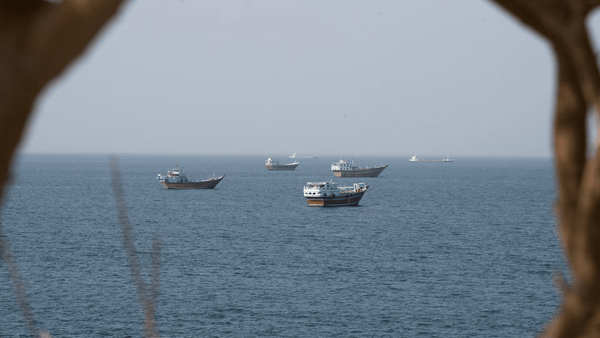

GENEVA: Global trade faces its most severe disruption in 80 years as bottlenecks in the Strait of Hormuz threaten food and fertilizer prices, World Trade Organization Director-General Ngozi Okonjo-Iweala has warned.
Speaking during the WTO Public Forum in Geneva, Okonjo-Iweala said the global trading system remained resilient but faced a major test from the continuing Middle East conflict.
Global merchandise trade grew by an unexpectedly strong 4.6% this year despite geopolitical pressures, while about 72% of world commerce continued under WTO rules.
AI Trade Helps Drive Stronger Global Growth
The WTO had initially projected overall goods trade growth of 1.9% for the year, but first-quarter growth reached 3.2%.
Okonjo-Iweala said rapidly expanding artificial intelligence-related trade provided significant momentum, supported by low- or zero-tariff arrangements covering around $3 trillion in semiconductor and chip shipments.
However, she warned that much of the economic benefit remained concentrated in North America and East Asia, raising concerns about whether other regions could participate equally.
Meanwhile, national reserves have temporarily cushioned markets against disruptions in the Strait of Hormuz.
Prolonged Hormuz Disruption Could Raise Agricultural Costs
Okonjo-Iweala warned that extended disruption would eventually increase agricultural costs as energy and transportation expenses rise.
Previous WTO estimates suggested crude oil reaching $90 a barrel could reduce overall trade growth by 0.5 percentage points. Current prices have already exceeded that level.
Furthermore, shipping companies have maintained trade flows by diverting vessels to alternative routes, but longer journeys are adding substantial costs.
Okonjo-Iweala also called for WTO reforms that give developing countries a stronger role in modernising global trade rules.
A recent WTO report warned that weakened multilateral cooperation and failure to update regulations could reduce potential global economic growth by as much as 10% by 2050.

