
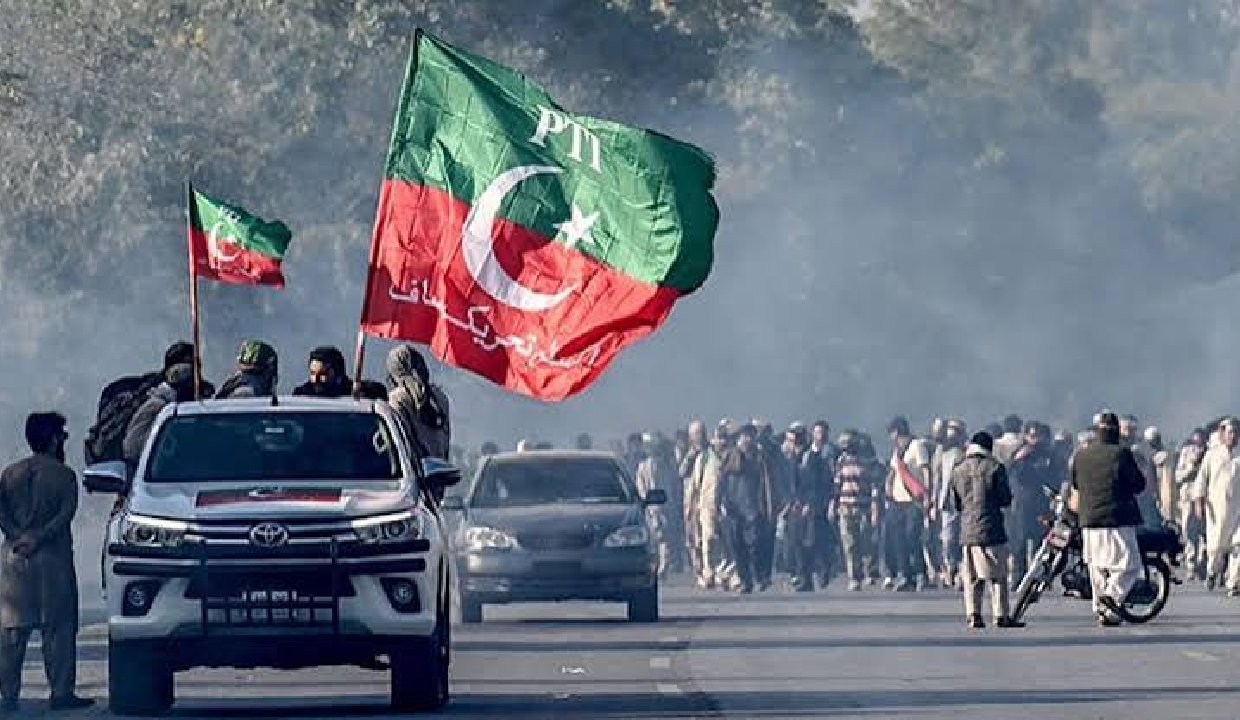

The Islamabad High Court has ruled that the constitutional right to peaceful protest is subject to reasonable legal restrictions.
The court issued the ruling while deciding a petition related to the Pakistan Tehreek-e-Insaf (PTI) proposed march towards Islamabad.
Court Stresses Constitutional Balance
The IHC said citizens and political parties have the right to peaceful assembly, political expression and democratic participation.
However, these rights must be balanced against the rights of other citizens.
These include the rights to life, liberty, dignity and free movement.
The court also highlighted access to hospitals, schools, courts, workplaces and businesses.
It noted that constitutional freedoms of movement, assembly, association and political participation are fundamental rights.
However, they are not absolute.
The court said restrictions can be imposed when they are provided by law, reasonable and connected to maintaining public order.
Protest Must Remain Peaceful
The IHC referred to a 2025 Supreme Court judgment on peaceful assembly and public demonstrations.
It observed that protests are permissible within reasonable legal limits.
However, participants cannot violate the law or take the law into their own hands.
The court said peaceful assembly cannot be used to overthrow a lawful government or trigger a revolution or insurrection.
It also stressed that demonstrations must remain peaceful and without weapons.
Government Resources Cannot Be Used
While disposing of the petition, the IHC directed provincial governments and public officials to prevent the use of government resources for political marches towards Islamabad.
The court said no political party, political leader, provincial government or public office holder could lawfully occupy roads, highways, interchanges, toll plazas or public buildings.
Authorities must also prevent blockages that restrict citizens’ movement or access to businesses, hospitals and educational institutions.
Provincial governments were directed to ensure that government vehicles, machinery, public funds and other resources were not used to facilitate such activities.
Officials Protected From Political Pressure
The court also directed authorities to ensure that public servants were not forced, pressured or encouraged to participate in political marches or rallies.
Officials who receive such orders must immediately report them to the relevant chief secretary, chief commissioner or inspector general of police.
The IHC further ordered the creation of helplines or other communication channels for officials facing political pressure.
Action Ordered Against Violating Officials
The court directed chief secretaries, provincial police chiefs, the federal interior secretary, Islamabad’s chief commissioner and Islamabad’s inspector general of police to issue clear instructions to government officials.
Authorities were ordered to take departmental action against officials who violate the court’s directions or facilitate marches, rallies or processions heading towards Islamabad.
The judgment reinforces that political protest remains a constitutional right, but its exercise is subject to legal restrictions designed to protect public order and the rights of other citizens.

