
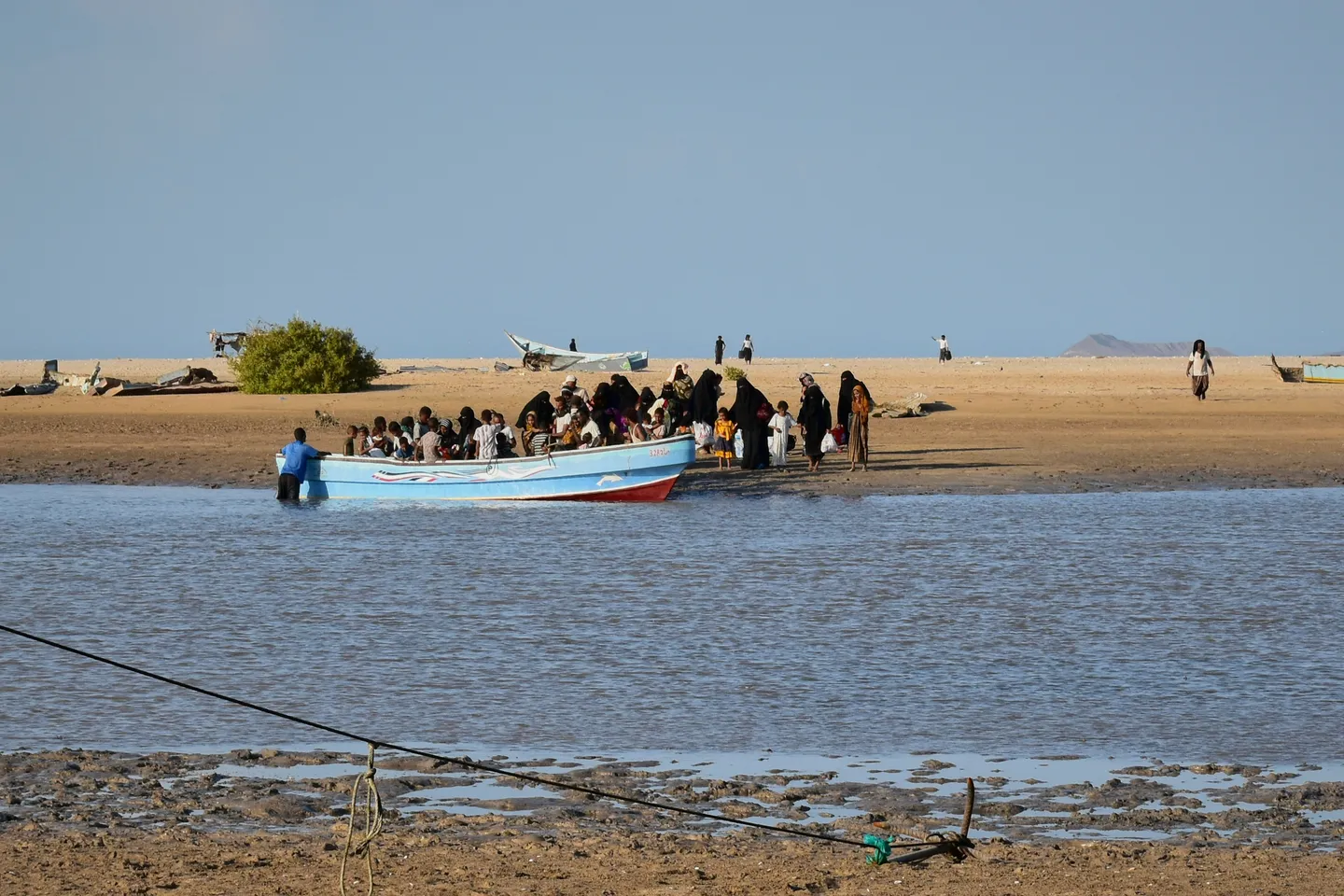

GENEVA: Nearly 3,000 people have fled Yemen for Djibouti in less than a week as escalating violence forces growing numbers of civilians from their homes, the UN refugee agency said on Friday.
UNHCR representative in Djibouti Sandrine Desamours said refugees continued arriving by boat through Obock, Khor Angar, Moulhoule and Godoria after difficult journeys aboard small vessels.
More than half of those crossing the Bab al-Mandab Strait are women and children. Moreover, some families are experiencing displacement for a second time after fleeing Yemen during the 2015 crisis, subsequently returning and now leaving again.
UNHCR Prepares for At Least 10,000 New Arrivals
UNHCR is preparing for at least 10,000 additional arrivals but warned that its capacity is rapidly declining.
Markazi refugee village, originally designed for 5,000 people, already accommodates more than 2,700 Yemenis and 1,500 Eritreans.
Meanwhile, intensified fighting, particularly along Yemen’s western coast, has displaced more than 100,000 people internally, according to Desamours.
The growing displacement is placing additional pressure on humanitarian agencies already facing limited resources.
Yemen’s Health System Faces Mounting Pressure
Furthermore, the World Health Organization said only 60% of 5,415 assessed healthcare facilities in Yemen remained fully operational. Just 6% offered a complete package of trauma services despite increasing emergency needs.
WHO spokesperson Tarik Jasarevic said Yemen had recorded more than 18,000 suspected measles cases and 106 associated deaths this year, alongside 390 diphtheria cases and 13 deaths.
Around 30,000 children experience severe acute malnutrition with complications annually, while some therapeutic feeding centres are operating at 120% capacity.
However, humanitarian access remains particularly difficult in northern Yemen, where UN operations are suspended in 90 priority districts.
WHO has secured only $490,000 from its emergency contingency fund, leaving what Jasarevic described as a significant funding gap.

