
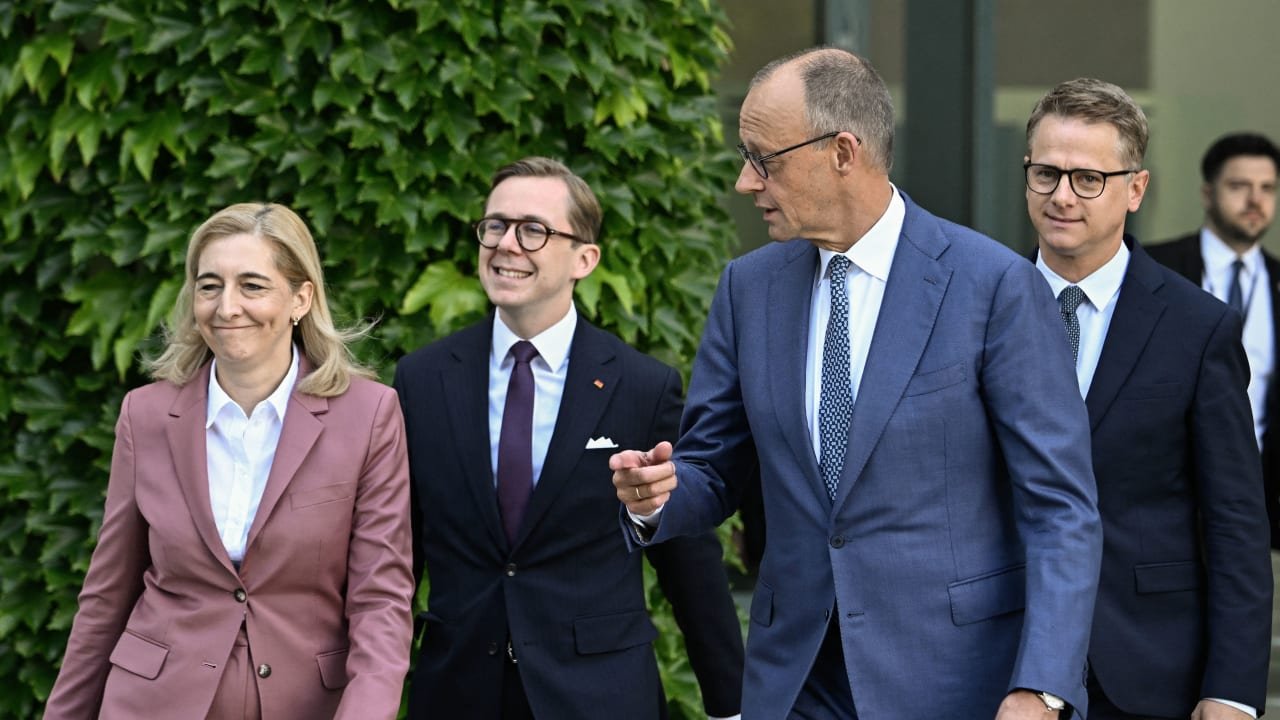

Merz appoints Nina Warken as chief of staff ahead of key state elections
BERLIN: German Chancellor Friedrich Merz announced a cabinet reshuffle on Friday, appointing Health Minister Nina Warken as his new chief of staff in an effort to strengthen his government ahead of crucial state elections scheduled for September.
Warken becomes the first woman to hold the influential position, which coordinates policy and communication between the chancellery, government ministries and parliament. Merz said additional cabinet changes would follow, although he did not provide a timeline.
The reshuffle comes after the resignation of senior conservative politician Jens Spahn as parliamentary faction leader following controversy surrounding his decision to have a child through surrogacy, an issue that sparked debate within his party.
Merz said his administration remained committed to implementing reforms aimed at revitalising Germany’s economy and pledged to move quickly once parliament returns from its summer recess.
More cabinet changes expected
Merz praised Warken as an experienced and determined politician, describing her as a strong negotiator with expertise in security policy.
Her departure from the Health Ministry is expected to pave the way for senior Christian Democratic Union figure Carsten Linnemann to assume responsibility for healthcare reforms focused on controlling rising medical costs.
According to sources familiar with the matter, Merz is also expected to replace Transport Minister Patrick Schnieder. However, the decision has reportedly been delayed after the chancellor’s preferred candidate withdrew from consideration.
Meanwhile, outgoing chief of staff Thorsten Frei will succeed Spahn as leader of the CDU/CSU parliamentary group.
Government faces political pressure
The cabinet changes come as Merz faces mounting political and economic challenges. Germany’s economy continues to struggle with weak growth, rising domestic costs, global tariff disputes and the lingering impact of higher energy prices.
Recent opinion polls have also shown declining public support for the chancellor. A Trendbarometer survey found only 14 percent of respondents were satisfied with his performance, while 85 percent expressed dissatisfaction.
The far-right Alternative for Germany (AfD) currently leads national polling ahead of important state elections in Saxony-Anhalt and Mecklenburg-Vorpommern, where the party hopes to secure significant electoral gains. Analysts say the reshuffle reflects Merz’s effort to reinforce his leadership and restore confidence in his government before those contests.

