
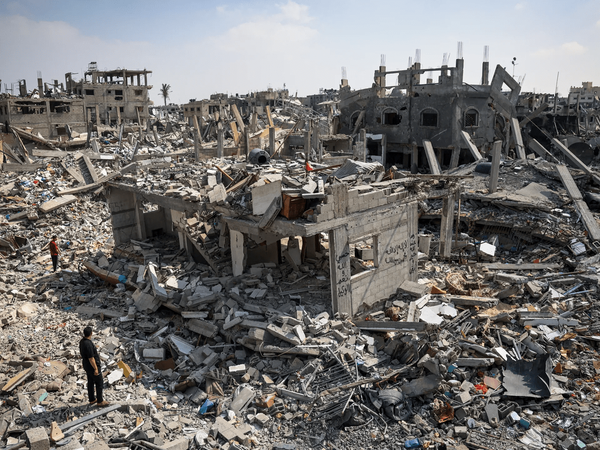

Government report details human losses, infrastructure damage and humanitarian impact
The Gaza government on Thursday released updated statistics on the humanitarian and physical impact of the conflict, stating that Israeli forces now control more than 80 percent of the Gaza Strip after 1,000 days of fighting.
According to the government media office, more than 73,000 Palestinians have been killed, including over 21,500 children and 12,500 women, while approximately 9,500 people remain missing. The report also said more than 173,500 people have been injured, including 433 journalists.
Officials added that 5,400 people have undergone amputations, with children accounting for 18 percent of those cases. Furthermore, the report documented around 1,500 cases of paralysis and 1,200 cases of vision loss linked to the conflict.
Health and public infrastructure suffer extensive damage
The statement said more than 58,800 children have lost one or both parents during the conflict. In addition, authorities reported over 2.14 million recorded cases of infectious diseases, including more than 71,000 cases of viral hepatitis.
The report also stated that 1,047 mosques were completely destroyed, while another 210 sustained partial damage. It further claimed that three churches were targeted and 312 religious figures, including imams and Quran teachers, were killed.
According to the government, 38 hospitals and 96 healthcare centres have been destroyed or forced out of service. Authorities also reported damage to 197 ambulances, 84 emergency vehicles and 16 civil defence centres.
Economic losses estimated at $80 billion
Officials estimated direct economic losses at approximately $80 billion, including $34 billion in housing damage. The report stated that 335,000 buildings and housing units were completely destroyed, while another 737,000 sustained varying levels of damage.
The government also said the conflict has continued despite a ceasefire agreement, alleging ongoing bombardment, restrictions on humanitarian assistance and continued shortages of food, medical supplies and essential services.

