
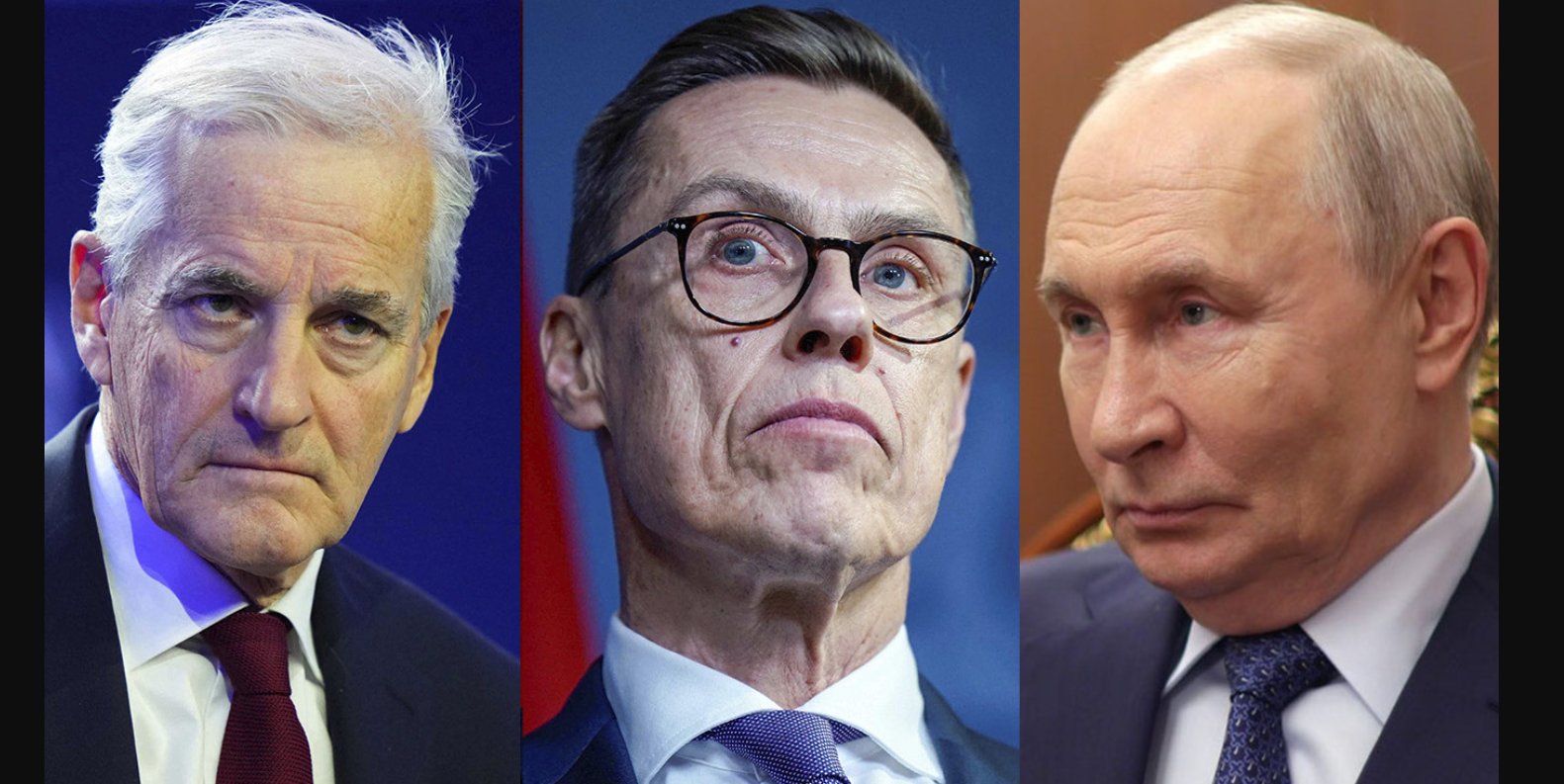

Finnish President Alexander Stubb and Norwegian Prime Minister Jonas Gahr Støre have held a phone call with Russian President Vladimir Putin to discuss diplomatic efforts to end the war in Ukraine. The conversation took place on Tuesday, ahead of anticipated peace negotiations in Abu Dhabi.
The outreach, coordinated with Kyiv, marks a significant diplomatic development involving two European countries that support Ukraine. However, the initiative has also drawn criticism from some European leaders, who favour a unified approach towards Russia.
Why Did the Finnish and Norwegian Leaders Contact Putin?
Stubb and Støre initiated the call to discuss Russia’s war against Ukraine and possible diplomatic steps towards peace. Stubb’s office said the leaders wanted to “discuss Russia’s war of aggression against Ukraine and the diplomatic efforts to end the war and promote peace and stability in Europe.”
The statement also explained that the leaders aimed “to convey messages directly regarding future negotiations to help to end the war to President Putin,” adding that the contact was “related to the upcoming meetings to be held in Abu Dhabi.”
Meanwhile, Støre’s office highlighted the need to reduce tensions, stating, “In the call we stressed the importance of de-escalation.”
Both governments clarified that their leaders spoke on behalf of their respective countries, rather than representing Europe as a whole.
European Leaders Raise Concerns Over the Initiative
Although the call aimed to advance diplomatic discussions, it prompted criticism from Danish Prime Minister Mette Frederiksen. She expressed doubts about Russia’s willingness to pursue peace with Ukraine and Europe.
“I think we should keep Europe together instead of going solo,” Frederiksen said. “We should stand together and speak with one voice and defend ourselves against Russia.”
Her remarks reflect concerns that separate diplomatic initiatives could weaken European unity. Nevertheless, Finland and Norway proceeded with the contact after consulting Ukraine.
How Did Moscow Respond to the Call?
The Kremlin confirmed the conversation and outlined Moscow’s position on the conflict. According to its statement, Putin “reiterated the root causes” of his decision to launch the full-scale invasion of Ukraine in February 2022.
He also “drew attention to the confrontational policies of EU and NATO member states, which he noted serve to prolong the hostilities,” the Kremlin added.
The three leaders also discussed security and stability in the Baltic Sea and Northern European regions. Furthermore, they agreed to maintain direct contact, according to the Kremlin’s account.
Zelensky Welcomes Continued Diplomatic Engagement
Ukrainian President Volodymyr Zelensky spoke with Stubb and Støre after their conversation with Putin. He welcomed their briefing and acknowledged their continued involvement in diplomatic efforts.
Zelensky said he was “grateful for the detailed briefing and for their active support for our diplomacy and the peace efforts we are pursuing together with all our partners.”
He also stressed the need for concrete steps to reduce hostilities, particularly attacks on energy infrastructure ahead of winter. “Russia must stop dragging out the war,” he wrote in a social media post.
Abu Dhabi Talks Could Offer Another Diplomatic Opening
The phone call followed a meeting in Oslo a week earlier, where Stubb and Støre met US special envoy Steve Witkoff and Zelensky. Those discussions sought to repair strained relations between Kyiv and Washington and explore a possible path towards ending the war.
Witkoff subsequently met Putin in St Petersburg to discuss progress towards a settlement. The Kremlin said Russia was willing to resume US-mediated peace negotiations in Abu Dhabi as soon as the following month, although officials had not announced specific dates.
The latest diplomatic contacts indicate continued efforts to find a negotiated resolution. However, disagreements over Russia’s actions and the conditions for peace remain significant obstacles as Ukraine and its partners pursue de-escalation.
For the latest updates, visit and follow The Truth International website (www.thetruthinternational.com) and subscribe to the YouTube Channel.

