
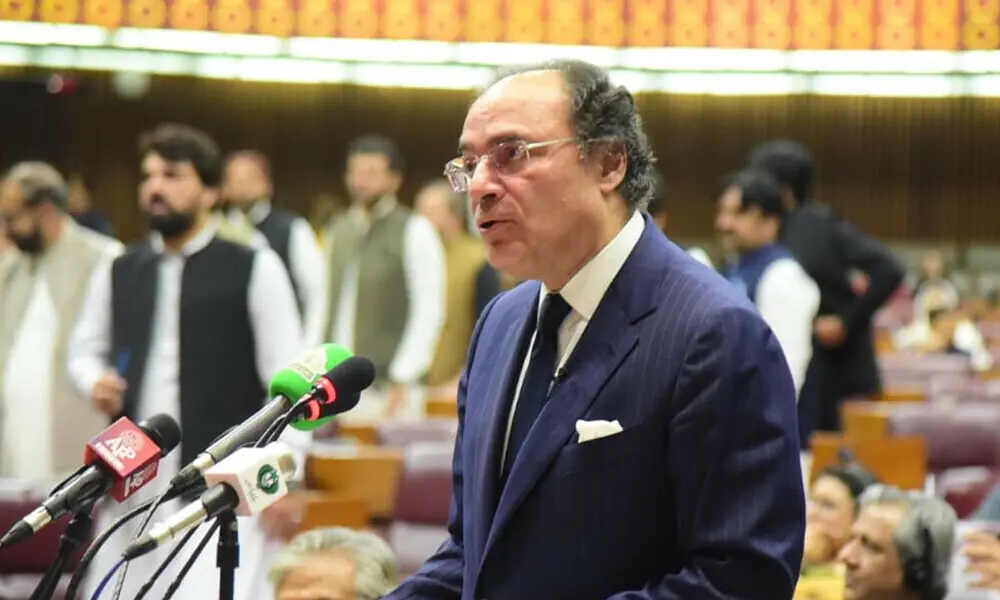

Government Balances Economic Expansion with IMF Commitments
ISLAMABAD: Finance Minister Muhammad Aurangzeb is set to present Pakistan’s Federal Budget for the fiscal year 2026-27, outlining the government’s economic priorities amid ongoing reforms and commitments under the International Monetary Fund (IMF) programme.
The budget comes as authorities seek to accelerate economic growth while maintaining fiscal discipline. Under the IMF-supported framework, Pakistan remains committed to broadening the tax base, improving revenue collection, reducing untargeted subsidies and strengthening financial stability.
Government officials say the new budget aims to support economic recovery while ensuring compliance with reform targets agreed with international lenders.
Meanwhile, investors and business groups are closely watching the announcement for measures that could stimulate investment, exports and industrial growth during the next fiscal year.
Regional Tensions Add Pressure to Economic Planning
The budget is being presented against a backdrop of rising geopolitical uncertainty in the Middle East. Escalating tensions involving the United States and Iran have raised concerns about global energy supplies and oil prices.
As a major energy-importing country, Pakistan remains vulnerable to fluctuations in international fuel markets. Officials have stated that the government is closely monitoring developments, warning that any prolonged disruption to regional trade routes could affect inflation, import costs and the country’s external account position.
Despite these challenges, financial markets have responded positively to expectations of a growth-oriented budget. The benchmark KSE-100 Index gained nearly 2,700 points, reflecting investor optimism ahead of the budget announcement.
Economic Survey Highlights Recovery Trends
A day before the budget presentation, the government released the Pakistan Economic Survey 2025-26, reporting GDP growth of 3.7 percent during the outgoing fiscal year.
Although the figure exceeded last year’s growth rate of 3.18 percent, it remained below the official target of 4.2 percent.
According to the survey, economic improvement was supported by effective macroeconomic management, stronger fiscal indicators, growth in large-scale manufacturing, resilience shown by the agriculture sector following the 2025 floods, exchange rate stability and reforms implemented under the IMF’s Extended Fund Facility programme.
Analysts now await details of the new budget to assess whether the government can sustain recovery while navigating domestic and international economic challenges.

