
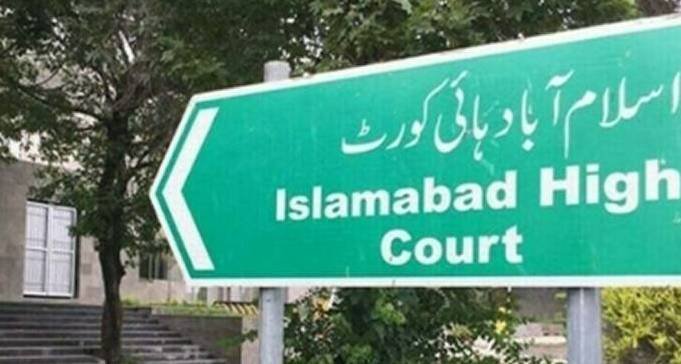

The Islamabad High Court has temporarily protected an Afghan doctor from deportation, allowing him to continue his postgraduate medical training in Pakistan.
Justice Khadim Hussain Soomro issued the interim relief while hearing a constitutional petition filed by Dr Imadud Din’s wife, Mehar Zahoor. She is a Pakistani citizen and challenged the Pakistan Medical and Dental Council’s direction concerning Afghan medical students.
IHC Suspends Expulsion Order Against Afghan Doctor
The court suspended the expulsion order against Dr Imadud Din and halted his deportation from Pakistan. It also directed authorities to let him continue his ongoing postgraduate medical training.
Dr Imadud Din is an Afghan national currently completing the fifth year of his FCPS-II training in urology. His training is taking place at Quaid-i-Azam Medical College and Bahawal Victoria Hospital in Bahawalpur.
During the hearing, his lawyer, Barrister Qasim Nawaz Abbasi, argued that a PMDC communication issued on July 31, 2026, could not apply retrospectively.
He maintained that Dr Imadud Din was not a new applicant but an already enrolled trainee who had received an official extension.
According to the petition, QAMC’s competent authority granted the extension following a recommendation from the head of the department. The extension covers the period from February 28, 2026, to February 27, 2027.
Doctor’s Training Cannot Be Stopped Under PMDC Letter
The lawyer argued that the PMDC communication directed medical institutions to take steps for the repatriation of Afghan students.
He said terminating the doctor’s training could cause serious professional and financial losses for his family, which includes two children.
The petitioner’s counsel stated that future policies regulating admissions were not being challenged. However, he argued that already enrolled trainees should receive an opportunity to complete their programmes.
He further maintained that ending the doctor’s training without prior notice or a meaningful hearing violated constitutional protections under Articles 4, 9, 10-A, 14 and 35.
After hearing the arguments, the IHC suspended the PMDC communication specifically regarding Dr Imadud Din.
The court also restrained authorities from terminating, discontinuing or obstructing his postgraduate training solely because of the PMDC letter.
IHC Seeks Responses From Authorities
The court adjourned the proceedings and issued notices to several concerned authorities.
These include the secretary of the Ministry of National Health Services, Regulations and Coordination, along with the PMDC president and registrar.
Notices were also issued to the principal of Quaid-i-Azam Medical College and the secretary of Punjab’s Specialised Healthcare and Medical Education Department.
The respondents will now provide their responses to the petition.
Balochistan High Court Takes Different Position
Meanwhile, the Balochistan High Court dismissed petitions filed by Afghan students seeking permission to continue medical and dental education in Pakistan.
The petitions also sought permission for Afghan nationals to continue their postgraduate medical training.
A two-member bench comprising Justice Muhammad Aamir Nawaz Rana and Justice Abdul Qayyum Lehri announced the decision on two constitutional petitions.
The court upheld the state policy concerning the stay and education of foreign nationals in Pakistan.
It held that foreign nationals do not have an absolute or permanent right to remain, study or undergo professional training in Pakistan contrary to state policy.
The BHC also declined to interfere with PMDC directions concerning the admission, transfer and facilitation of Afghan nationals at medical institutions.
BHC Stresses Fair Treatment of Afghan Nationals
The Balochistan High Court observed that immigration, the return of foreign nationals and national security primarily fall within the executive authorities’ domain.
However, the bench stressed that Afghan nationals must receive human dignity and fair treatment under the law.
The petitions were consequently dismissed at the preliminary stage.
The two rulings therefore address different circumstances, with the IHC granting interim protection to one already enrolled doctor while the BHC upheld the broader state policy concerning Afghan students.
For the latest updates, visit and follow The Truth International website (www.thetruthinternational.com) and subscribe to the YouTube Channel.

