
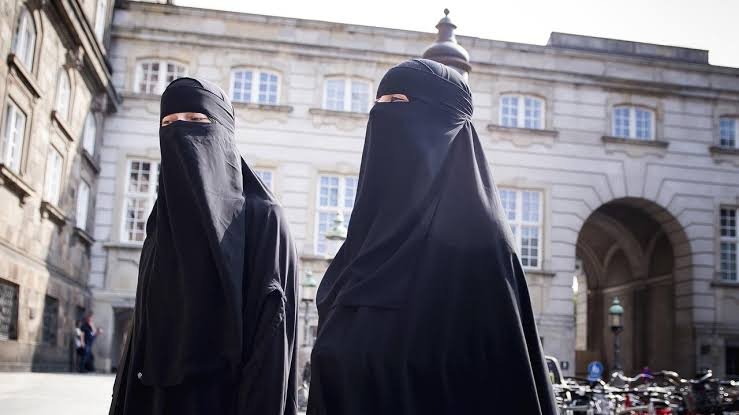

Government Seeks Wider Restrictions on Face Coverings
Denmark is preparing to extend its ban on full-face coverings to schools, colleges and universities as part of a broader campaign focused on integration and what the government calls “negative social control.”
The proposed legislation would prohibit burqas, niqabs and other clothing that prevents a person’s face from being clearly visible inside educational institutions. The measure has not yet become law and would require approval from the Danish Parliament.
Denmark already prohibits face-covering clothing in public places under legislation introduced in August 2018. However, educational institutions have not been fully covered by the existing rules, creating what Prime Minister Mette Frederiksen’s government describes as a gap in the law.
Immigration and Integration Minister Rasmus Stoklund has argued that clothing which hides a person’s face has no place in Danish classrooms. He said the same rules applied in public spaces should also apply in schools and universities.
The government says visible facial communication is important between students, teachers and other members of an educational community. Supporters also argue that the measure would send a message against honour-based pressure and restrictive practices affecting women from immigrant backgrounds.
Proposal Linked to Campaign Against ‘Parallel Societies’
The proposed ban forms part of Denmark’s wider political campaign against so-called parallel societies and practices that officials believe prevent immigrants from fully participating in Danish life.
Under Denmark’s official housing terminology, a “parallel society” is a socially vulnerable residential area where more than half of the population consists of immigrants or descendants from non-Western countries. These neighbourhoods must also meet additional socioeconomic criteria to be classified as vulnerable areas.
The Danish government has increasingly linked debates over immigration, education, religious expression and women’s rights. Officials argue that certain religious or cultural practices may create pressure on girls and women or limit their participation in society.
Frederiksen has previously said religious freedom should be respected but must not override democratic principles in educational institutions. She has also raised concerns about prayer rooms at universities, claiming they may create opportunities for discrimination or social pressure.
The face-covering proposal follows recommendations from the Commission for the Forgotten Women’s Struggle. The commission was established to examine barriers faced by women from minority communities and presented 13 recommendations in January 2025.
One recommendation called for Denmark’s existing face-covering ban to be extended to educational institutions. The commission argued that schools and universities should not maintain systems that could enable honour-related violence or restrictive social control.
Critics Question Need and Impact of New Ban
Critics have questioned whether the proposed law addresses a widespread problem. They say very few students appear to wear niqabs or burqas at Danish educational institutions.
A University of Copenhagen scholar said he was unaware of the niqab being commonly worn at Danish universities. He suggested that the proposal may be intended partly as a statement of political principle rather than a response to a significant number of cases.
Previous estimates suggested that only around 150 to 200 women wore the niqab across Denmark before the 2018 national ban. The burqa is believed to be extremely rare in the country, although there are no complete official figures.
Human rights organisations and religious groups have criticised Denmark’s existing restrictions on face coverings. Opponents argue that such laws disproportionately affect Muslim women and may violate their freedom of religion, expression and personal choice.
Some critics argue that women who are forced to remove face coverings may withdraw from public life or education instead of becoming more integrated. They say authorities should address coercion directly rather than restricting the clothing choices of all women.
Supporters reject that argument and maintain that facial visibility is necessary for effective teaching, communication and participation. They also present the proposal as a preventive measure designed to stop restrictive religious practices from becoming established in classrooms.
Repeat Violations Can Bring Heavy Fines
Under Denmark’s existing face-covering law, a first violation can result in a fine of 1,000 Danish kroner. Repeated offences can carry fines of up to 10,000 kroner.
The law does not exclusively mention Islamic clothing. It covers garments and objects that conceal the face, including certain masks, balaclavas and artificial disguises. Exceptions may be allowed when a face covering serves a recognised purpose, such as protection from weather, health requirements or professional duties.
However, the legislation is widely described as the “burqa ban” because the political debate has primarily focused on full-face coverings worn by a small number of Muslim women.
The government has not yet provided complete details about how the proposed educational ban would be enforced. Further legislation would need to clarify penalties, exemptions and the responsibilities of schools and universities.
The proposal is expected to renew Denmark’s national debate over immigration, integration and religious freedom. It also highlights the country’s increasingly strict approach to migration and cultural integration, an area where major centre-left and centre-right parties have often supported restrictive measures.

