
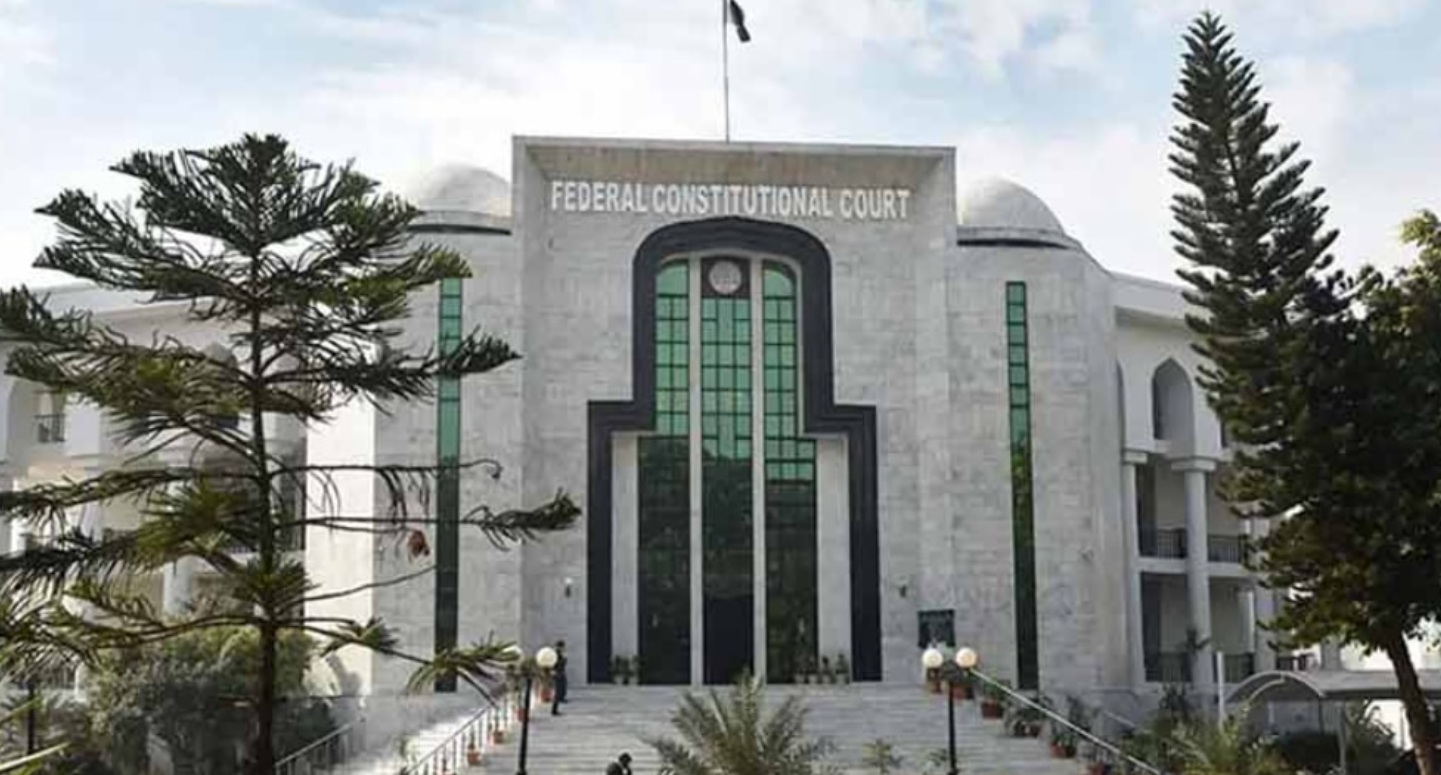

The Federal Constitutional Court of Pakistan has issued a landmark verdict in an inheritance case from Wazirabad. The ruling addresses long-standing irregularities in land ownership records.
The case involved a dispute from Mouza Dhanunkal in Tehsil Wazirabad. It focused on the exclusion of a pre-deceased daughter from official inheritance documentation.
As a result, she was deprived of her lawful share. Consequently, her heirs also remained deprived for decades.
Court Recognizes Rights of Pre-Deceased Daughter’s Heirs
The court, headed by Chief Justice Aminuddin Khan, examined the matter in detail. Justice Ali Baqar Najafi also participated in the proceedings.
During the hearing, other legal heirs acknowledged the lineage of Sardar Begum. This confirmation strengthened the claim of her legal status.
Therefore, the court ruled that her heirs have a rightful claim to inheritance. It declared that they are entitled to the share she would have received.
This decision corrects a major legal oversight in the inheritance process. Moreover, it sets a precedent for similar cases in the future.
Irregularities in Revenue Records Highlighted
The case revealed serious flaws in revenue documentation practices. Authorities had failed to include Sardar Begum in official records.
As a result, the land distribution process ignored her legal rights. Consequently, her heirs faced prolonged injustice.
The court emphasized the importance of accurate record-keeping in inheritance matters. It noted that such omissions can lead to long-term disputes.
Therefore, the ruling highlights the need for greater transparency in land administration.
Fresh Review Ordered for Land Distribution
In its judgment, the court directed a fresh review of the land distribution. This review will cover previously finalised arrangements under consolidation schemes.
The purpose is to ensure that the rightful share of excluded heirs is properly included. Thus, authorities must reassess past decisions carefully.
The court also ordered that Sardar Begum’s heirs be formally added as parties in the case. This step ensures their representation in future proceedings.
Officials Summoned to Ensure Compliance
To enforce its directives, the court has taken further action. It summoned key revenue officials to appear at the next hearing.
These officials include the consolidation officer, patwari, and tehsildar. They must assist the court and confirm compliance with its orders.
This move reflects the court’s commitment to proper implementation. It also signals a strict approach toward accountability.
A Step Toward Legal Clarity and Justice
The verdict marks a significant development in Pakistan’s inheritance law framework. It reinforces the rights of heirs who were previously overlooked.
Furthermore, the decision highlights the role of courts in correcting administrative errors. It ensures that legal entitlements are not denied due to faulty records.
Legal experts believe this ruling could influence future inheritance disputes. It may encourage affected families to seek rightful claims through legal channels.
Conclusion
The Federal Constitutional Court’s decision brings long-awaited relief to the affected heirs. It also underscores the importance of fairness in inheritance distribution.
By addressing decades-old injustice, the ruling sets a strong legal precedent. Consequently, it strengthens trust in the judicial system and land administration processes.

