
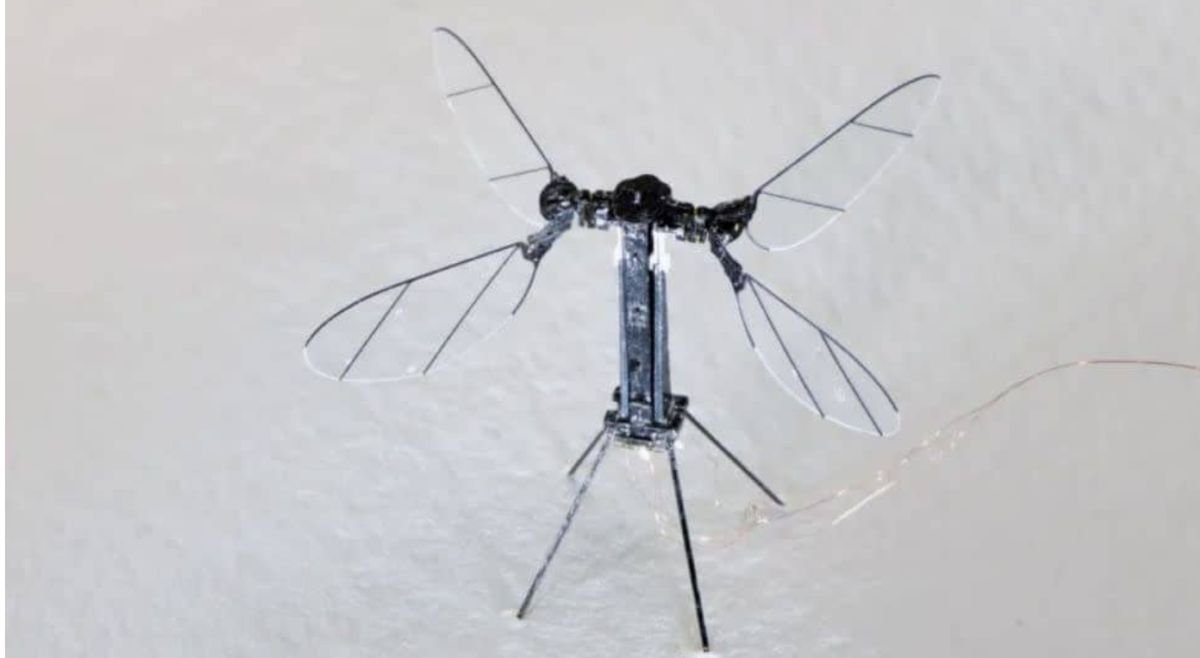

China has introduced a mosquito-sized drone designed for covert surveillance and special operations, marking a significant step in the development of next-generation military technology. The miniature device reflects a growing focus on advanced reconnaissance systems that are smaller, harder to detect, and capable of operating in confined environments.
The drone was unveiled by China’s National University of Defense Technology. According to available information, the tiny aircraft weighs less than 0.3 grams and features a bionic design that closely imitates the flight of a real mosquito. Moreover, its wings can flap up to 500 times per second, allowing it to move with remarkable agility.
In addition, the miniature drone can carry lightweight sensors for surveillance and reconnaissance missions. Its compact size makes it difficult to detect visually, while its limited radar signature could enable it to operate in locations that conventional drones cannot easily access.
🦟 China Unveils 'Spy Mosquito'
While the world's militaries debate hypersonic missiles and suicide drones, China is demonstrating a completely different approach to developing military technologies.
China's National University of Defense Technology has unveiled a… pic.twitter.com/WEyxc4GpPL
— China pulse 🇨🇳 (@Eng_china5) June 16, 2026
Military analysts believe such technology could support intelligence gathering, target monitoring, urban reconnaissance, indoor surveillance, and observation of personnel movements. Furthermore, the drone could provide valuable information from areas where larger unmanned systems or reconnaissance teams face operational challenges.
The unveiling highlights China’s continued investment in advanced military innovation. As countries compete to develop next-generation defense technologies, miniature drones are emerging as a new area of strategic interest alongside hypersonic weapons and autonomous systems.
However, experts note that the technology also faces important limitations. Due to its extremely small size, the drone can only carry a very small battery. Consequently, its operational flight time remains limited compared with larger unmanned aerial vehicles.
Additionally, the lightweight design makes the drone highly vulnerable to environmental conditions. Strong winds or adverse weather could easily push it off course or force it to land unexpectedly.
Despite these challenges, the mosquito-sized drone demonstrates how military technology continues to evolve toward smaller, more discreet surveillance platforms. If further developed, such systems could play an increasingly important role in future intelligence and reconnaissance operations.

