
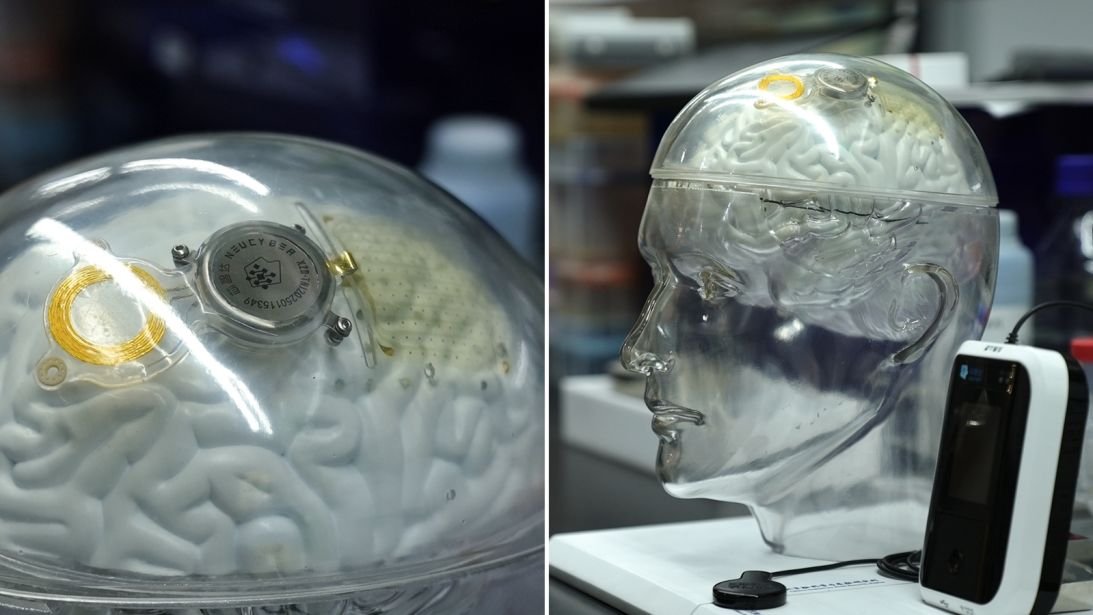

NEO Implant Marks Major Neurotechnology Milestone
China has approved its first brain-computer chip for commercial use, marking a major step in the global race to develop advanced neurotechnology.
The coin-sized implant, known as NEO, is being described as one of the first brain-computer interface devices cleared for wider medical use. The approval places China ahead of Elon Musk’s Neuralink in the race to bring brain implant technology to market.
According to reports, the NEO implant has completed clinical trials and is designed mainly for patients with spinal cord injuries and paralysis. The device is expected to help improve nervous system function and support medical rehabilitation.
The implant is now expected to enter mass production for use within China’s state-run healthcare system. Early deployment will focus on patients who need support for movement recovery and neurological rehabilitation.
The approval has drawn global attention because brain-computer interface technology is seen as one of the most important emerging fields in modern medicine.
China Moves Ahead as Neuralink Continues Trials
The development comes as Neuralink, founded by Elon Musk, continues testing its own brain implant system. Neuralink aims to allow users to control digital devices through thought.
Musk has repeatedly described brain implants as potentially life-changing for people with severe neurological conditions. He has said the technology could one day help restore movement, vision and communication abilities.
However, Neuralink’s system is still undergoing limited human trials and has not yet received broad commercial approval.
China’s NEO chip, by contrast, is reportedly moving toward early large-scale production. This gives China a major lead in the commercial rollout of brain-computer implant technology.
Experts believe such devices could eventually help people with paralysis, Parkinson’s disease, epilepsy, stroke-related disability and other neurological disorders.
Ethical, Medical and Security Concerns Remain
Despite the excitement, experts warn that brain-computer chips remain experimental and carry serious risks.
Medical concerns include infection, immune rejection, brain injury and complications caused by implanting devices in sensitive neural areas.
Cybersecurity experts have also raised alarms about data protection. Brain implants could collect extremely sensitive neural information. This may include signals linked to memory, emotion, movement and thought patterns.
Analysts say questions about data ownership, consent and privacy will become more serious as the technology expands.
Unlike phones or wearable devices, brain implants interact directly with the nervous system. This makes privacy concerns much deeper than ordinary digital tracking.
Supporters argue that the benefits could be enormous if the technology is safely developed. They believe brain-computer chips could transform medical care for millions of people living with neurological conditions.
Still, the approval of China’s NEO implant shows that the global race has entered a new phase. The focus is no longer only on laboratory testing. Countries and companies are now moving toward real-world medical use.

