
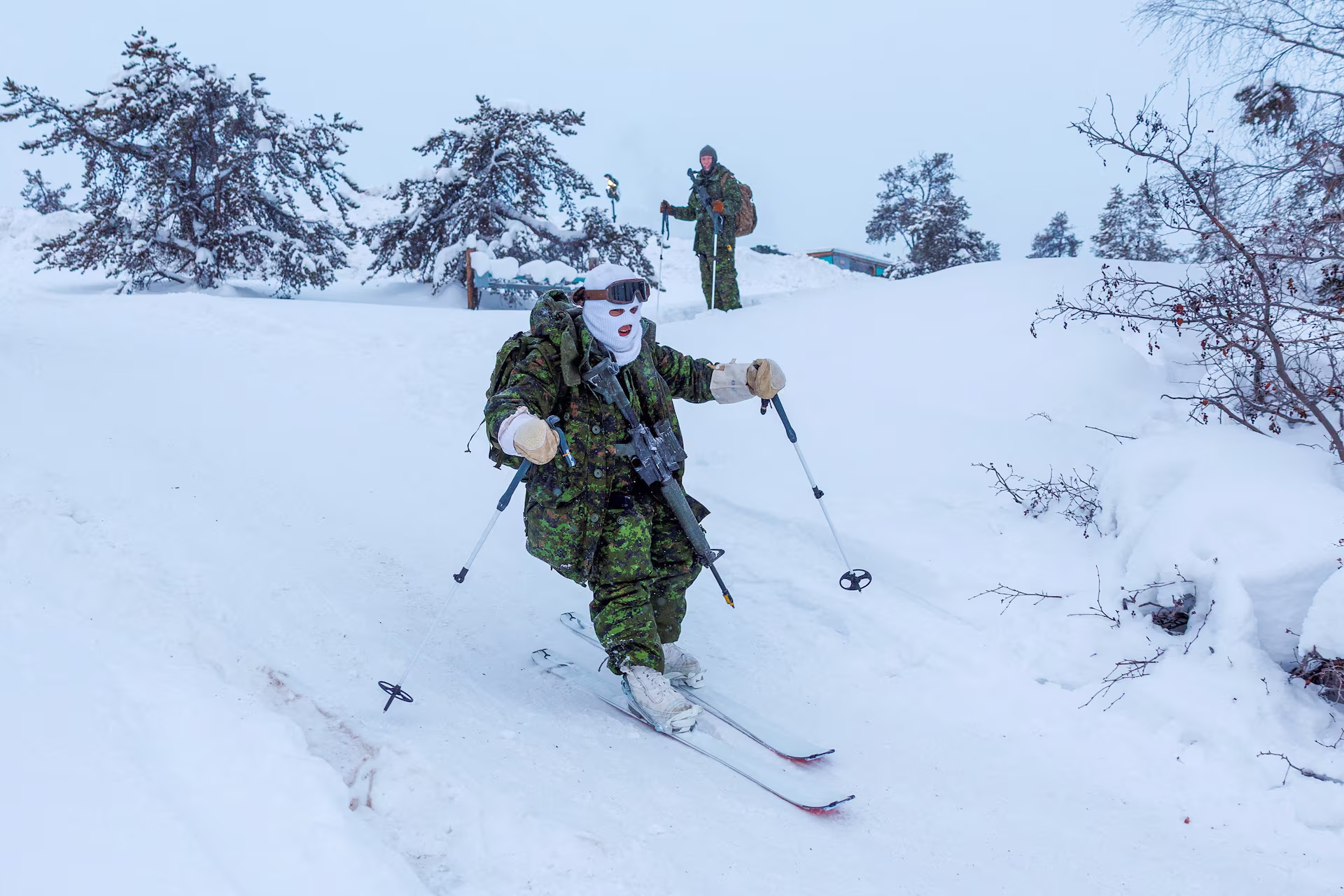

Canadian forces have completed an extensive Arctic exercise spanning more than 5,000 kilometers across frozen terrain, highlighting efforts to strengthen sovereignty in the far north of Canada. The mission stretched from Inuvik in the Northwest Territories to Churchill in Manitoba, where troops endured blizzards and temperatures near minus 60°C.
During the operation, members of the Canadian Armed Forces carried out snowmobile patrols, ski exercises, and aircraft landings on frozen sea ice. In addition, artillery units moved equipment to northern regions in what officials described as one of the largest Arctic deployments since 2007.
Meanwhile, military leaders emphasized that the exercises aim to prepare for potential foreign threats while reinforcing Canada’s ability to independently secure its Arctic territory. However, officers acknowledged the extreme environmental challenges that continue to test operational limits.
Furthermore, tensions in global politics have increased attention on Arctic security. Canadian officials referenced growing activity by Russia in northern regions as a key concern. As a result, Canada has pledged significant investment in military infrastructure across the Arctic.
At the same time, cooperation with the United States remains critical. Canada continues to operate within NORAD, a joint defense system established in 1958. Officials stressed that despite political rhetoric, military coordination between both countries remains strong and necessary for regional security.
Additionally, experts noted that neither Canada nor the US can independently monitor the vast Arctic region effectively. Consequently, both nations rely on shared intelligence, infrastructure, and coordinated defense systems to address emerging threats.
Ultimately, while Canada expands its Arctic capabilities, officials acknowledge that full self-reliance remains unlikely given the region’s scale and harsh conditions.

