
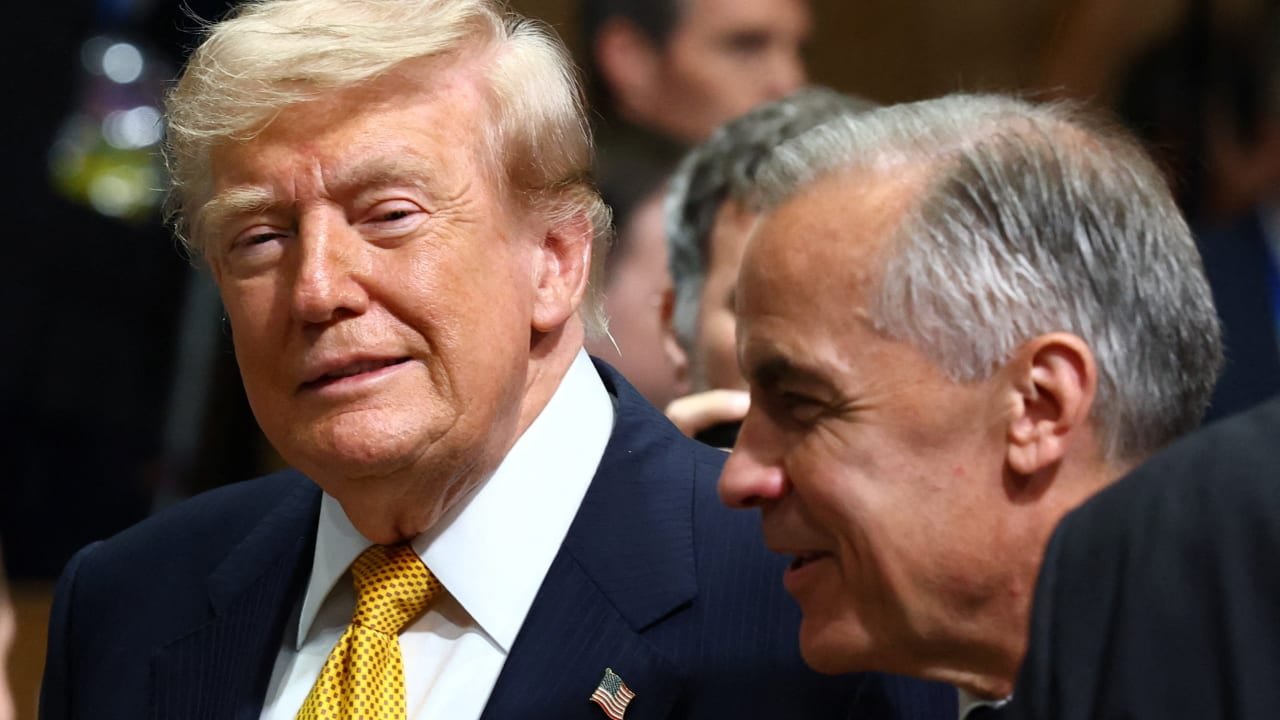

Carney says all options remain available as negotiations with Washington continue
CHARLOTTETOWN: Canadian Prime Minister Mark Carney said his government is prepared to take whatever steps are necessary to protect Canada’s economic interests after the United States announced new tariffs on a range of Canadian products.
Speaking at a meeting of provincial premiers in Charlottetown, Prince Edward Island, Carney described the new US measures as unjustified and said Ottawa would continue to pursue intensive negotiations with Washington.
US President Donald Trump announced earlier this week that a 50 percent tariff on various Canadian goods will take effect on August 19. In response, Carney said Canada would not hesitate to consider retaliatory measures if ongoing negotiations fail to produce an agreement.
“Everything is on the table if there is no agreement,” Carney said, without specifying potential countermeasures.
Provinces differ on response
Although Carney stressed that federal and provincial leaders remain united in defending Canada’s interests, provincial governments have expressed differing views on how to respond.
Ontario Premier Doug Ford called for Canada to match US tariffs “dollar for dollar,” while Alberta and Saskatchewan opposed export restrictions or duties on products such as crude oil and potash.
Meanwhile, British Columbia Premier David Eby suggested his province could consider limiting US access to critical mineral exports, including copper, zinc and aluminum, if requested by the federal government.
Trade talks continue amid uncertainty
The latest dispute comes as Canada and the United States work to accelerate bilateral trade negotiations following President Trump’s decision not to renew the United States-Mexico-Canada Agreement (USMCA) earlier this month. The agreement remains in force but will now undergo annual reviews instead of receiving a long-term extension.
Separately, US Trade Representative Jamieson Greer said Washington hopes to reach interim trade arrangements with both Canada and Mexico before the end of the year, while more complex negotiations over the future of the USMCA continue into 2027.
Analysts say the prolonged negotiations could extend uncertainty for businesses and investors across North America. Nevertheless, Canadian officials reiterated their preference for a comprehensive trade agreement covering all sectors rather than separate deals for individual industries as discussions with Washington continue.

