
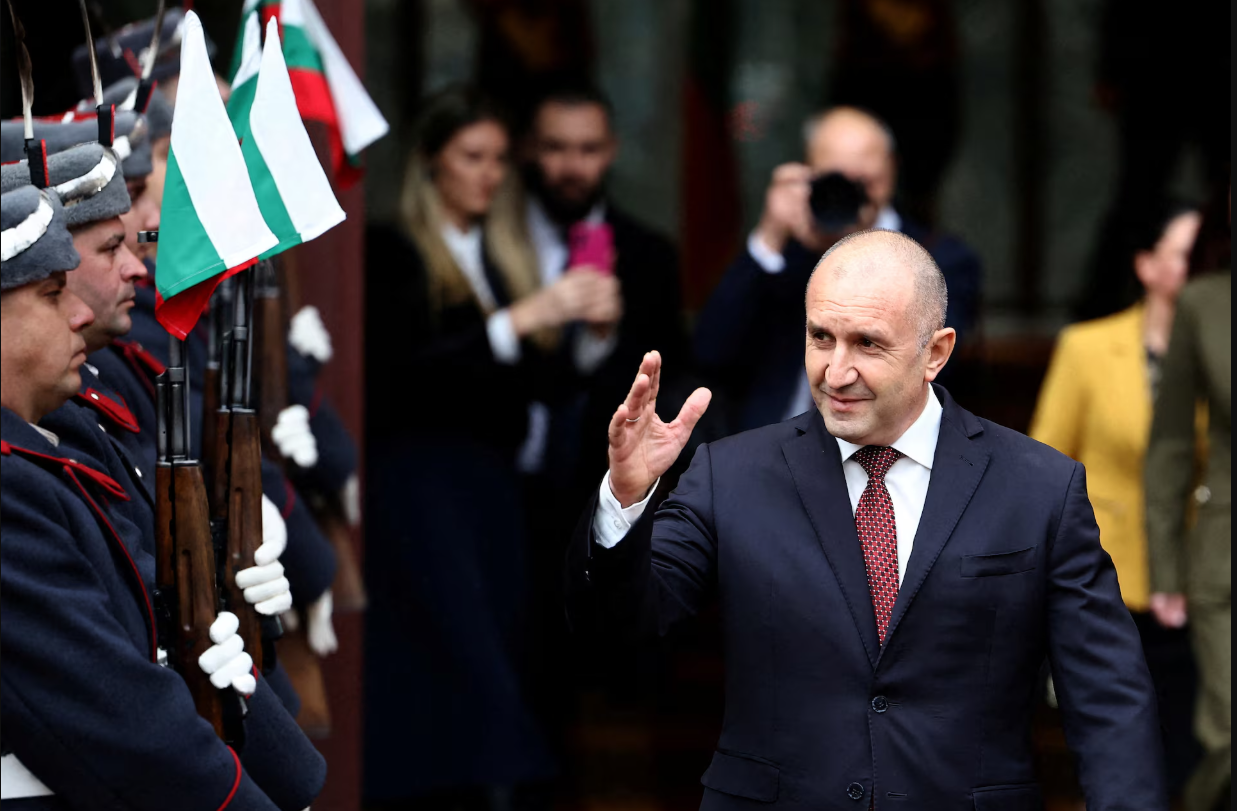

Bulgaria is heading into a crucial parliamentary election on Sunday. It is the eighth vote in just five years.
Voters face growing frustration over political instability. At the same time, concerns about corruption and living costs continue to dominate public debate.
Rumen Radev Emerges as Front-Runner
Rumen Radev has emerged as the leading candidate in the election race. He entered politics promising to end repeated government collapses.
Radev, a former fighter pilot, has taken a strong eurosceptic stance. He also opposes military support for Ukraine against Russia.
He stepped down from the presidency in January to contest the election. His campaign focuses on stability and anti-corruption reforms.
Voter Fatigue and Political Instability
Bulgaria has experienced frequent snap elections in recent years. This instability has created widespread frustration among citizens.
Mass protests in December led to the collapse of the previous government. As a result, public trust in political institutions has weakened further.
Radev’s campaign has gained momentum by promising change. Therefore, many voters see him as a break from the past.
Cost of Living and Economic Pressure
Economic concerns are also shaping voter sentiment. The adoption of the euro in January has influenced price levels.
Rising living costs remain a major issue for households. In addition, recent tax and social contribution proposals triggered public protests.
The previous government fell partly due to these economic tensions. Therefore, economic stability is now a key electoral issue.
Public Sentiment and Election Dynamics
Many voters express frustration with long-standing political figures. They believe corruption remains a persistent problem.
“I will put my trust in the new general in politics,” said Georgi Bozhkov, a 37-year-old civil servant.
“When there is something new, we should try the new thing.”
This sentiment reflects a broader desire for change. Therefore, new leadership appeals to a large section of the electorate.
Poll Trends and Political Competition
Recent polls show Radev’s Progressive Bulgaria leading with around 35% support. This marks a significant increase compared to earlier surveys.
However, the figure still falls short of a parliamentary majority. Therefore, coalition-building will likely be necessary.
The GERB party, led by former Prime Minister Boyko Borissov, trails in second place. Meanwhile, other political groups remain in contention.
Possible Coalition Scenarios
One potential partner is the pro-European PP-DB coalition. This group also supports institutional reform.
However, forming a stable government remains a challenge. Political fragmentation increases the likelihood of fragile coalitions.
Analysts warn that instability could continue even after the election. Therefore, another snap election cannot be ruled out.
Corruption Concerns and Governance Challenges
Corruption remains a central issue in Bulgaria’s political system. It affects governance, elections, and public trust.
The country ranks low in European corruption perception indexes. As a result, reform pressure continues to grow.
Despite EU membership and economic progress, institutional weaknesses persist. Therefore, voters demand stronger accountability.
Public Hope for Change
Many citizens hope the election will bring meaningful reform. They want stronger governance and reduced corruption.
“We really, really hope that something will change, and that these corrupt rulers of ours will be replaced,” said 82-year-old pensioner Temenuzhka Vaseva.
Her remarks reflect widespread public sentiment. Therefore, expectations for change remain high.

