
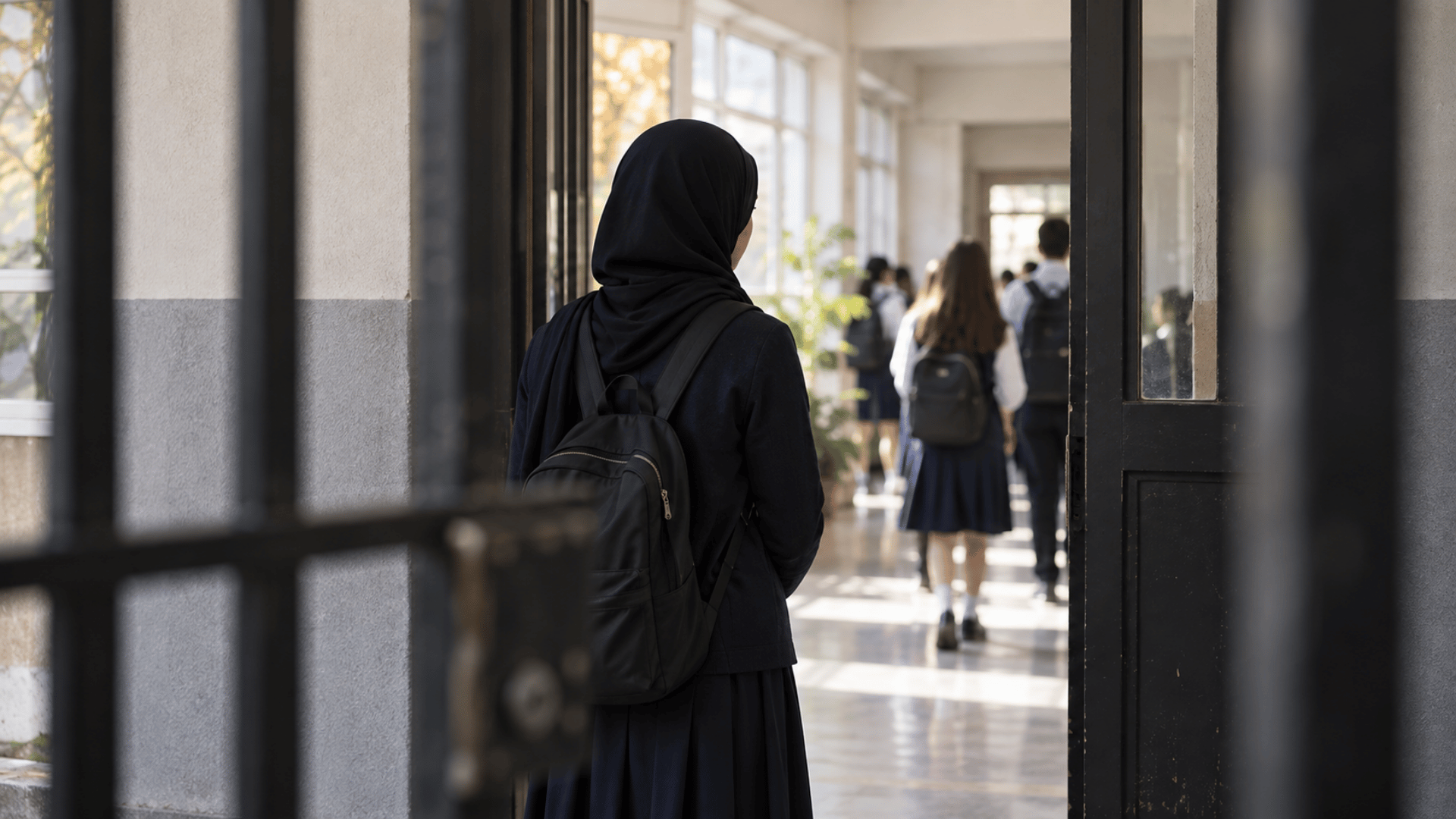

Azerbaijan’s revised school dress code has sparked protests after reports emerged that hijab-wearing girls and teachers were being denied entry to classrooms. The controversy has intensified debate over religious freedom and the country’s secular education system.
The government introduced amendments to school clothing regulations last month. Although the rules do not explicitly prohibit the Islamic headscarf, they restrict clothing considered inconsistent with the “principle of secularism.”
As schools began enforcing the requirements, some students and teachers reportedly found themselves unable to attend classes.
New Dress Code Triggers School Protests
The revised rules apply to state general education institutions and aim to establish a uniform standard of dress. According to Azerbaijan’s state-run news agency, the changes are intended to ensure that school clothing reflects the country’s secular principles.
However, implementation has triggered demonstrations and student boycotts. Videos circulating online reportedly show schoolgirls crying as they are turned away from classrooms and embracing teachers affected by the restrictions.
Local reports indicate that students at several schools have protested against the enforcement of the new requirements.
Teachers and Students Raise Concerns
The restrictions have also affected teachers who wear hijabs. Teacher Zahra Hasanova told Al Jazeera that school officials informed her she could no longer wear the headscarf at work.
She described feeling hurt by the decision and said wearing or removing the hijab should remain a personal choice.
Critics argue that the restrictions limit religious expression and raise questions about constitutional protections. Azerbaijan’s constitution defines the country as secular while also guaranteeing religious freedom.
Around 96 per cent of the population identifies as Muslim, making the controversy particularly significant for communities affected by the new rules.
Hunger Strike Adds to Growing Opposition
The dispute has prompted further protests and a social media campaign. Imprisoned journalist Polad Aslanov has also reportedly launched a hunger strike to challenge the new requirements.
In a message shared by his wife, Aslanov argued that the restrictions violated constitutional rights.
Demonstrations have also taken place in neighbouring Turkiye, where activists have criticised the restrictions and called on Azerbaijani authorities to reconsider their approach.
Secularism and Religious Freedom at the Centre
Authorities have presented the revised rules as a way to standardise school uniforms and uphold secular education. However, critics question whether enforcing the policy against hijab-wearing students and teachers unfairly restricts religious expression.
The central dispute concerns how Azerbaijan can maintain its secular education framework while protecting individual freedoms.
With protests continuing and reports of students being turned away from schools, the implementation of the revised dress code remains under scrutiny. Whether authorities will reconsider the rules or clarify how schools should enforce them remains uncertain.
For the latest updates, visit and follow The Truth International website (www.thetruthinternational.com) and subscribe to the YouTube Channel.

