
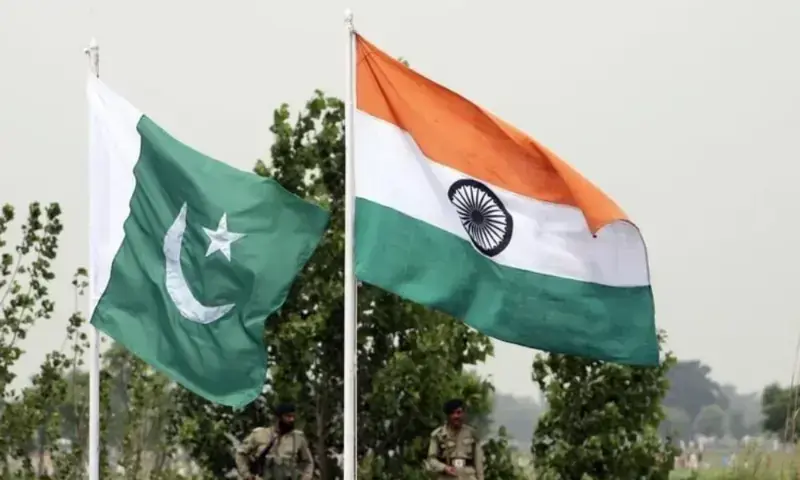

Washington: A year after the May 2025 India-Pakistan conflict, analysts across the United States and beyond increasingly warn that another confrontation appears more likely and potentially more dangerous. Moreover, experts argue that future crises could unfold faster, leaving limited room for international mediation.
Rising risks and changing war dynamics
The Washington Post noted that global attention has drifted despite the significance of a recent clash between two nuclear-armed rivals. It emphasized that another conflict seems inevitable rather than hypothetical. Additionally, the paper described the 2025 episode as a “non-contact” war, driven by drones, missiles, and airpower instead of ground invasion. Consequently, both countries may now assume they can contain escalation within conventional limits, a belief analysts consider risky.
At the same time, diplomatic conditions have shifted. Although US officials previously helped de-escalate tensions, friction between Washington and New Delhi could complicate future mediation. Analysts highlight that India’s strong emphasis on sovereignty may limit external influence in a crisis.
Water tensions and global consequences
Meanwhile, a Congressional Research Service report flagged water as a critical flashpoint. India’s move to suspend the Indus Waters Treaty, despite limited evidence linking Pakistan to prior attacks, has raised alarms. Pakistan, which relies heavily on the Indus basin, views any disruption as an act of war.
Furthermore, environmental experts warn that even limited nuclear use could trigger severe global consequences. Studies suggest atmospheric changes could disrupt agriculture worldwide, potentially causing widespread food shortages.
Overall, analysts stress that future conflicts may involve quicker escalation, deeper strikes, and higher risks of miscalculation, making containment far more difficult.

