
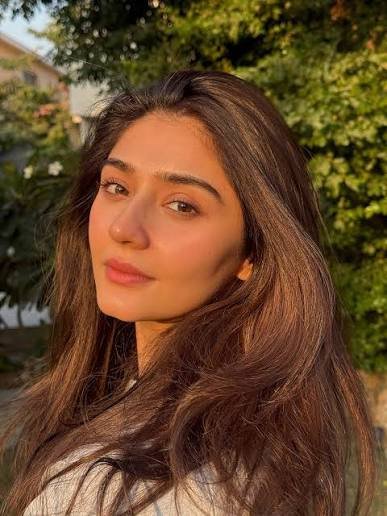

Entertainment journalist argues conventionally attractive actresses face greater scrutiny as viewers debate criticism surrounding Dar-e-Nijaat performance
KARACHI: Pakistani entertainment journalist Amna Isani has triggered an online debate after suggesting that conventionally beautiful actresses, including Durefishan Saleem, can face heightened scrutiny because audiences sometimes attribute their professional success to their appearance.
During a discussion with host Hassan Chaudhry, Isani argued that attractive women appearing on television often face assumptions that producers cast them or audiences watch them primarily because of their looks.
However, Chaudhry questioned the argument by naming actresses including Sajal Aly, Yumna Zaidi, Ayeza Khan, Urwa Hocane, Mawra Hocane and Sehar Hashmi, asking whether physical appearance alone could explain public attention or criticism.
Debate Turns to Conventional Beauty Standards
The discussion subsequently shifted toward how Pakistan’s entertainment industry defines conventional beauty.
Chaudhry referred to characteristics such as fair skin and height, while Isani agreed that society frequently associates such features with traditional beauty standards.
Furthermore, Chaudhry cited Hania Aamir and Mahira Khan, suggesting that Isani’s argument would mean they could similarly attract disproportionate criticism because audiences widely consider them conventionally attractive. Isani agreed with his observation.
The conversation emerged amid continuing criticism of Durefishan’s performance in Dar-e-Nijaat.
Some viewers have questioned her expressions, dialogue delivery and English accent. Meanwhile, her pronunciation of the word “fab” has also generated discussion across social media.
Social Media Users Challenge Isani’s Argument
However, several users rejected attempts to connect criticism of Durefishan’s acting with her physical appearance.
Some argued that actresses who do not fit conventional beauty standards often work harder and depend more heavily on acting ability to secure prominent roles.
Others criticised Durefishan’s Urdu and English accents and questioned her selection for leading projects.
Additionally, some commenters accused Isani of favouring Durefishan, while others maintained that audiences should judge performers primarily on acting ability rather than appearance.
Consequently, the discussion has widened into a broader debate about beauty standards, privilege, casting and talent within Pakistan’s entertainment industry.

