
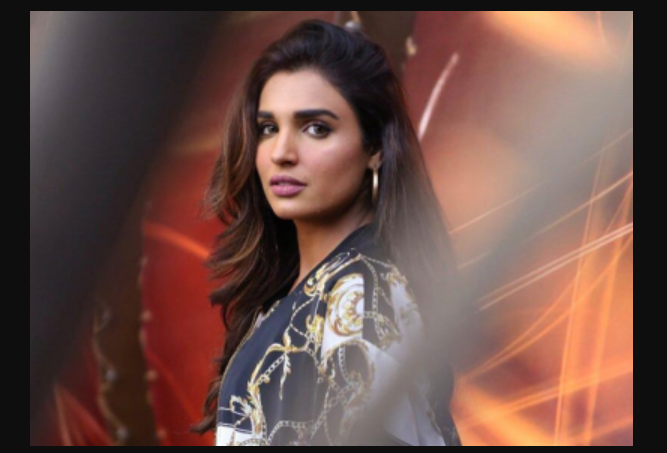

Actor Amna Ilyas has criticised online critics for policing women’s choices and promoting harmful attitudes.
She warned that such commentary can reinforce misogynistic thinking and potentially validate violence against women offline.
Ilyas shared her concerns on Instagram after a recent dance performance attracted both praise and criticism.
While she said criticism itself did not bother her, one particular comment prompted a stronger response.
According to Ilyas, a “self-acclaimed critic” described her as “cheap”. She then reviewed his online content to understand his criticism.
However, she said she noticed a repeated focus on women he disliked or disagreed with.
Amna Ilyas Questions Online Moral Policing
Ilyas said the content repeatedly targeted women and attempted to police their behaviour.
“All his videos talked about women that he didn’t like or had some problems with; he is moral-policing them,” she said.
She argued that such commentary promotes the idea that women should live according to male expectations.
“You have a mic, you have a platform, and you chose to instigate violence against women using this platform,” she said.
Ilyas acknowledged that she has enough personal freedom to ignore online criticism.
“It doesn’t affect me because at the end of the day I live life the way I want, I don’t care,” she said.
However, she stressed that other women may not have the same freedom or support.
According to Ilyas, online comments can have deeper consequences for women already facing violence or difficult circumstances.
“A woman who is already facing violence and is living life through extreme difficulty, your words will in turn validate the mindset of a man that’s doing that with the woman, that whatever he’s doing with that woman is right, because you have made it seem okay,” she said.
Ilyas Says Online Words Can Have Real-World Consequences
For Ilyas, the issue extends beyond criticism directed at celebrities or public figures.
She believes repeated online attacks can strengthen attitudes that restrict women in their daily lives.
She also questioned whether provoking outrage for attention or financial gain justifies targeting women.
“Congratulations, that for some views, some money, you have given men a licence to not let a woman lead a life with her own wishes,” she said.
Her comments have therefore placed the focus on the wider impact of online commentary.
Rather than treating such remarks as simple criticism, Ilyas argued that their consequences can reach women facing serious social and personal challenges.
Zhalay Sarhadi Backs Amna Ilyas
Actor Zhalay Sarhadi later supported Ilyas through a video of her own.
Sarhadi challenged the description of people who repeatedly target women online as ordinary critics.
“The people out there that are sitting there calling themselves ‘critics,’ they are not critics, they are misogynists especially against women,” she said.
She also questioned whether online virality should come at the expense of women.
Sarhadi described commentary surrounding women’s “clothing” and “choices” as particularly harmful.
She argued that these discussions can affect women who already face pressure within society and their homes.
“The non-privileged women that are already going through so much because of the society and their home situation, trying to overcome these obstacles” can become discouraged from “wanting to move forward”, she said.
Sarhadi Calls for a Change in Online Attitudes
Sarhadi further argued that online commentators can reinforce harmful attitudes through their words.
“Your words are egging these men on, when instead they need teaching the world is trying to make them see, to accept women as humans,” she said.
She also criticised people who use online platforms to promote what she described as misogynistic views.
“When you come [online] trying to spread your misogynistic ideology, [and] you view women wrongly, it shows that you are the one with issues, you don’t like women, and that is disgusting,” she said.
Sarhadi concluded by expressing solidarity with Ilyas and women experiencing violence and abuse.
“I am sorry to Amna that this happened to you, sorry to all the women that are going through femicide and abuse at the hands of such men,” she said.
The statements from both actors have consequently highlighted concerns about the way women face scrutiny online.
Their comments also draw attention to the possible impact of repeated moral policing beyond social media itself.

