
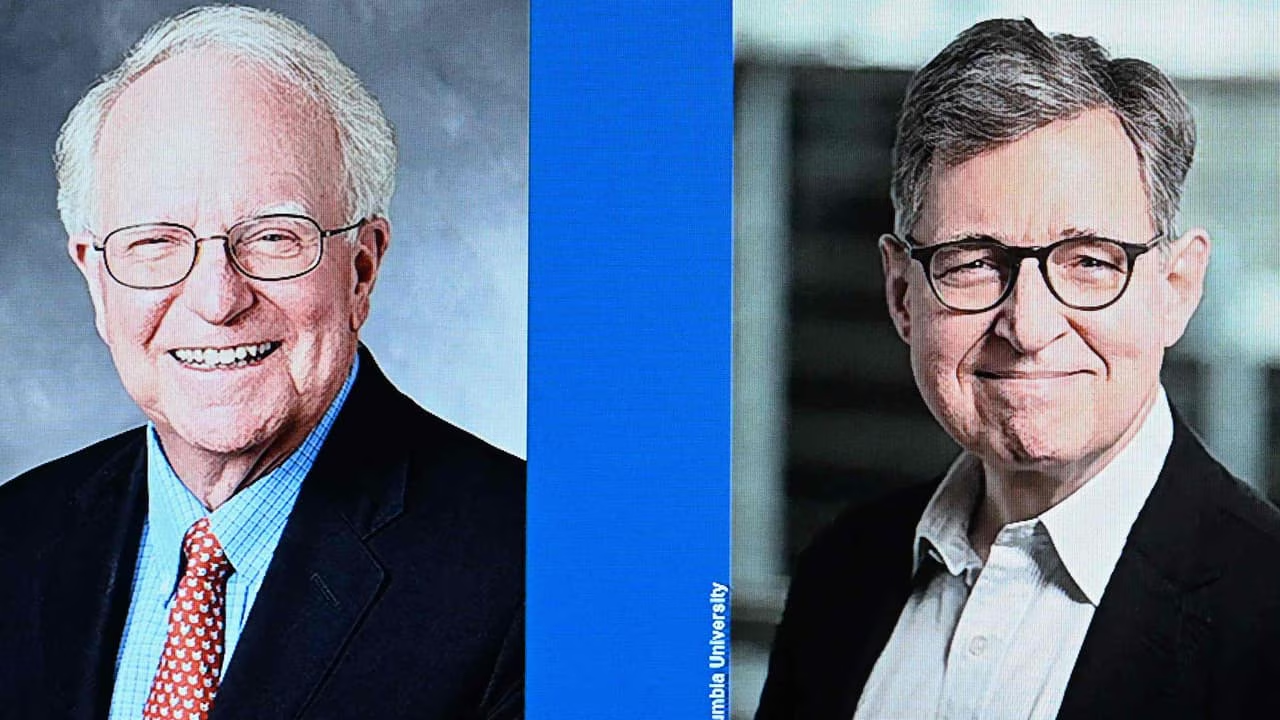

American economists Robert E. Hall and Michael Woodford won the 2026 Nobel Prize in Economic Sciences on Monday for their research into economic stabilisation. The Royal Swedish Academy of Sciences recognised their work on the microeconomic foundations of macroeconomic stabilisation, which has improved how governments and central banks respond to economic fluctuations.
The award carries a prize of 12 million Swedish kronor, worth approximately $1.2 million. Their research developed economic models that help policymakers introduce timely fiscal and monetary measures to reduce damaging economic swings.
Research Improves Economic Stabilisation Policies
Hall, a professor at Stanford University, studied how households make spending decisions based on their expectations of future income. His research showed that consumer confidence and changing financial circumstances can influence spending patterns and affect overall economic activity.
Meanwhile, Woodford, a professor at Columbia University, examined how businesses set prices based on expectations about future interest rates and costs. His work also highlighted the importance of clear communication from central banks, helping businesses and consumers understand potential policy changes.
Together, their research established a stronger theoretical foundation for economic models used worldwide. Consequently, governments can better assess how households and businesses respond to changing conditions when developing policies to manage inflation, unemployment and economic downturns.
Economists Help Governments Manage Economic Shocks
The researchers’ contributions have proved valuable in addressing major economic challenges, including energy crises and sudden changes in consumer spending. Their models help policymakers understand how individual decisions influence broader economic trends and determine when intervention may be necessary.
The economics award, formally known as the Sveriges Riksbank Prize in Economic Sciences in Memory of Alfred Nobel, was established by Sweden’s central bank and first presented in 1969. Although it was not among the five original prizes created through Alfred Nobel’s will, it is awarded alongside the other Nobel honours.
Last year’s economics prize went to Joel Mokyr, Philippe Aghion and Peter Howitt for research explaining how innovation and new technologies drive economic growth and improve living standards.
For the latest updates, visit and follow The Truth International website (www.thetruthinternational.com) and subscribe to the YouTube Channel.

