
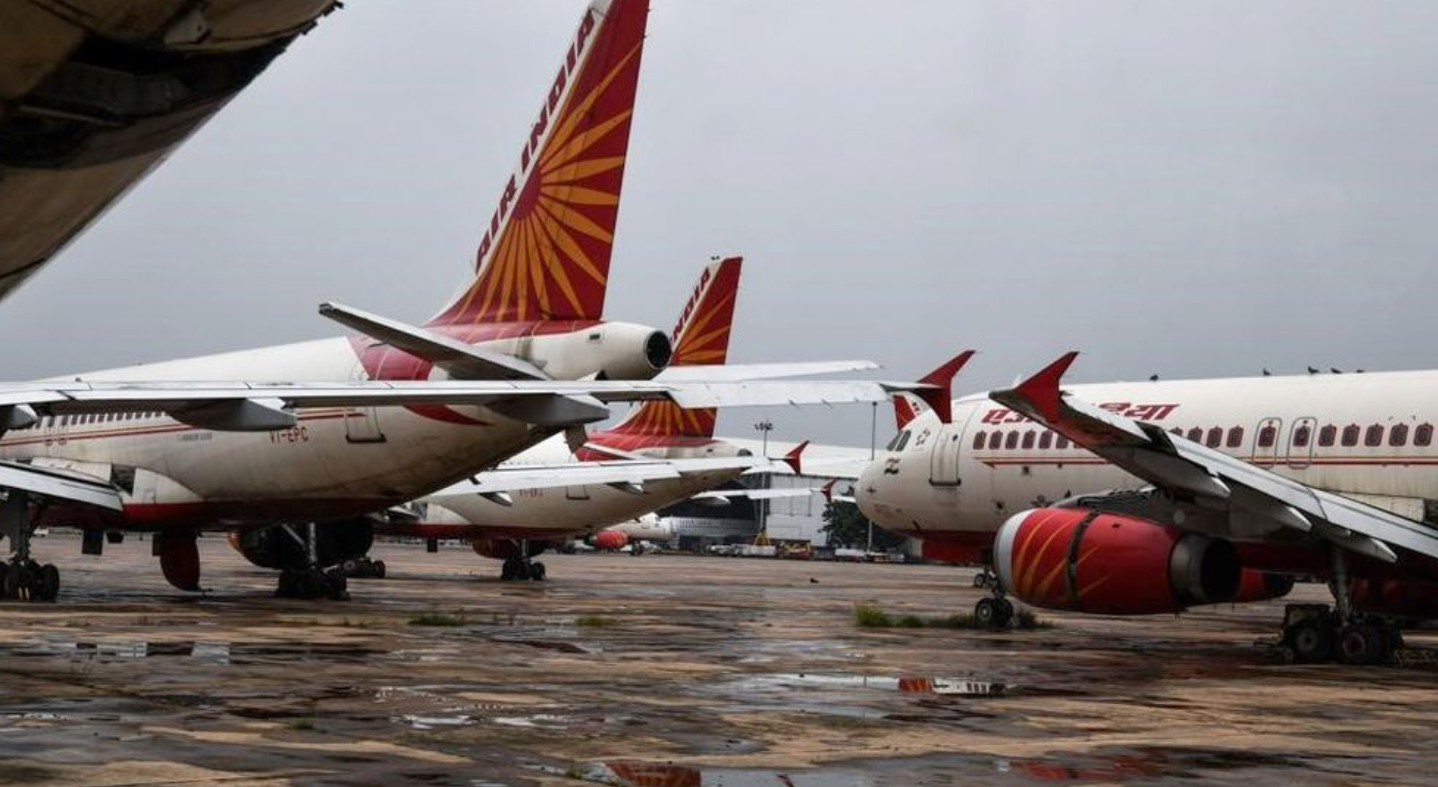

Air India has reported a sharp annual loss of around 2.8 billion US dollars for the 2025–26 financial year. The result highlights major financial pressure on the airline during its ongoing restructuring phase.
The loss reflects operational disruptions, rising costs, and geopolitical challenges affecting international aviation routes. It also marks the airline’s largest annual deficit since its acquisition by Tata Group in 2022.
Biggest Annual Loss Since Privatization
The financial shortfall represents Air India’s most significant annual loss under Tata Group ownership. It also ranks among the largest losses reported by any major Asian airline in recent years.
The results were disclosed through financial filings linked to Singapore Airlines, which holds a 25 percent stake in Air India. The figures cover the Air India Group, including both full-service and low-cost operations.
The airline reported losses of approximately 3.56 billion Singapore dollars for the year ending March 31, 2026.
Geopolitical and Operational Pressures
Several external factors contributed to the financial decline. Airspace restrictions and regional tensions significantly disrupted flight routes.
The continued closure of Pakistani airspace for Indian carriers forced longer flight paths. This increased fuel consumption and operational costs across international routes.
Additionally, tensions in the Middle East added further uncertainty. These disruptions impacted scheduling, efficiency, and overall route profitability.
Rising global jet fuel prices also placed additional pressure on operating margins. A stronger US dollar further increased costs for long-haul international operations.
Network Adjustments and Flight Reductions
In response to financial strain, Air India has adjusted its international operations. The airline has reduced or temporarily suspended several routes.
Some of these changes will remain in place until at least August 2026. The airline stated that these steps aim to improve operational stability.
Management is also working to reduce last-minute disruptions for passengers. Capacity adjustments are part of broader efforts to optimize network performance.
Ongoing Transformation Strategy
The airline continues to undergo a large-scale transformation under Tata Group ownership. The strategy includes fleet modernization, service upgrades, and operational restructuring.
Air India has placed significant aircraft orders and merged Vistara into its operations. It is also upgrading cabin services and improving digital systems.
These changes are designed to reposition Air India as a competitive global carrier. However, restructuring costs have weighed heavily on short-term profitability.
Analysts note that such transformations often take time before delivering financial gains.
Investor Concerns and Market Outlook
Singapore Airlines has acknowledged the impact of Air India’s losses on its own earnings. Despite this, it continues to support the long-term partnership with Tata Group.
At the same time, auditors have flagged potential impairment risks linked to the investment. These concerns stem from ongoing geopolitical uncertainty and operational challenges.
Air India has not yet released full standalone financial statements publicly in India. As a result, investor insights remain dependent on external disclosures.
Conclusion
Air India’s $2.8 billion loss highlights the combined impact of geopolitical disruptions, airspace restrictions, and restructuring costs. While the airline continues its transformation journey, financial pressure remains significant.
The coming years will be critical as Air India attempts to balance modernization efforts with operational stability and profitability.

